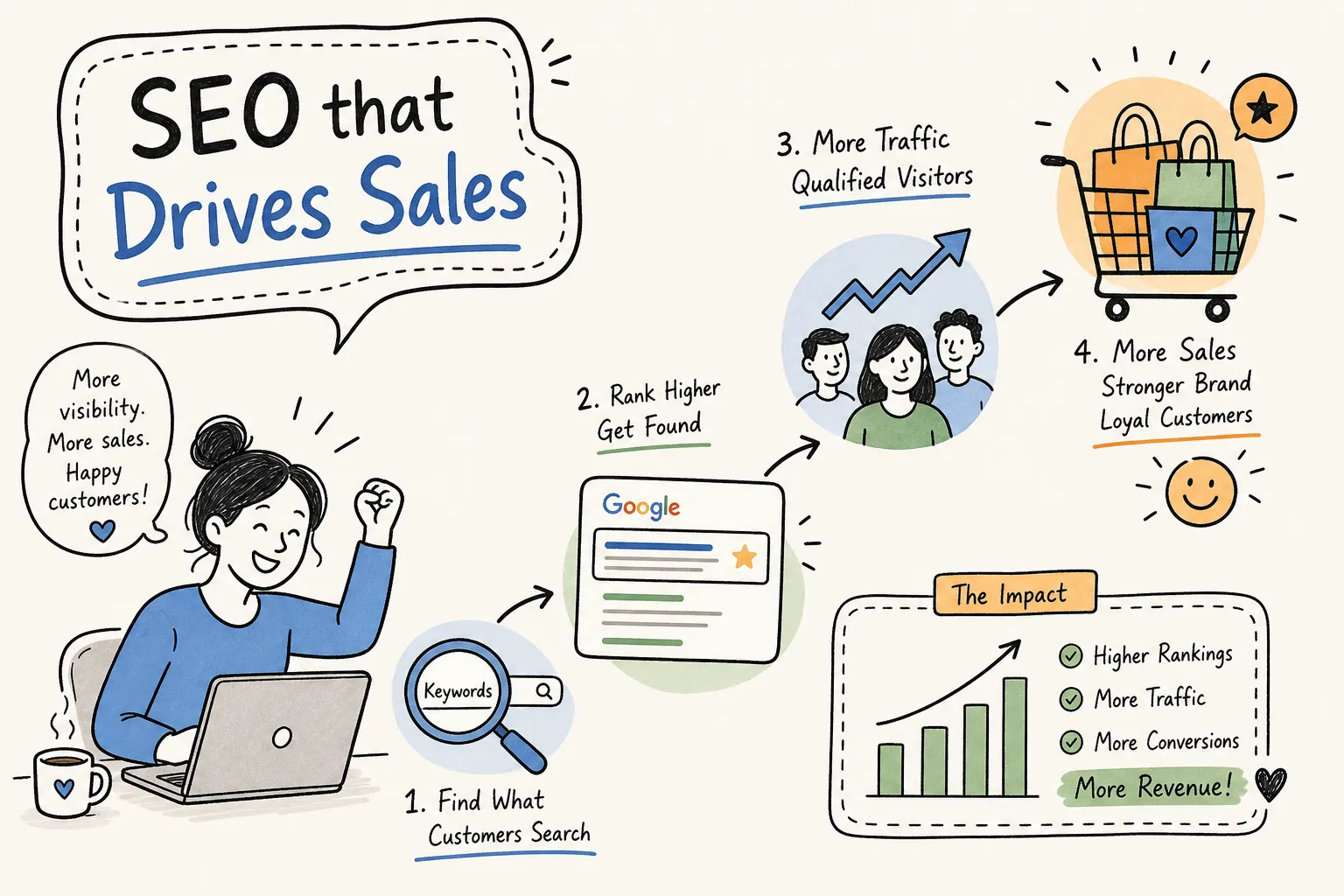
Many SEO guides skew toward B2B topics: long sales cycles, niche decision-makers, and lead forms as the conversion goal. If you sell directly to consumers, that playbook doesn’t fit your business. B2C SEO services are built around a completely different buyer, someone who searches, browses, compares, and often converts within a single session. Applying the wrong strategy can mean paying for a framework that was never designed to move your products.
Brandleap Agency builds B2C SEO services specifically for small and growing consumer brands that can’t afford to waste time or budget on strategies designed for enterprise B2B pipelines. The gap between generic SEO and actual consumer brand SEO is wider than most business owners realize, often discovered only after burning through a retainer with nothing to show for it.
This guide covers what separates B2C SEO from B2B, what a real service package includes, what you should pay in 2026, and how to evaluate agencies before you sign anything.
How B2C SEO Fundamentally Differs from B2B SEO
In B2B, a prospect might spend weeks comparing vendors before converting. In B2C, the window between search and purchase can be minutes. That compression means every product page and category page you rank carries direct revenue potential, not just pipeline contribution. A missed ranking for a high-intent product term isn’t a missed lead, it’s a missed sale, today, not in 90 days.
B2B SEO targets decision-makers researching solutions over time. B2C SEO targets people who already know what they want and are deciding where to buy it. The keyword landscape shifts from long, problem-framing queries like “how to improve team communication” toward intent-rich, product-specific searches like “best wireless earbuds under $100” or “organic face wash for sensitive skin.” Emotional triggers, lifestyle language, and comparative terms dominate the B2C search environment in ways that require a completely different content approach.
B2B sites are often modest in size. A consumer brand on Shopify or BigCommerce can have thousands of product URLs, filtered category pages, and dynamic facets that create duplicate content, crawl waste, and indexation problems at scale. B2C SEO has to solve those catalog-level technical issues before rankings improve, because Google can’t rank pages it can’t consistently crawl and understand. That catalog-scale complexity is a common reason generic SEO agencies underdeliver for consumer brands.
Why Keyword Intent Is the Defining Variable for Consumer Brands
Consumer brands win organic traffic primarily through two intent types: transactional (ready to buy) and commercial-investigation (comparing options before buying). Both require different page types. Transactional queries land on product pages and optimized category pages. Commercial-investigation queries land on buying guides, comparison articles, and “best of” content that earns the trust needed to convert browsers into buyers.
Consumers don’t search the way procurement managers do. A search like “gifts for runners” or “sustainable weekend bag” isn’t driven by specifications, it’s driven by feeling and occasion. Effective consumer SEO services map content around these lifestyle-driven queries and build topic clusters that intercept buyers at every stage of their decision process. Skipping this step leaves entire search-intent segments uncovered.
One of the most overlooked parts of retail SEO work is making sure the right intent lands on the right page. When a high-converting query points to a poorly structured product page with thin copy, trust signals are missing and conversion rates suffer. Aligning intent with page type and page quality is where B2C SEO earns its ROI, a diagnostic step that’s frequently overlooked by generalist agencies.
What a Real B2C SEO Services Package Includes
A credible consumer SEO package starts with a full technical audit: crawlability, indexation, Core Web Vitals, site architecture, faceted navigation issues, canonical tags, and redirect chains. For consumer brands with large product catalogs, this is the foundation. Without it, content and link work won’t produce consistent rankings because Google’s crawlers can’t efficiently process the site.
Technical Audit and Catalog-Scale Fixes
Ecommerce SEO for consumer brands demands a level of technical rigor that most generalist agencies aren’t built for. Thousands of product URLs, dynamic filter parameters, and faceted navigation all create crawl-budget problems that undermine rankings before a single piece of content is written. A proper technical audit surfaces these issues and prioritizes fixes by revenue impact, not just by what’s easiest to resolve.
Product and Category Page Optimization
Product page and category page optimization is the revenue-critical work that separates serious retail SEO from generic content marketing. At the page level, this covers:
- Keyword and intent research
- Title tag and meta description rewrites
- H1 and heading structure cleanup
- Product description optimization
- Image alt text
- FAQ additions for purchase-stage questions
- Product schema markup for rich results in Google’s SERP
These are the pages where money changes hands, so they deserve line-item attention, not template-level fixes.
Content, Links, and Conversion-Oriented Improvements
Most consumer-facing SEO solutions also include content production (buying guides, category-supporting blog posts, comparison pages), a link acquisition program targeting editorial placements and digital PR, and conversion-oriented improvements like stronger calls to action, clearer page structure, and friction reduction on product and category pages. These channels reinforce each other: content earns rankings, links build authority, and conversion improvements turn that traffic into revenue. An agency that omits any of these areas may be offering a partial solution, worth verifying before you sign a contract.
What to Budget for B2C SEO Services in 2026
Monthly retainers are the dominant model among SEO providers. For small consumer brands, serious campaigns typically start between $1,500 and $3,000 per month, covering local or regional optimization, on-page work, and basic content. Mid-market brands investing in national or multi-product SEO generally see scopes in the $3,000 to $10,000 per month range. Enterprise programs with large catalogs, multi-location support, or international SEO can reach $10,000 to $50,000 or more monthly.
At the entry level, you’re getting foundational technical cleanup, on-page optimization of core pages, and a limited content calendar. At mid-market, the scope expands to include dedicated content production, a proactive link-building program, and regular strategy calls. At enterprise, you’re often working with a dedicated account team handling complex catalog issues, multiple site sections, and continuous testing.
Organic SEO isn’t a 30-day channel, and anyone telling you otherwise is selling you something. In the first three months, expect technical improvements, crawl health gains, and early movement in impressions. Traffic lift and ranking improvements for commercial terms usually become measurable between months three and six. Meaningful organic revenue impact typically shows up between six and twelve months in, and durable share gains compound from month twelve onward.
The KPIs That Actually Matter for Consumer Brands
A B2C SEO engagement should be measured on organic sessions, organic conversion rate, and organic revenue, not just keyword rankings. Rankings tell you where you are in search results. Revenue tells you whether being there is working. Non-branded clicks and impressions are also critical because they measure new-customer acquisition, not just existing brand demand being recycled through search.
Click-through rate from the SERP tells you whether your titles and meta descriptions are competitive. Engaged sessions, pages per session, and scroll depth tell you whether your content earns attention after the click. These secondary metrics help you identify whether a page has a traffic problem, a content problem, or a conversion problem, each of which points to a different fix.
Healthy organic conversion rates for consumer brands vary widely by page type. Top-of-funnel content typically converts at 0.5% to 2%. Product-focused category pages and commercial comparison content often reach 2% to 5%. These are benchmarks, not guarantees, and they depend heavily on your site’s UX quality, offer strength, and how well the page matches the original search intent. Any agency quoting you conversion rate targets without reviewing your site first is guessing.
How to Evaluate and Shortlist B2C SEO Agencies
The right agency should be able to answer questions that go deeper than generic SEO strategy. Ask them how they handle faceted navigation and filter-generated URLs to prevent crawl-budget waste. Ask how they structure product and category pages around buying behavior rather than just keyword volume. Ask who specifically will work on your account and what’s handled in-house versus outsourced. Strong B2C SEO agencies give specific, concrete answers rather than broad promises about “holistic strategies.”
Before shortlisting any agency, request two or three case studies from comparable consumer or ecommerce brands, complete with traffic, conversion, and revenue metrics. Ask for a redacted sample technical audit and a sample monthly report so you can judge the rigor of their process. Request one reference call from a comparable client. An agency that can’t provide these artifacts isn’t ready to manage your brand’s organic growth.
Well-regarded names in the B2C and ecommerce SEO space include Searchbloom and OuterBox for technical catalog work, First Page Sage and Silverback Strategies for SEO for DTC brands with content-led programs, and Coalition Technologies for large-scale full-service execution. For small and growing consumer brands managing tighter marketing budgets, Brandleap Agency offers B2C SEO services structured around consumer brand goals and catalog realities, without the overhead pricing of enterprise-focused firms. The key is matching the agency’s track record and pricing model to your business size and growth stage, not just their client logo list.
Making the Right Call for Your Consumer Brand
B2C SEO services aren’t a smaller version of B2B SEO. They’re a fundamentally different discipline built around consumer intent, catalog-scale technical work, and content that earns trust at the moment of purchase. Understanding that distinction is the first step toward finding an agency that actually fits your business.
Use the pricing benchmarks, KPI framework, and evaluation questions in this guide to build a shortlist of three to five agencies worth a real conversation. Request case studies, ask the hard questions, and make sure the agency you choose tracks revenue outcomes, not just rankings. That discipline is what separates B2C SEO agencies that grow consumer brands from those that simply keep you on a retainer.
If you want a second opinion on your current SEO setup or a package built around your actual catalog and customer acquisition goals, the team at Brandleap Agency is happy to take a look and give you a straight assessment of where the gaps are.