Local SEO services USA-wide are reshaping how small businesses compete for nearby customers, and the gap between businesses that rank and those that don’t is measurable. A large share of Google searches carry local intent, and many of those searches end in a call, a visit, or a purchase quickly. For urgent home-service queries like plumbing and electrical, some data suggests roughly half of searches result in a call within the hour. Businesses that show up in the local map pack get 126% more website traffic and 93% more calls than competitors sitting just outside that top three (based on local pack visibility research). That’s not a marginal edge. It’s the difference between a full calendar and a thin one.
The problem is that most U.S. small business owners know they need local SEO but have no clear picture of what they’re actually buying when they sign with an agency. What services are included each month? What does it cost? How long before results show up? This guide answers all of it. You’ll get a breakdown of standard deliverables, honest pricing ranges, realistic timelines, industry-specific nuances, and a practical checklist for evaluating providers. If you’re considering working with a U.S.-based local SEO agency, Brandleap Agency focuses on local search optimization for service-area businesses across all states, and the criteria laid out below are the same ones we apply to every campaign we run.
Local SEO Services USA: What a Complete Package Actually Includes
Too many business owners sign a contract and wait for results they can’t verify because no one explained what the agency was doing each month. A legitimate local search optimization package covers several core areas. Understanding each one helps you hold any provider accountable.
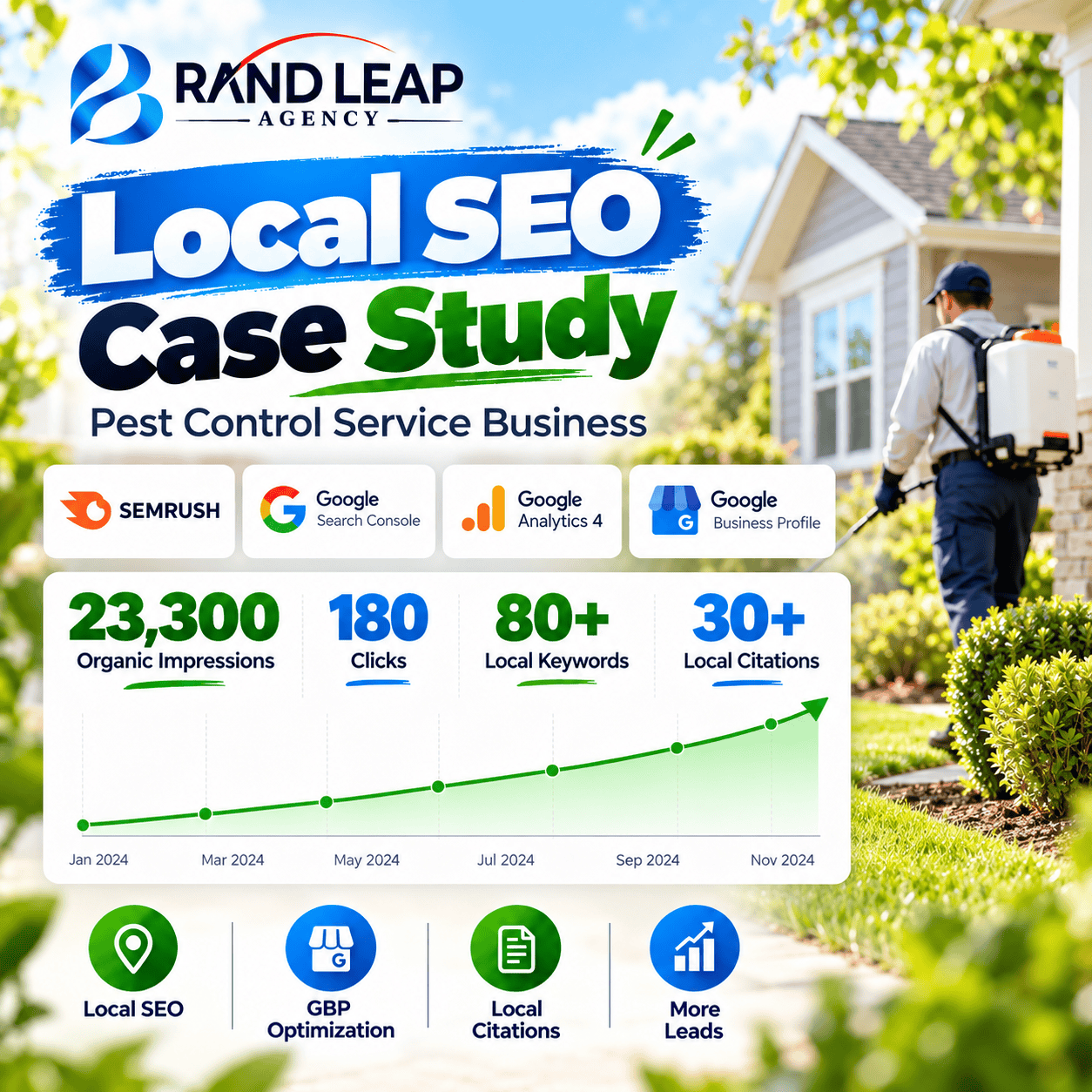
Google Business Profile optimization and local citation building
Your Google Business Profile is the single most important asset in local search. A well-managed profile includes the right primary category, a complete service list, consistent photo publishing, regular posts, and active Q&A monitoring. Agencies that treat GBP as a one-time setup and never revisit it are leaving significant ranking potential on the table.
Local citation building runs alongside GBP management and covers your business name, address, and phone number (NAP) across directories like Yelp, Apple Maps, and industry-specific listings. Inconsistent NAP data confuses Google’s local algorithm and suppresses rankings. A proper citation audit identifies duplicate listings, cleans up conflicting data, and builds new directory presence in relevant, high-authority sources. Google Maps SEO visibility depends heavily on this consistency, businesses with clean, well-distributed citations tend to hold map-pack positions more reliably than those without.
On-page local SEO and schema markup
Every service-area business needs location-specific pages optimized with local keywords in the title tags, meta descriptions, headers, and body content. A plumbing company serving five cities should have five distinct service-area pages, not one generic page that mentions all five in a footer. Schema markup adds a structured data layer that tells Google exactly what your business does, where it operates, and when it’s open. Most entry-level packages include schema as a one-time setup; higher-tier packages maintain and expand it as your service areas grow.
Local content and link building
Content is what builds long-term authority in local search. FAQs, neighborhood-specific landing pages, and locally relevant blog posts compound over time, pulling in organic traffic that no amount of directory submissions can replicate. Local link building, community sponsorships, local media mentions, chamber partnerships, signals to Google that your business is genuinely embedded in its market. Agencies that only manage listings and GBP without producing content or earning links are likely to see limited long-term gains. If a proposal doesn’t mention both, ask why.
Realistic timelines and benchmarks to expect
One of the most common reasons businesses fire good agencies too early is a mismatch in expectations. Local SEO is not a paid-ad channel where results appear the same week you turn it on. Understanding how the work unfolds over time protects your investment and your patience.
The two phases most agencies follow
The first one to two months are typically a setup phase. The agency audits and optimizes the GBP, cleans up citation inconsistencies, installs conversion tracking, publishes initial location pages, and handles any technical fixes on the website. This work is foundational and essential, but it rarely produces visible ranking movement on its own.
The growth phase begins around month three, when search engines start processing the cleaner, more consistent signals. Map-pack visibility improves, keyword rankings shift, and qualified call volume begins to climb. Anyone who promises page-one rankings in 30 days is overselling. In low-competition markets, meaningful movement can appear in two to four months. In competitive urban markets or saturated service niches, six to twelve months is a more realistic window for top placements and consistent lead flow.
What results actually look like by industry
Results vary considerably depending on your vertical. Here’s what to expect across four common categories:
Home services (HVAC, plumbing, roofing): Success shows up primarily in call volume. Urgent-intent searches dominate this category, and data from home-service studies suggests a significant share of those searches convert to calls quickly, particularly for plumbing and electrical queries. Track inbound calls above all other metrics.
Restaurants: High GBP engagement and strong Google Maps SEO drive results here. Local-pack click-through rates for restaurants run around 6.4% according to local search click-behavior studies, with success measured in visits and orders rather than form fills.
Healthcare: Google’s local algorithm weighs trust signals heavily in this vertical. Review velocity matters more here than in almost any other category. In many competitive healthcare markets, profiles with fewer than 40 reviews at a 4.5-star average often struggle to rank, making reputation management a core deliverable, not an add-on.
Legal: Click-through rates for legal practices are lower, running closer to 2.8% in local-pack research, but lead value per conversion is significantly higher. Success in this vertical shows up in lead quality, not raw traffic volume.
Pricing for Local SEO Services USA, Tier Breakdown
Pricing varies significantly across providers, and the range is wide enough that two agencies quoting similar services might be $2,000 apart per month. Here’s what each tier actually buys, based on 2026 market data from industry pricing surveys:
The four common pricing tiers
- Basic / Entry, $300 to $900/month: Suited for single-location businesses in low-competition markets. Expect GBP optimization, foundational citation work, and basic reporting.
- Growth / Standard, $900 to $2,500/month: The sweet spot for most U.S. small businesses. This range adds content production, review management, ongoing optimization, and local link work.
- Competitive / Premium, $2,500 to $5,000+/month: Appropriate for businesses in dense urban markets or those managing multiple locations. Strategy is more intensive and reporting is more granular.
- Enterprise / Franchise, $5,000+/month: Designed for large multi-location brands that need custom strategy and dedicated account management across regions.
For most single-location service businesses, a solid retainer lands between $800 and $1,500 per month. That range should include a human strategist, real deliverables each month, and transparent reporting tied to calls and leads, not just keyword positions.
What cheap local SEO actually costs you
Packages under $500 per month almost always rely on automated software with minimal human oversight. Citations get submitted in bulk but never cleaned. Content doesn’t get produced. Link building doesn’t happen. The real cost isn’t the monthly fee. It’s the six to nine months of slow drift before you realize the work isn’t producing anything, and then the additional time it takes a new agency to undo the damage. Buying the cheapest option in a category that depends on expertise is rarely a savings decision.
Why your industry changes what you need from a local SEO provider
Not every business should hire the same type of local SEO agency. The tactics, compliance requirements, and success metrics differ enough across industries that a generalist approach often underperforms a vertical-experienced one.
Home services and healthcare: two different local SEO challenges
Home services businesses need aggressive service-area page optimization, accurate GBP category selection, call-tracking integration, and strong review generation because their leads come from high-urgency searches. A homeowner whose furnace breaks on a January evening isn’t comparing options carefully; they’re calling the first trusted result they see. Agencies serving this vertical should have a clear process for managing service-area coverage, not just a single city page.
Healthcare businesses face a different challenge entirely. Rankings matter, but trust signals, reviews, provider credentials, consistent location data, matter just as much. Agencies working in healthcare also need to understand compliance-sensitive messaging and avoid tactics that create legal or regulatory exposure.
Legal and restaurant businesses: niche expertise worth paying for
Law firms operate in one of the most competitive local search environments in the country. Practice-area differentiation, attorney credibility signals, and lead quality all require an agency that understands how legal clients search and what drives them to convert. A generalist agency is less likely to navigate that nuance effectively than one with documented legal SEO results.
Restaurants and multi-location food brands need a different kind of expertise: GBP management at scale, neighborhood-level targeting, review systems that handle high volume, and menu schema that surfaces correctly in local search results. As the number of locations grows, so does the complexity of the work and the cost of doing it well.
How to evaluate and hire the right local SEO agency in the U.S.
The difference between a good hire and a bad one is usually the quality of the questions you ask before signing. Use the following framework to evaluate any provider seriously.
Questions to ask before you sign anything
Start with deliverables. Ask for a written list of exactly what the agency produces each month: how many citations, how many content pieces, how many GBP posts, and what link-building activity is included.
Then ask about reporting. Do they track calls, form fills, and GBP actions alongside keyword movement, or only rankings? Agencies that report only rankings are usually masking the absence of real lead impact.
Clarify contract terms. Month-to-month arrangements signal confidence in their own work; long-term lock-ins with no performance clauses are a red flag. Finally, ask for case studies specific to your industry or city. Vague references to “past clients” tell you very little about whether they can actually move the needle in your market.
Red flags that signal a bad fit
Guaranteed ranking promises are always a warning sign, no agency controls Google’s algorithm. If a proposal mentions “authority building” but never explains how citations, content, or links work together, the agency is using vague language to cover thin deliverables. Agencies that can’t explain their process in plain language are often outsourcing the work to low-quality vendors running the same automated tools as the $299/month competitors. Walk away from any proposal that omits GBP strategy entirely or leads with rankings instead of leads and revenue.
Why Brandleap Agency works specifically for U.S. service-area businesses
Brandleap Agency is built around the criteria above. We focus exclusively on U.S. service-area businesses, and every campaign includes transparent monthly deliverables, industry-specific strategy, and reporting tied to real business outcomes, calls, leads, and GBP actions. Rather than relying on software-heavy automation to hit citation numbers, we combine foundational local citation building with ongoing content production and managed local SEO services that build durable visibility over time.
If your business serves customers in a specific city or region and you’re not showing up where you should be, that’s a solvable problem. Reach out to Brandleap Agency to talk through your market and see what a realistic campaign looks like for your industry.
The bottom line
Local SEO services USA businesses rely on are only as valuable as the agency behind them. A business owner who understands what’s included in a proper package, what each pricing tier buys, how long results take to materialize, and how industry type shapes strategy will consistently make better hiring decisions than one who selects the lowest price on a Google search. You now have the framework to evaluate deliverables, timelines, pricing, industry-specific requirements, and any agency you’re considering, before you sign anything.
If you’re ready to invest in local SEO services for your U.S. business, start with a clear brief, ask the right questions, and demand transparency on deliverables and reporting. For service-area businesses that want a partner handling both strategy and execution, Brandleap Agency is built for exactly that. Get in touch today to start with a free market assessment.