
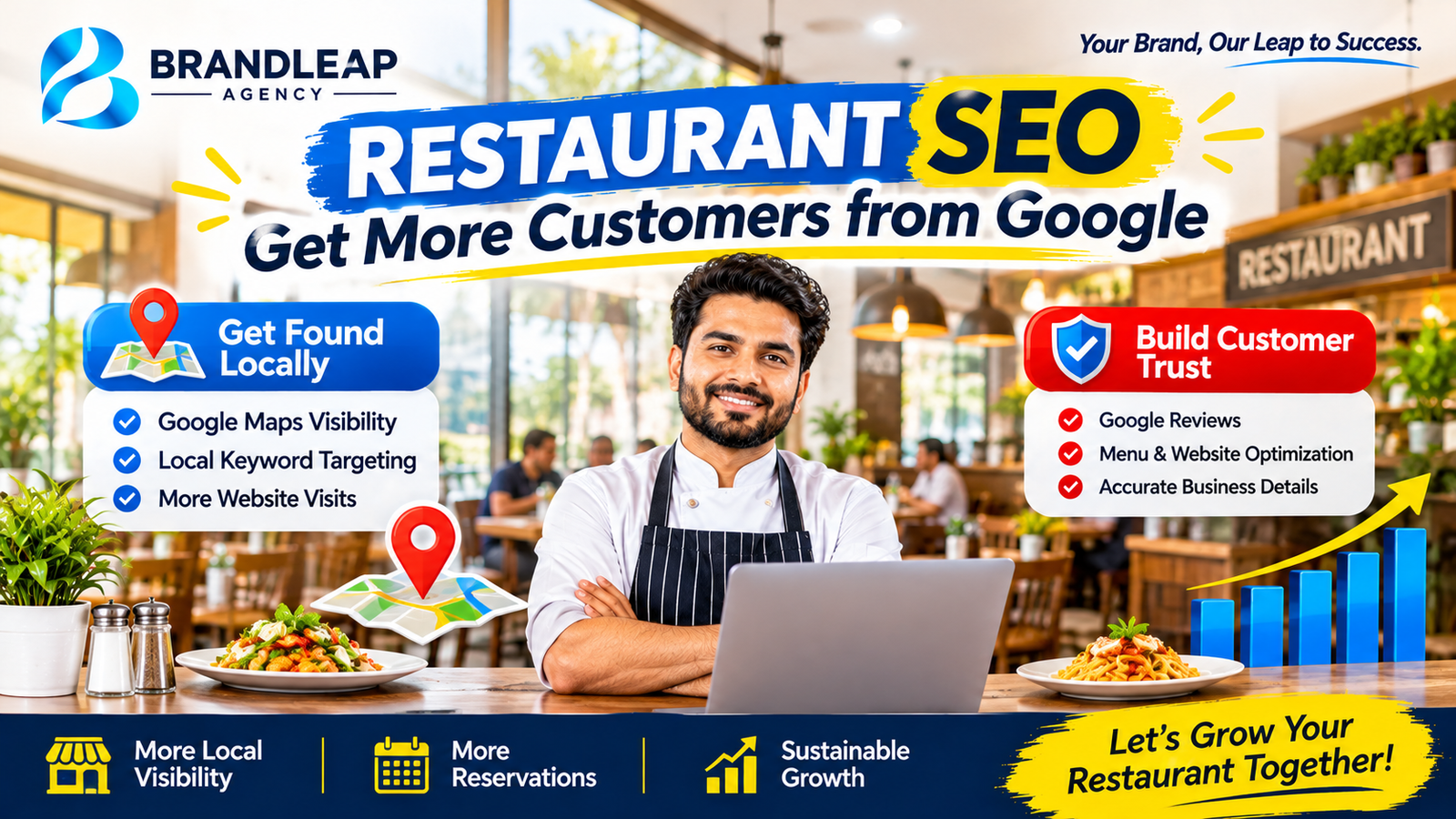
Running a successful restaurant takes more than serving delicious food. You also need customers to discover your restaurant when they search online for places to eat.
Think about how people choose a restaurant today. They search Google for phrases like “best Italian restaurant near me,” “restaurants open now,” or “best family restaurant in [City].” They compare ratings, look at food photos, check menus, and read customer reviews before deciding where to eat.
If your restaurant does not appear in those search results, you could be missing valuable customers. This is why Restaurant SEO matters.
Restaurant SEO helps improve your online visibility, attract local customers, and encourage more people to visit your restaurant or make reservations.
Why Is SEO Important for Restaurants?
Customers increasingly use search engines to discover restaurants, compare dining options, and find nearby places. A strong SEO strategy helps your restaurant appear when potential customers are actively looking for dining experiences.
- More Local Visibility: Help nearby customers discover your restaurant.
- More Website Traffic: Attract people searching for your menu, cuisine, and location.
- Increased Reservations: Make it easier for customers to find booking information.
- Stronger Brand Reputation: Build trust through genuine customer reviews.
- Long-Term Marketing Value: Develop organic visibility that can continue attracting customers.
For independent restaurants and growing restaurant brands, SEO can become an important part of customer acquisition.
1. Optimize Your Google Business Profile
Your Google Business Profile is one of the most important tools for restaurant Local SEO. When someone searches for restaurants nearby, Google may display a map with relevant restaurant listings.
To optimize your profile:
- Use your restaurant’s correct business name.
- Select the most relevant primary business category.
- Add your accurate address and phone number.
- Update opening hours and holiday schedules.
- Upload high-quality food and restaurant photos.
- Add your website and available reservation links.
- Keep menu information updated.
- Respond professionally to customer reviews.
Make sure your information is accurate and consistent. Google explains that local search visibility is influenced primarily by relevance, distance, and prominence. Complete business information helps Google understand how your restaurant matches relevant searches.
2. Target the Right Restaurant Keywords
Keyword research helps you understand what potential customers are searching for. Instead of targeting only broad terms such as “restaurant,” focus on relevant keywords connected to your cuisine, location, and dining experience.
- Best restaurant in [City]
- Italian restaurant near me
- Seafood restaurant in [City]
- Family-friendly restaurant near me
- Best brunch restaurant in [City]
- Romantic dinner restaurant
- Affordable lunch near me
- Vegan restaurant in [City]
You should also consider specific dishes and services. For example, a restaurant specializing in pizza could target searches related to wood-fired pizza, authentic Italian pizza, and pizza delivery in its service area.
Use Google Search Console and keyword research tools to identify opportunities that match your restaurant’s offerings. Your goal should be to reach people who are genuinely interested in dining at your restaurant.
3. Create an SEO-Friendly Restaurant Website
Your website is an important part of your restaurant’s digital presence. Although social media and Google Business Profile can help customers discover your restaurant, your website gives you greater control over your brand information and customer experience.
An effective restaurant website should include:
- An attractive homepage.
- A complete and updated food menu.
- Restaurant location and contact details.
- Opening hours.
- Reservation information.
- Food photography.
- Customer testimonials or reviews.
- Mobile-friendly navigation.
Make your menu available as readable website text instead of relying exclusively on PDF files or images. This makes the menu easier for customers to browse on mobile devices and gives search engines more useful information about your restaurant.
Also optimize page titles, meta descriptions, headings, image alt text, and internal links.
4. Improve Your Google Maps Visibility
For restaurants serving customers at physical locations, Google Maps visibility is especially valuable. Imagine someone searching for “Chinese restaurant near me” while walking through your neighborhood. If your restaurant appears in relevant local results, that person may discover your menu, check your reviews, and decide to visit.
To strengthen your local presence:
- Complete your Google Business Profile.
- Choose accurate business categories.
- Maintain accurate opening hours.
- Add authentic food and interior photographs.
- Keep your menu and contact information updated.
- Build relevant local citations.
- Encourage genuine customer reviews.
- Maintain a useful, location-focused website.
No SEO agency can guarantee a specific Google Maps position. Local rankings depend on several factors, including the searcher’s location and competing businesses.
5. Get More Genuine Customer Reviews
Customer reviews can influence how people choose between restaurants. Before visiting, many customers check ratings and read feedback about food quality, service, cleanliness, and atmosphere.
Here are some practical ideas:
- Ask satisfied customers to share honest feedback.
- Make it easy for customers to find your review link.
- Respond politely to positive and negative reviews.
- Address genuine complaints professionally.
- Use feedback to improve your customer experience.
Never purchase fake reviews or offer incentives in exchange for positive Google reviews. Authentic customer feedback is more valuable for building long-term trust.
6. Use High-Quality Food Photography
People eat with their eyes first, especially when discovering a restaurant online. High-quality photographs can help potential customers understand your menu and dining experience.
Consider uploading authentic photographs of signature dishes, restaurant interiors, your storefront, dining areas, food preparation, and special dining experiences.
Use descriptive image filenames and relevant alt text when uploading images to your website. For example, a filename could be best-italian-pasta-restaurant.jpg, with alt text such as “Fresh Italian pasta served at the restaurant.” Avoid using misleading stock photographs that do not represent your actual restaurant.
7. Publish Restaurant-Related Blog Content
A restaurant blog can help attract customers through searches beyond your main service pages. Instead of publishing random articles, create helpful content related to your cuisine, menu, location, and dining experience.
- Best Italian Dishes to Try on Your First Visit.
- What Makes Authentic Italian Pizza Different?
- Best Foods to Enjoy for a Family Dinner.
- How to Choose the Perfect Restaurant for a Special Occasion.
- Popular Seafood Dishes Every Food Lover Should Try.
- A Guide to Hosting a Memorable Birthday Dinner.
Each article should answer a real question and naturally connect readers with relevant menu items or restaurant services. Focus on original content that reflects your restaurant’s expertise and actual offerings.
8. Implement Restaurant Schema Markup
Structured data helps search engines understand important information about your restaurant. Restaurant schema is a specific type of LocalBusiness structured data that can describe information such as:
- Restaurant name.
- Address.
- Phone number.
- Opening hours.
- Website.
- Menu URL.
- Price range.
- Geographic location.
Implementing accurate Restaurant structured data can help search engines better understand your business information. Use Google’s Rich Results Test and Schema Markup Validator to check your implementation. Adding schema does not guarantee enhanced search appearances or higher rankings.
9. Track Your Restaurant SEO Performance
SEO requires continuous monitoring and improvement. Use Google Search Console and Google Analytics 4 to understand how people discover and interact with your website.
Monitor important metrics such as:
- Organic search clicks.
- Search impressions.
- Keyword performance.
- Organic website traffic.
- Menu page visits.
- Reservation link clicks.
- Contact and phone interactions.
- Website conversion performance.
You should also monitor relevant Google Business Profile interactions, such as calls, website clicks, and direction requests. These insights help you understand whether your SEO strategy is attracting potential customers.
Common Restaurant SEO Mistakes to Avoid
Many restaurant owners overlook important SEO opportunities. Avoid these common mistakes:
- Leaving Google Business Profile incomplete.
- Using outdated menus and opening hours.
- Ignoring mobile website performance.
- Publishing duplicate or low-quality blog content.
- Not responding to customer reviews.
- Uploading unoptimized food photographs.
- Ignoring location-specific keywords.
- Neglecting technical SEO issues.
- Failing to track customer enquiries and reservations.
A successful strategy requires consistency across your website, Google Business Profile, and overall online presence.
Final Thoughts: Grow Your Restaurant With SEO
Your restaurant deserves to be discovered by people searching for great food and dining experiences in your area. With the right Restaurant SEO strategy, you can improve your Google visibility, attract relevant local traffic, build customer trust, and create more opportunities for reservations and visits.
Start with your Google Business Profile, optimize your website, target relevant local keywords, publish useful content, and maintain a strong review management strategy. SEO takes time and ongoing effort, but it can become a valuable long-term marketing channel for your restaurant.
Ready to Attract More Customers to Your Restaurant?
Brandleap Agency helps businesses strengthen their online presence through SEO, Local SEO, website optimization, and digital marketing strategies.
Visit Brandleap Agency to discover how we can help your business grow online.