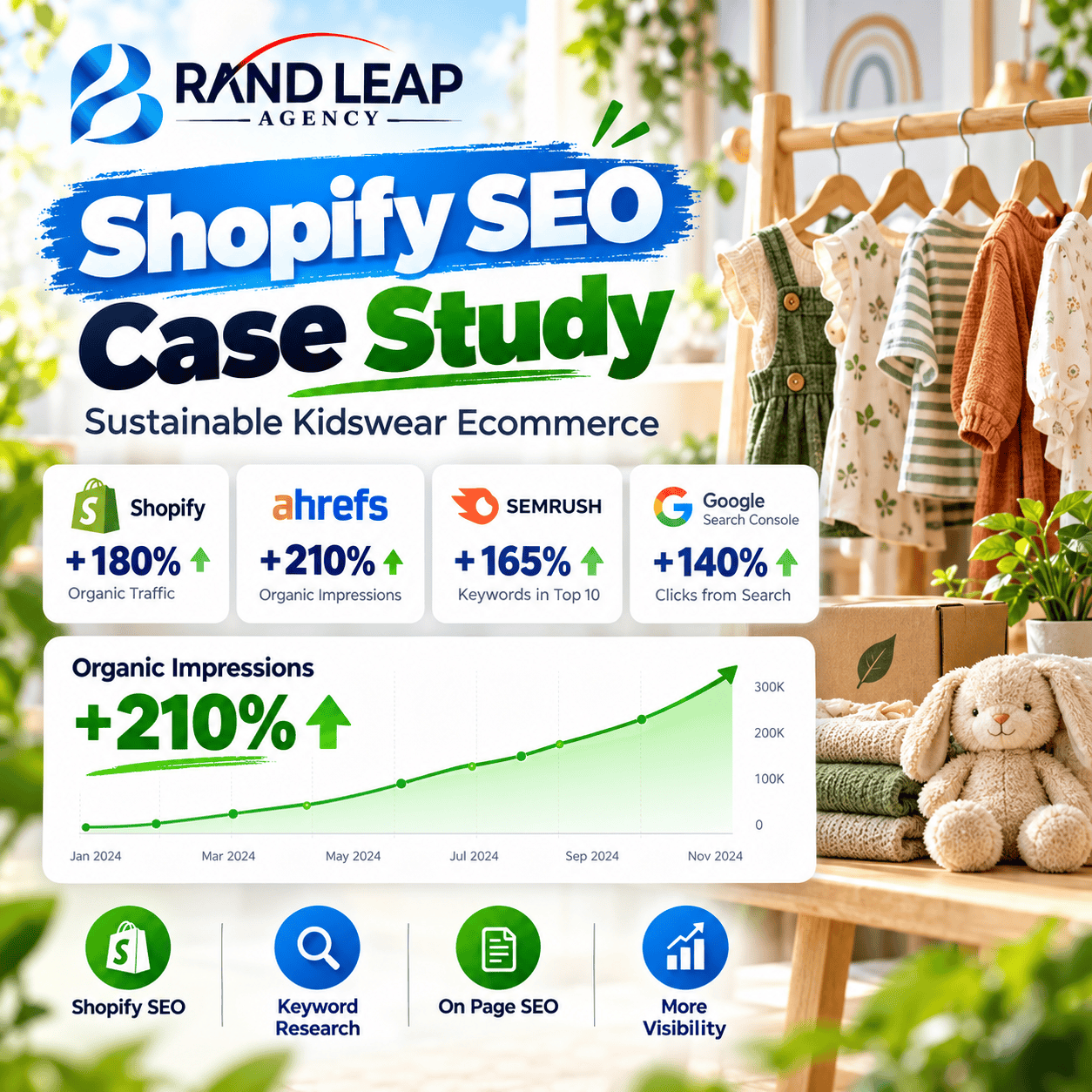
Brandleaf Agency worked with a Shopify store in Belgium that sells kidswear and sustainable products. The goal was simple: help more parents find the store on Google. In 3 months, organic impressions grew by 210%. This Shopify SEO case study shows what we did and why it worked.
Quick Results
| Detail | Info |
|---|---|
| Industry | E-commerce, kidswear, sustainable products |
| Platform | Shopify |
| Market | Belgium |
| Timeframe | 3 months |
| Main result | +210% organic impressions |
About the Client
The client runs an online store in Belgium. It sells kidswear and sustainable products for families. Parents who shop in this space care about quality, safe materials, and eco-friendly choices. Many of them search on Google before they buy.
The store had good products. The next step was making sure the right shoppers could find them.
The Challenge
Kidswear is a busy niche. Large brands and marketplaces already show up for most common searches. A small store cannot win by copying them. It has to be clear about what it sells and who it sells to.
The store needed to:
- Show up for searches that real parents make
- Give Google clear signals on every product and category page
- Fix technical issues that could hold back visibility
Our Goals
- Grow organic impressions in Google Search
- Improve keyword targeting across key pages
- Make product and category pages easier to find and understand
- Build a stronger technical base for future growth
What We Did
1. Keyword Research and Mapping
We started with research in Ahrefs and Semrush. We looked for words parents use when they shop for kids’ clothing and sustainable items. Then we matched each keyword to the right page. One page, one main topic. This stops pages from competing with each other.
2. Product Page Optimization
Product pages are where sales happen, so they got close attention. We improved:
- Page titles and meta descriptions
- Headings and product copy
- Keyword use in a natural way
- Image names and alt text
The aim was to help both Google and shoppers understand each product fast.
3. Category Page Optimization
Category pages often rank for broader searches, so they can bring a lot of traffic. We rewrote titles and headings and added helpful text that explains what each category offers. We kept the copy short and easy to read.
4. Technical SEO Improvements
We used Google Search Console to check how Google saw the site. Then we worked on technical fixes to make the store easier to crawl and index. Clean structure matters on Shopify, where collections and products can create many similar URLs.
Tools Used
| Tool | How we used it |
|---|---|
| Ahrefs | Keyword research and competitor checks |
| Semrush | Keyword tracking and site checks |
| Google Search Console | Impressions, queries, and indexing data |
The Results
After 3 months, organic impressions were up 210%, measured in Google Search Console. More impressions mean the store is showing up in more searches. That is the first step toward more clicks and more sales.
| Metric | Result |
|---|---|
| Organic impressions | +210% |
| Timeframe | 3 months |
Why It Worked
- Clear keyword targets. Each page had one job.
- Better page signals. Titles, headings, and copy matched what parents search for.
- A clean technical base. Google could crawl the store with fewer problems.
- Work on the pages that matter. Product and category pages came first.
Key Takeaways
Small stores can grow in a crowded niche. You do not need hundreds of new pages. You need the right keywords on the right pages, plus a site that Google can read well.
Want similar results for your Shopify store? Brandleaf Agency can help.