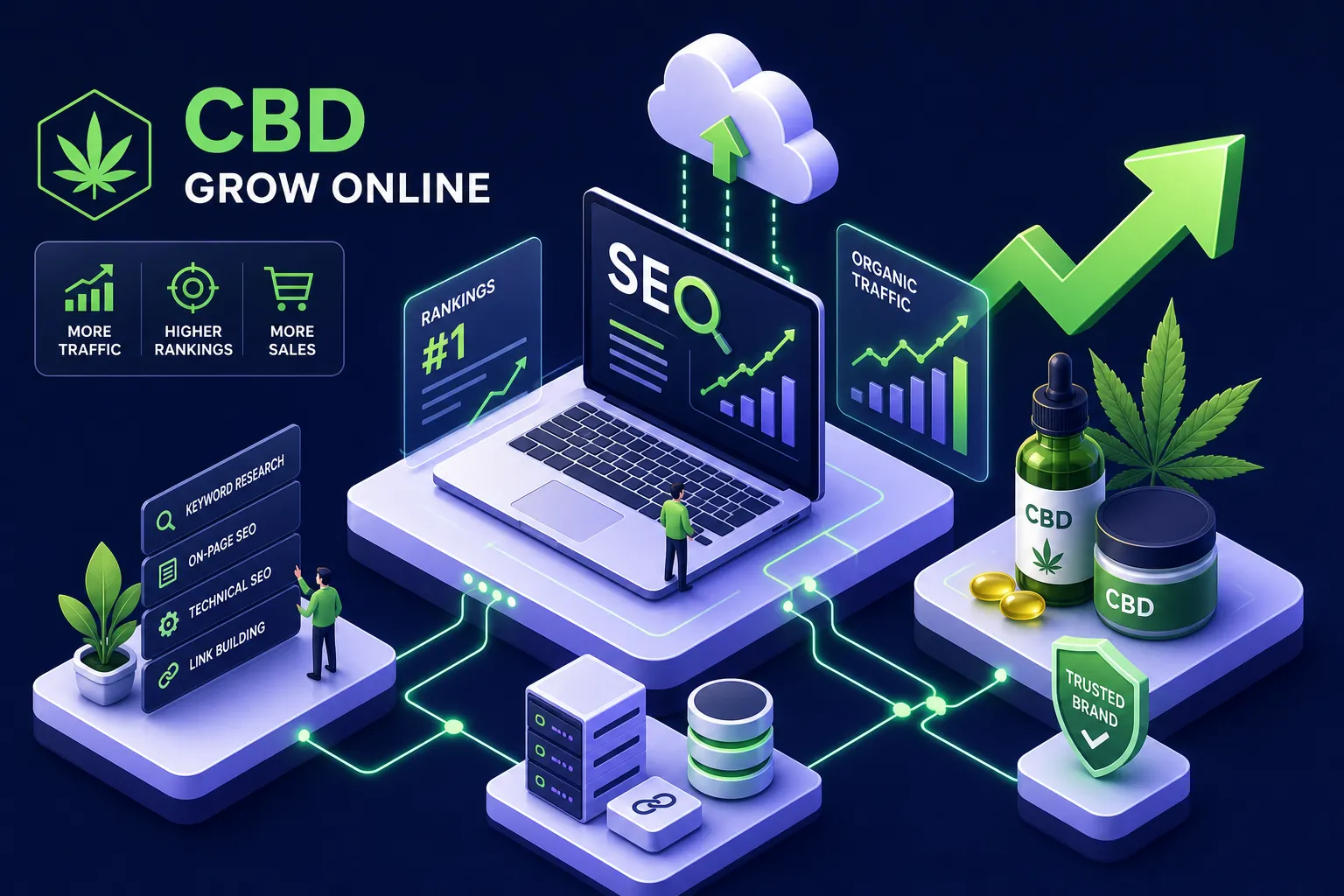
CBD brands face a marketing constraint almost no other e-commerce category deals with: the two most powerful paid acquisition channels, Google Ads and Meta, are either fully blocked or so restricted they’re functionally unavailable for most product types. That’s not a temporary policy gap. It’s a structural reality that forces organic search to carry the entire customer acquisition load. For a CBD brand, hiring a qualified CBD SEO agency isn’t a nice-to-have, it’s the strategic decision that determines whether you can grow at all.
At Brandleap Agency, we’ve built organic growth strategies for businesses operating in complex, compliance-heavy environments where generic SEO playbooks cause more damage than results. CBD and cannabis brands represent one of the most demanding versions of that challenge: restricted advertising, YMYL content standards, health claim regulations, and technical requirements around indexation that most agencies simply haven’t encountered. This guide walks you through what separates a genuine cannabis SEO agency from one that’s repurposed a generic service page, and how to evaluate, hire, and hold accountable the right partner for your brand.
Why paid ads won’t save a CBD brand
Google Ads: effectively closed for most CBD products
Google’s current policy allows a narrow exception for topical, hemp-derived CBD products containing 0.3% THC or less, but only after LegitScript certification and prior written authorization from Google, and only in California, Colorado, and Puerto Rico. That’s the entire allowance. If your product line includes ingestibles, tinctures, gummies, pet supplements, or anything with a higher THC threshold, Google Ads is not a viable channel. This isn’t a workaround situation where a clever campaign structure opens the door; the structural limitation applies regardless of how the ad is framed.
For brands that do qualify under the topical exception, the geographic restriction alone limits reach so significantly that paid search rarely functions as a scalable acquisition engine. Most CBD brands are building their entire business on organic, not because they chose to, but because no real alternative exists on the paid side.
Social platforms and marketplaces follow the same pattern
Meta allows only certified, non-ingestible hemp product ads with prior written authorization and no targeting of users under 18. TikTok has limited or effectively prohibited CBD promotion, particularly for ingestibles and smokeable products, with no standard self-serve path available. Amazon bans CBD sales outright, which closes the largest marketplace channel entirely. The pattern is consistent across every major platform: paid and marketplace distribution are blocked or restricted to a degree that makes them impractical for most CBD operators.
Brands that try to work around these restrictions typically face account bans, wasted budget, and compliance exposure. The risk-to-reward ratio makes circumvention a losing strategy, not a path to sustainable growth.
Organic search becomes the only scalable acquisition engine
When paid channels are off the table, the quality of your organic search strategy determines your growth ceiling. A CBD brand with a weak or non-compliant content approach doesn’t have a fallback option. That’s the core reason hiring a specialist in cannabis digital marketing and CBD marketing matters more here than in almost any other vertical. If your strategy is wrong and you can’t supplement with paid traffic while you course-correct, the stakes of that mistake are dramatically higher.
Why CBD SEO is a specialist discipline
How a CBD SEO agency handles YMYL compliance
Google classifies CBD as a health-adjacent, YMYL topic, which means the algorithm holds CBD content to a higher standard of expertise, authoritativeness, and trustworthiness than it applies to most commercial categories. Thin product descriptions, vague educational content, and unsupported claims don’t just underperform; they actively suppress rankings and create compliance exposure at the same time. A generalist SEO agency that hasn’t worked in YMYL territory will optimize for the wrong signals and produce content that creates more problems than it solves.
E-E-A-T signals carry real weight in this space: transparent author credentials, references to third-party Certificates of Analysis, clear sourcing information, and accurate disclaimers aren’t optional enhancements. They’re the foundation of ranking stability for any CBD content that touches health-adjacent topics.
Health claims, disclaimers, and compliance-aware copy
FDA and FTC guidelines prohibit CBD brands from claiming their products treat, cure, or prevent any medical condition. Even indirect phrasing around anxiety, pain, sleep, or endocannabinoid system effects can trigger regulatory scrutiny. A qualified CBD SEO services provider knows how to write educational content that is accurate, ranking-ready, and compliant without crossing into health claim territory. This is one of the clearest differentiators between a hemp SEO company that genuinely understands the space and one that adapted a generic wellness template.
Standard product page disclaimers, such as “These statements have not been evaluated by the Food and Drug Administration. This product is not intended to diagnose, treat, cure, or prevent any disease,” are non-negotiable. Educational content pages require their own version: “This content is for informational purposes only and does not constitute medical advice.” The placement and wording of these disclaimers affects both compliance and how Google interprets the intent of your pages.
Indexation, age-gating, and crawlability
Some jurisdictions require age gates on CBD content or restrict visibility by user location. These technical decisions directly affect how Googlebot crawls and indexes your site. An improperly configured age gate can result in your pages not being indexed at all, which is an SEO failure with no visible warning sign until you notice rankings that never materialized. A specialist understands how to balance compliance requirements with crawlability and ensures that the technical implementation of these requirements doesn’t quietly undermine the entire organic strategy.
Organic search strategies that drive real growth for CBD brands
Content clusters and topical authority
The highest-return long-term organic strategy for CBD brands is content clustering: a pillar page covering a broad topic supported by a network of intent-specific supporting articles. A pillar on “What Is CBD?” earns more authority when it’s surrounded by articles covering dosage basics, spectrum types, COA interpretation, product comparisons, and safety guidance. Product pages alone will never build the topical authority that educational clusters generate over time. This architecture is the core investment for both e-commerce and DTC brands trying to compete in organic search, and any experienced CBD SEO agency should be able to map this out as part of an initial engagement.
Local SEO for retail and dispensary locations
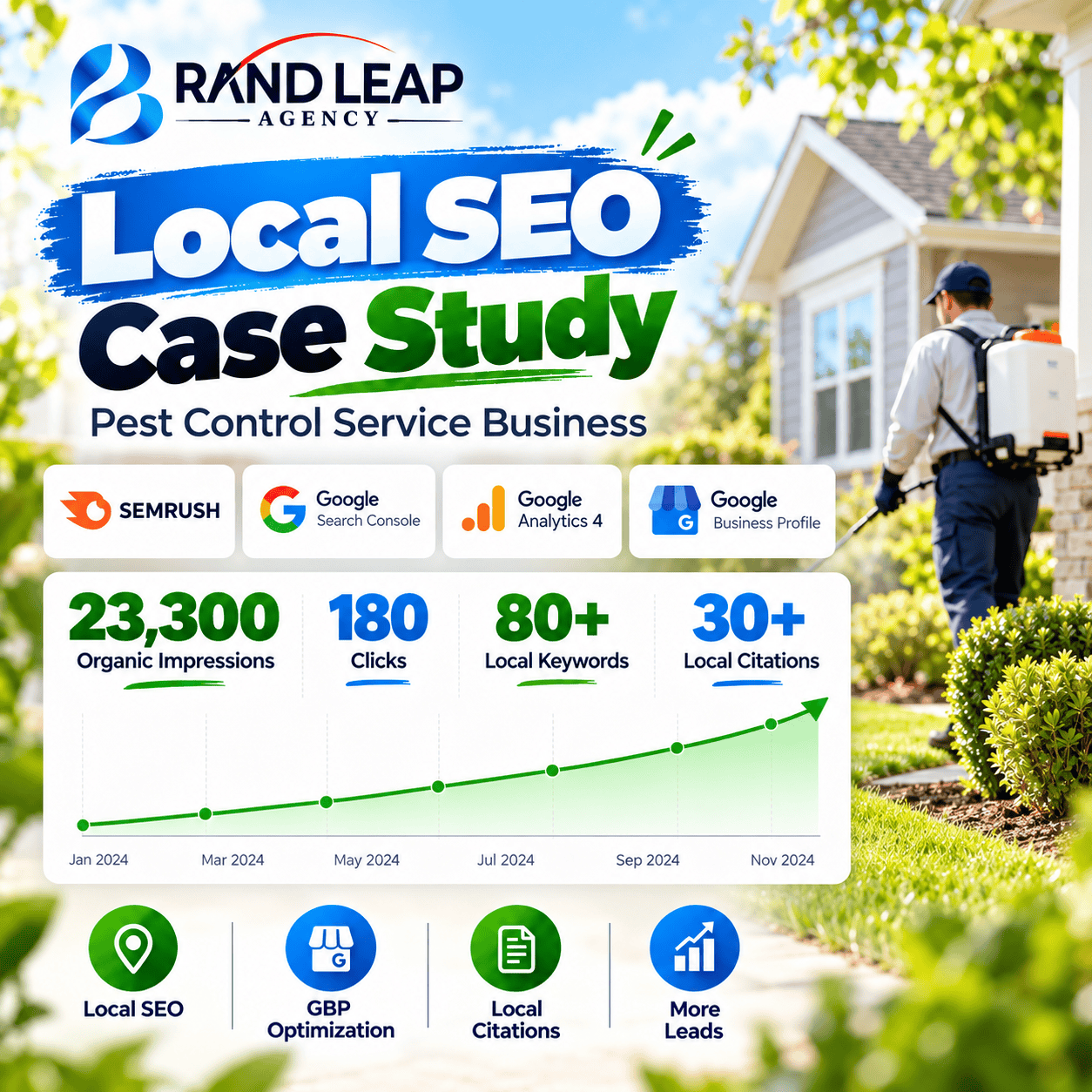
For CBD brands with physical retail locations, local SEO typically delivers the fastest qualified traffic. Fully optimized Google Business Profiles, consistent NAP data across directories, location-specific landing pages, and a disciplined review acquisition strategy directly influence local pack visibility. Dispensary SEO has its own nuances, including accurate category selection, menu integration, and city-level content strategy that national generalist agencies rarely execute correctly on the first attempt. If your brand has a retail footprint, local SEO deserves its own dedicated scope within any agency engagement.
Schema markup that helps Google understand CBD pages
Product schema, FAQ schema, Organization schema, and LocalBusiness markup help Google understand CBD pages more accurately and improve how those results display in search. Structured data is particularly valuable in a niche where content restrictions limit how directly you can communicate product benefits in copy. Combined with strong E-E-A-T signals, schema implementation is part of what separates a technically mature cannabis digital marketing strategy from a content-only approach that leaves technical authority on the table.
How to vet a CBD SEO agency before signing anything
Case studies and proof you should demand
Any credible CBD SEO company should show you named or clearly attributed case studies with specific traffic and conversion metrics, not just testimonials. Ask for organic traffic growth percentages, before-and-after monthly sessions, conversion rate improvements, and revenue outcomes where available. Verified results exist in the market: documented traffic increases of 300 to 550 percent over 12-month periods with corresponding revenue data are achievable with the right strategy. If an agency can’t show you verifiable results in a CBD or cannabis context specifically, that’s a meaningful gap in their claimed expertise.
Choosing a CBD SEO agency: questions to ask before you commit
Use this question set as a structured filter when evaluating any agency you’re seriously considering. What is your experience with YMYL content in CBD or adjacent health categories? How do you handle health claim compliance in content briefs and editorial review? Can you show me a CBD client’s content cluster map and how it contributed to keyword rankings? What does your reporting stack look like, and how do you separate branded from non-branded organic growth? The quality and specificity of the answers will tell you whether you’re speaking with a true cannabis SEO agency or a generalist with a repurposed CBD services page.
7 red flags that mean walk away
Watch for these specific warning signs when evaluating any agency claiming CBD or hemp expertise:
- Guaranteed rankings on specific timelines: credible SEO is strategy-dependent and time-variable; guarantees are a sign of poor process or outright dishonesty.
- No demonstrable knowledge of FDA or FTC content restrictions: if they can’t explain health claim compliance, they’ll create regulatory exposure in your content.
- Pricing under $1,000 per month for a full-service retainer: at that price point, the work volume required for real results simply can’t be delivered.
- PBN links or mass directory submissions as a core link strategy: low-quality link acquisition creates more ranking risk than it resolves.
- No compliance review process for published content: content that goes live without a compliance step is a liability in a regulated niche.
- No distinction between branded and non-branded KPIs: conflating the two masks whether organic growth is real or just brand search capturing existing demand.
- Inability to explain how age-gating affects indexation: this is a technical baseline for CBD SEO; if they can’t explain it, they haven’t worked in the space.
A strong CBD SEO partner builds its process around these compliance fundamentals at the start of every engagement. Agencies with that foundation, like Brandleap, approach niche industries differently because restricted ad environments demand a higher standard of execution, and the vetting process should reflect that.
Pricing, KPIs, and what a real 90-day scope looks like
What CBD SEO actually costs in 2026
For a small single-location CBD retail brand, typical monthly retainers run $1,500 to $4,000. Growing e-commerce brands or multi-state operators generally fall in the $3,000 to $7,500 range, while large-scale or highly competitive programs can exceed $10,000 per month. Hourly consulting rates for specialized cannabis SEO agency work run $75 to $300 per hour. The most practical benchmark for a small-to-mid-size CBD business entering a retainer is $2,500 to $5,000 per month, depending on scope, competitive density, and whether local SEO is included alongside content strategy.
If an agency is quoting substantially below $1,500 per month for a full-service engagement, the economics don’t support the work volume that produces real organic results. Price is not the only vetting criterion, but it is a signal of scope and resourcing.
KPIs and reporting cadence to require in your contract
Your contract should require a tiered reporting structure. Each tier serves a different planning horizon:
- Weekly: an operational snapshot covering rankings movement, traffic anomalies, crawl or indexation issues, and shipped deliverables.
- Monthly: a full performance report covering organic conversions, conversion rate, organic traffic segmented by device and geography, keyword rankings, CTR, backlink growth, and Core Web Vitals health.
- Quarterly: a strategic business review focused on organic revenue attribution, branded versus non-branded traffic growth, and the next quarter’s content and link roadmap.
The KPIs that matter most are organic conversions, organic revenue or qualified leads, and non-branded keyword visibility growth. Vanity metrics like total impressions without conversion context are red flags in themselves, and any agency that leads reporting with impression counts is measuring activity, not business outcomes.
What the first 90 days should look like
A competent CBD SEO partner will structure the first 90 days around three distinct phases. The first 30 days cover a technical and compliance audit: crawlability, indexation, page speed, schema gaps, age-gate configuration, and any compliance risk in existing content. Days 30 through 60 focus on content architecture and cluster mapping: establishing pillar topics, intent mapping across the funnel, and developing content briefs with compliance review built into the workflow. Days 60 through 90 move into execution: publishing the first content cluster with schema implementation, internal linking architecture, and local SEO groundwork where applicable.
If an agency wants to skip directly to publishing content without a technical audit or compliance review, that sequencing problem will create more remediation work later. The technical and compliance foundation isn’t a preliminary formality; it’s the work that determines whether the content you publish can actually rank.
The bottom line on hiring a specialist
CBD brands face a constraint that most other industries don’t: organic search isn’t a channel choice, it’s the only viable scaled acquisition path available. That makes the compliance fluency and content quality of your SEO partner a direct business risk, not just a marketing preference. The brands that grow in organic search do it by investing in agencies that understand YMYL content standards, build topical authority through structured content clusters, and treat trust architecture as a core deliverable rather than an afterthought.
When you evaluate your shortlist, come prepared with the questions outlined above, demand case studies with specific traffic and revenue metrics, and pressure-test each agency’s understanding of health claim compliance and technical indexation requirements. The right CBD SEO agency will show its work across all three, and the gap between a specialist and a generalist in this space is measurable in rankings, compliance exposure, and ultimately revenue.
At Brandleap Agency, our content-first SEO methodology is built for exactly this environment: niche industries where the margin for error is low, compliance requirements shape every content decision, and generic tactics fail. If your CBD brand needs an organic growth strategy built on technical depth, compliance-aware content, and clear business KPIs, explore our approach at Brandleap or get in touch to talk through your specific situation.