Organic search in 2026 is a different game than it was five years ago. Google’s algorithm has grown significantly more sophisticated, AI tools are pulling answers directly from source content, and businesses dominating search results today are largely those that committed to serious SEO investment well ahead of their competitors. Most agencies are still running the same recycled playbook from 2019 and wondering why results don’t move. That’s the backdrop against which Brandleap SEO takes a distinctly modern approach, one built around what actually works in today’s search environment. This article is a full breakdown of what Brandleap actually does: the specific services on offer, real client outcomes you can evaluate, a realistic look at Brandleap pricing, and a clear picture of whether this is the right agency for your business.
This isn’t a promotional page. It’s a decision-making resource. By the end, you’ll have everything you need to decide whether to request a proposal, ask sharper questions before you do, or look elsewhere with a better sense of what to compare.
What Brandleap’s SEO services actually cover
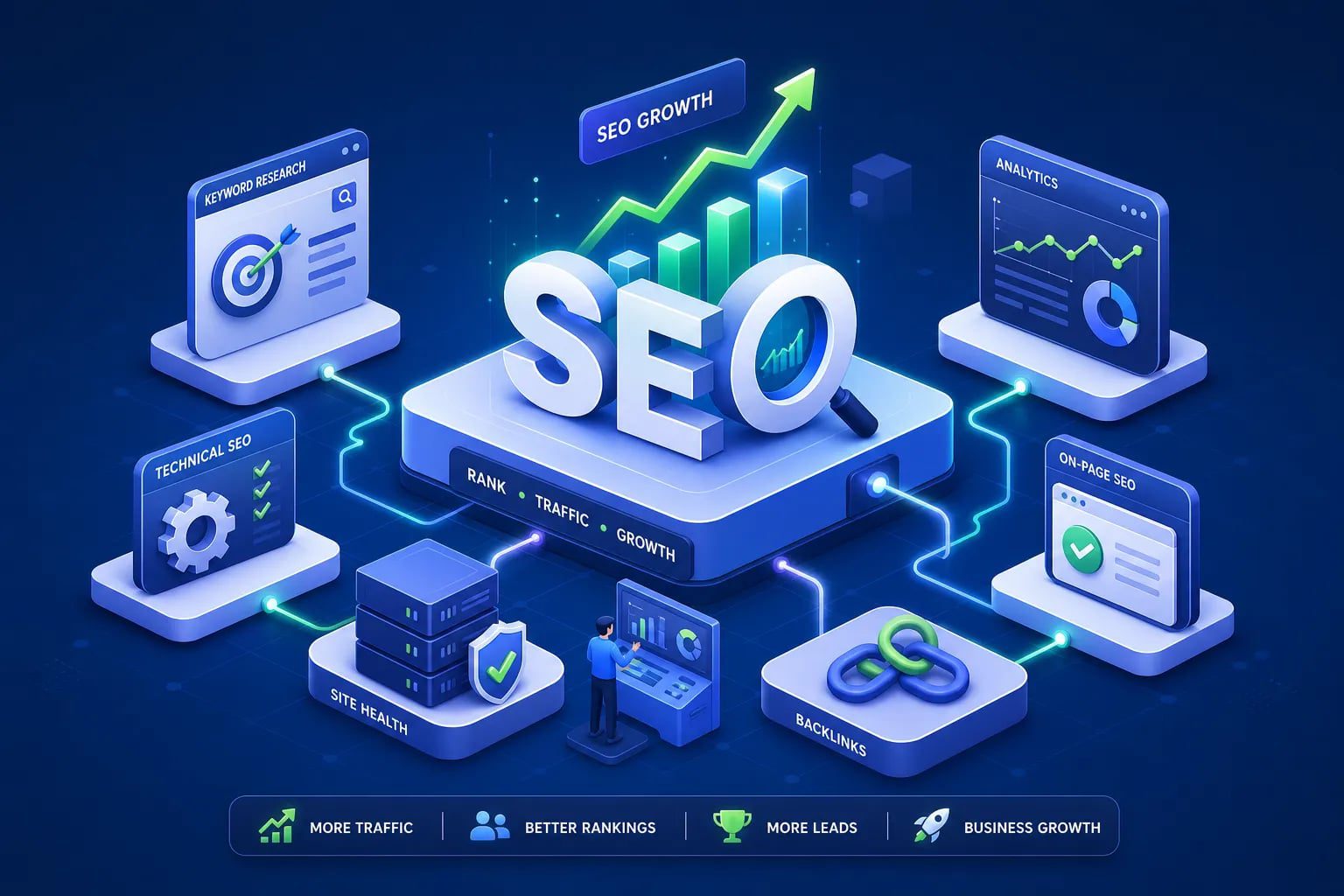
Brandleap is not a generalist agency that applies the same checklist to every client regardless of industry or competitive landscape. Brandleap SEO services are organized around three interconnected disciplines, on-page, off-page, and technical, with specialists working at depth in each area. This structure matters because when a technical SEO specialist is managing your site architecture and a separate content strategist is building your content clusters, both are operating at expert depth rather than one generalist trying to do everything at average quality.
The on-page and content layer
Brandleap’s on-page work begins with search intent mapping: understanding what a user actually wants when they type a query, not just what keywords appear in the search bar. From there, the team builds content cluster architecture around pillar pages that anchor topical authority, supported by tightly interlinked cluster content. Title tags, meta descriptions, header structures, and internal linking are all optimized with ranking momentum in mind.
What separates this from most agencies is that content writing and SEO strategy are integrated, not siloed. According to Brandleap’s described workflow, the strategist and writer work from the same brief, meaning content that gets published is built to rank from day one rather than retrofitted with keywords after the fact. This integration is what drives initial ranking momentum and keeps it compounding over time.
Off-page authority building and digital PR
Brandleap’s off-page approach is built on outreach-based backlink acquisition, digital PR campaigns, and citation building for local businesses. The focus is firmly on quality over volume. A handful of high-authority, industry-relevant placements is generally more valuable for a site’s ranking trajectory in 2026 than hundreds of links from generic directories, a distinction well-supported by how Google’s quality guidance has evolved.
Brandleap advertises outreach-based link building, digital PR, and local citation management as core off-page tactics. For local businesses operating in Egypt or elsewhere, citation building across authoritative directories is handled systematically to strengthen local pack visibility and Google Business Profile authority. The off-page strategy is not an afterthought; it’s a core pillar of every campaign.
Technical SEO architecture
Before any content gets published or any link gets built, Brandleap runs a comprehensive website and SEO audit to establish the baseline. The audit covers crawlability, indexation status, Core Web Vitals, site speed, schema markup, structured data, redirect chains, and canonical tag accuracy. Fixing what’s broken before building on top of it is the correct sequence, and it’s where many of the fastest early wins tend to come from.
The technical layer also includes ongoing monitoring of LCP, INP, and CLS scores against Google’s current thresholds, along with structured data that supports rich results and entity clarity. For sites with crawlability or indexation issues, resolving those problems can produce meaningful ranking movement, often within 30 to 90 days depending on the severity and the site’s existing structure.
Beyond standard SEO: Brandleap’s next-gen optimization disciplines
Ranking on Google is necessary in 2026, but it’s no longer sufficient on its own. Search is also happening inside ChatGPT, Google AI Overviews, Perplexity, and other AI answer engines that don’t serve a traditional list of results at all. Brandleap digital marketing services extend into dedicated offerings for each of these surfaces, which is the clearest line of difference between this agency and conventional shops still optimizing exclusively for the standard SERP.
AEO: getting into AI-generated answer boxes
Answer Engine Optimization is the practice of structuring content so that AI systems and search platforms can extract a direct, trustworthy answer from it. Where traditional SEO asks “can this page rank?” AEO asks “can this page be quoted, summarized, or cited as the answer?” Brandleap addresses this through FAQ schema implementation, featured snippet targeting, question-based heading structures, and concise, extractable paragraph formatting that AI engines are built to favor.
The authority signals that trigger AI citations are not separate from good SEO; they’re an extension of it. Brandleap builds both simultaneously, so clients benefit from traditional search traffic and growing AI answer visibility from the same content investment. For commercial and informational queries in 2026, this dual-channel visibility is increasingly what separates market leaders from everyone else.
GEO and LLM citation: showing up where AI answers come from
Generative Engine Optimization takes the AEO principle further. Brandleap’s goal is to have client content actively cited by AI platforms like ChatGPT, Google AI Overviews, and Perplexity when they synthesize answers for user queries. The tactics involved include high-authority source building, entity optimization so AI systems understand who the brand is and what it’s about, consistent brand signals across the web, and content depth that signals genuine expertise on a topic.
This is a forward-looking investment. AI-driven search is growing in volume, and the brands building GEO-optimized content now are the ones accumulating citation authority ahead of the curve. Brandleap frames this as building visibility for tomorrow’s search, not just today’s, a reasonable position given where search behavior appears to be heading.
Client results: what Brandleap SEO delivers in practice
Claims are easy. Data is what matters when you’re evaluating an agency. Brandleap has shared organic search outcome data from actual campaigns, published in social posts and campaign snapshots, and the numbers are worth examining critically rather than just accepting at face value.
The traffic and visibility numbers
One published three-month SEO roadmap result shows a client moving from 25 total organic clicks to 15.4K clicks, and from 1.1K impressions to 620K impressions over that period. Those are strong numbers. That context is worth unpacking: this kind of growth typically reflects a combination of consistent content publishing, technical fixes that unlocked previously suppressed pages, and targeting lower-competition long-tail keywords where early wins arrive faster. Rolling 28-day data from the same campaign shows 1.82K clicks and 326K impressions, with clicks up 13% and impressions up 21% period-over-period.
A 90-day window with results like these usually involves a site where meaningful technical issues were resolved early, paired with consistent content output targeting search intent precisely. For small businesses in competitive niches, this is the realistic upside of a well-executed campaign where the foundation is right from the start.
Brandleap reviews and ratings across platforms
Brandleap holds a 4.8 out of 5 rating on both GetApp and Capterra, each based on six client reviews (ratings checked as of 2026; figures may update as new reviews are added). The public review footprint is still building, but the consistency across both platforms is a meaningful signal. Six reviews averaging 4.8 is harder to achieve than it might appear, because early reviews tend to set the tone for everything that follows.
Brandleap also maintains a Clutch profile, which is worth reviewing as part of any due-diligence process. The overall picture is one of a growing review presence rather than a deep archive, but what exists points toward high client satisfaction. For a business evaluating whether to engage, that’s a solid signal worth pairing with your own discovery conversation.
Brandleap SEO pricing: what to expect
Pricing is always the first question and the hardest to answer without a scope conversation. Brandleap builds custom packages rather than selling off-the-shelf tiers, which means your investment tracks actual campaign requirements rather than an arbitrary bundle that may include services you don’t need and exclude ones you do.
How SEO investment is typically structured
To frame expectations based on published market data for 2026: local SEO for small businesses typically runs between $1,500 and $4,000 per month. SMB and e-commerce campaigns with broader scope, including content production, off-page link building, and ongoing technical maintenance, generally fall between $4,000 and $10,000 per month depending on competition level, geography, and the number of pages or product categories in play. For businesses in Egypt, pricing conversations may involve adjusted scope and currency considerations, so direct discussion with Brandleap’s team is the clearest way to get an accurate picture.
Brandleap’s process of starting every engagement with a website and SEO audit is particularly valuable here because it grounds the proposal in actual findings. You’re not paying for a quote built on guesswork; you’re getting a scope built on a real picture of where the site stands today and what it will take to move it.
What drives cost up or down
The main variables are keyword competitiveness, the volume of content production required, whether off-page link building is in scope, and whether AEO and GEO optimization layers are included. Campaigns that also incorporate Google Ads or Meta Ads management alongside SEO will naturally scope higher, but they benefit from a unified strategy where paid and organic reinforce each other rather than competing for budget with no coordination.
A few things worth clarifying before you reach out: what success looks like in 12 months, what the primary goal is, leads, revenue, or authority, and what budget range is realistic. The clearer you are going in, the more actionable the proposal you’ll receive.
Who gets the most value from Brandleap
Not every business is the right fit for every agency, and this section is worth an honest read rather than a scan for confirmation that you qualify.
Small businesses, local service providers, and e-commerce brands
Local businesses in law, healthcare, real estate, home services, and similar industries, whether based in Egypt or serving other markets, can get strong, measurable ROI from Brandleap local SEO, Google Business Profile optimization, citation building, and targeted content strategy. These are the use cases where the model produces fast, attributable results because the path from better local visibility to phone calls and inquiries is short and clear.
For e-commerce brands, Brandleap’s product page optimization, collection-level SEO architecture, and content cluster work around buyer-intent keywords address the core challenge most online retailers face: reducing dependence on paid traffic while building sustainable organic revenue. The goal is always to make organic search a reliable, growing channel rather than a secondary priority.
B2B companies, SaaS startups, and mid-size marketing teams
B2B and SaaS brands benefit from Brandleap’s pillar page and content cluster methodology, which builds topical authority systematically over time and supports long sales cycles by keeping the brand visible at every stage of the buyer’s research process. Organic inbound from well-executed content SEO compounds in a way that paid advertising doesn’t, which matters when the deal cycle stretches over weeks or months.
In-house marketing teams at mid-size companies use Brandleap as a specialist extension of their existing function. Rather than hiring additional headcount for technical SEO, off-page authority building, or content production, they bring in Brandleap’s specialists to fill those gaps at a fraction of the overhead cost. The agency operates as a genuine partner rather than a vendor, which distinguishes a retained specialist relationship from a transactional arrangement.
How to get started with Brandleap
If you’ve read this far, you’re likely in evaluation mode rather than just browsing. Getting started is straightforward, but being prepared makes the first conversation significantly more productive.
What to prepare before reaching out
Come with your current traffic situation, even if it’s just rough numbers from Google Search Console. Bring your top three business goals from SEO: whether that’s lead volume, e-commerce revenue, local visibility, or organic brand authority. Have a sense of your timeline and an honest read on your budget range. None of these need to be precise, but having them ready means the discovery conversation focuses on strategy rather than gathering basic context.
What the onboarding process looks like
Brandleap begins with a discovery call to understand your business, competitive landscape, and goals. From there, the team runs a full website and SEO audit to baseline the current state: what’s working, what’s broken, and where the highest-leverage opportunities are. That audit feeds directly into a custom strategy and roadmap. Campaign execution starts after the roadmap is agreed on, with technical fixes going first before new content and off-page work layers on top.
That sequence is what drives faster-than-expected movement in the first 60 to 90 days. If you’re ready to see what Brandleap SEO can do for your business, reach out and request a proposal. The first conversation is the clearest way to find out whether the fit is right.