
If your new business is not getting customers, the cause is almost never one big mistake. It is usually a chain of small gaps: people do not find you, do not understand what you offer, do not trust you yet, or contact you and never hear back in time. The good news is that each gap can be found and fixed, often without a large budget.
This guide is written for first-time business owners who have launched a shop, service, clinic, or online store and are waiting for sales that are not arriving. You will learn the nine most common reasons, a simple way to diagnose yours, and a 30-day plan to get your first customers.
Table of Contents
Why your new business is not getting customers
A sale needs four things to happen in order. A person must find you, understand what you offer, trust you enough to act, and then be able to buy or contact you easily. If any step breaks, the whole chain stops. Most new owners focus only on the first step, so they spend money on posts or ads and still wonder why nobody buys.
Use this quick table to match your symptom to a likely cause. Then read the matching section below.
| What you notice | Likely cause | First fix |
|---|---|---|
| Almost no visitors or calls | Low visibility | Set up your Google profile and publish key pages |
| Visitors but no enquiries | Unclear offer or weak website | Rewrite your headline and add a clear action button |
| Enquiries but no sales | Weak trust, slow follow-up, or price mismatch | Reply faster and add proof |
| Sales stop after friends and family | No repeatable channel | Pick two channels and use them every week |
| Spending money with no clear result | No tracking | Set up basic tracking before spending more |
1. Nobody can find you
A new business has no reputation, no reviews, and no search history. That is normal, but it means you must create visibility on purpose. Customers usually search with a need, such as “plumber near me” or “birthday cake delivery”, and they choose from whoever appears.
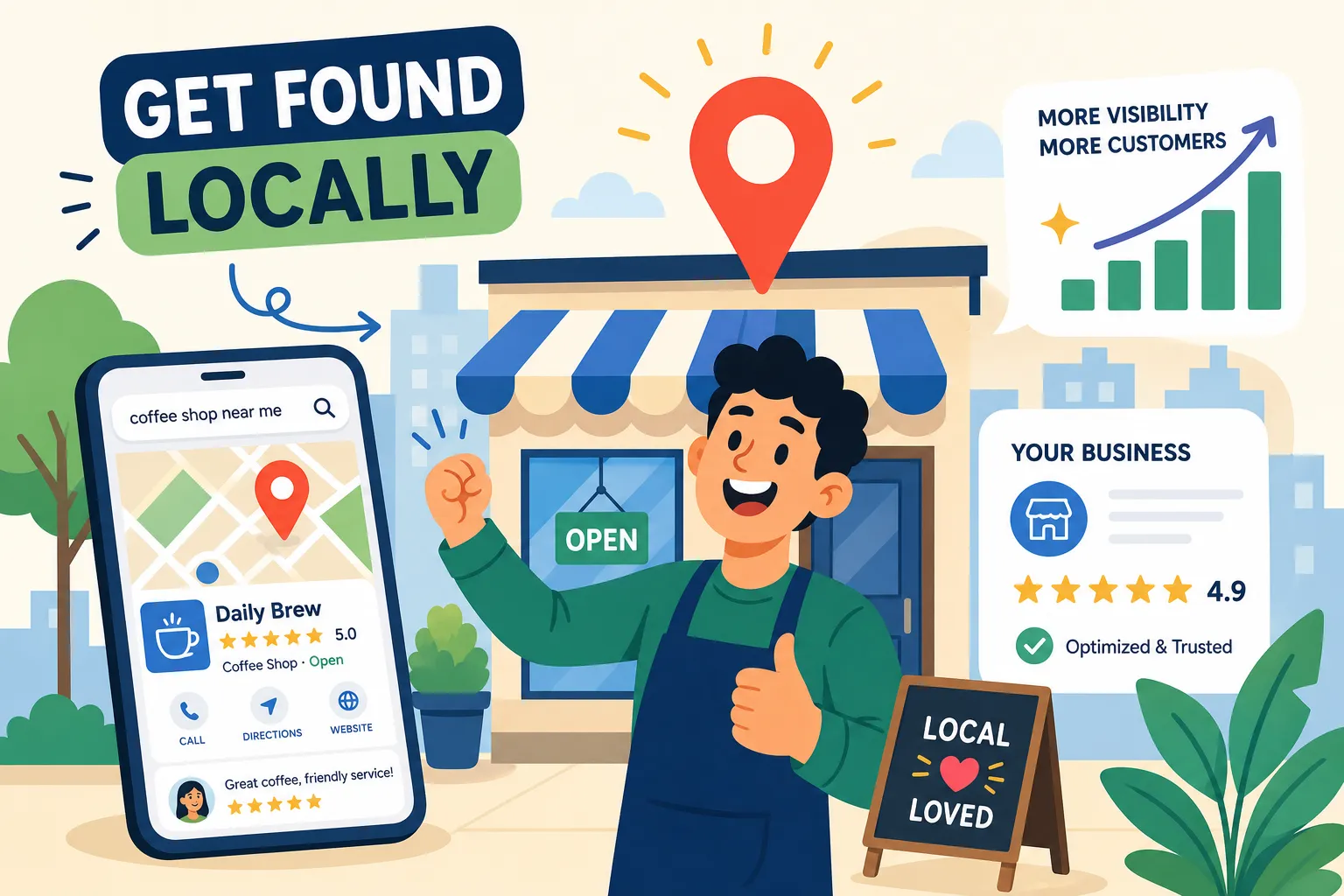
- Claim your Google Business Profile if you serve customers locally. Google explains that local ranking depends on relevance, distance, and prominence. Our Google Business Profile guide shows how to complete it.
- Create a simple page for each service or product, so search engines understand what you sell.
- List your business consistently with the same name, address, and phone number everywhere.
- Tell people you exist: a launch message to your contacts, local groups, and nearby businesses often brings the first few customers.
For long-term growth, SEO helps customers find you without paying for every click. It takes time, so combine it with faster channels while it builds.
2. Your offer is not clear
Try this test: can a stranger understand what you sell, who it is for, and why it is better within five seconds of seeing your homepage or social profile? Many new owners describe themselves with vague phrases like “quality solutions” or “your trusted partner”. Customers cannot act on vague words.
Write one clear sentence in this format: “We help [specific customer] get [specific result] by [what you do].” For example, “We help busy families in Dhaka get fresh home-cooked meals delivered twice a week.” Put it at the top of your website, your social bio, and your Google profile.
3. You are talking to the wrong people
Trying to sell to everyone usually means selling to no one. A new business gets better results by choosing a narrow group first, then expanding later. Ask yourself:
- Who has the problem I solve most urgently?
- Where do these people already spend time, online and offline?
- What words do they use when they describe the problem?
- How do they currently solve it, and what do they dislike?
Talk to five real potential customers. Their answers will improve your message more than any guesswork, and they will often tell you why they would or would not buy from you.
4. Customers do not trust you yet
Buying from an unknown business feels risky. Trust is the biggest barrier for new companies, and it is built with evidence, not slogans.
- Show real people and real work: photos of your team, shop, products, and completed jobs.
- Make contact details obvious: a real phone number, email, address or service area, and opening hours.
- Collect honest reviews: start with your first happy customers, using methods in our guide to getting more Google reviews.
- Reduce risk: clear returns, guarantees, or a simple trial where it makes sense.
- Explain your process: what happens after someone contacts you, step by step.
Never invent testimonials or claim experience you do not have. If you are new, say so honestly and focus on your skills, your process, and your promise.
5. Your website does not convert
Many people reach your site and leave because they cannot tell what to do next. Check your pages on a phone first, since most visitors will arrive that way.
- Put one clear action above the fold, such as “Call now”, “Get a quote”, or “Order today”.
- Keep forms short: name, contact, and one question are often enough.
- Make the site fast. Compress images and remove heavy pop-ups.
- Write for your customer’s problem, not your company history.
- Add a WhatsApp or click-to-call button if customers prefer messaging.
Google recommends content that is helpful, reliable, and people-first, which is also what converts visitors into customers. If your site needs a rebuild, see our web design and development services.
6. Enquiries slip through the cracks
Sometimes the marketing works and the sale is lost afterward. A customer who messages you at night and hears back two days later has often already bought elsewhere. Fix your response process before you spend more on attracting people.
- Reply to every enquiry within a few hours during business days, and set an auto-reply outside working hours.
- Keep a simple tracker with name, date, source, status, and next step, even if it is only a spreadsheet.
- Follow up politely two or three times before closing an enquiry.
- Prepare short answers to common questions about price, delivery, and timing.
7. Your pricing and positioning do not match
New owners often price too low, hoping to win customers, or too high without proof of value. Neither works well. Study three to five competitors and note their prices, offers, and promises. Then decide where you fit and explain why.
- Compete on a clear strength, such as speed, quality, convenience, or specialisation, instead of only on price.
- Make your pricing easy to understand, with packages or clear starting points where possible.
- If price is the common objection, test a smaller entry offer rather than cutting every price.
8. You rely on one channel, or none
Posting on social media now and then is not a marketing plan. Choose two main channels and use them consistently for at least 60 to 90 days before judging them.
| Channel | Best for | Speed |
|---|---|---|
| Google Business Profile | Local services and shops | Weeks |
| SEO and blog content | Lasting search visibility | Months |
| Google Ads | Fast enquiries from people already searching | Days |
| Social media | Awareness, community, and showing your work | Weeks to months |
| Referrals and partnerships | Trust and early customers | Immediate |
If you want to test paid search, read our Google Ads playbook for small business. For social platforms, see social media marketing for small businesses.
9. You are not measuring anything
Without numbers, you cannot tell what works. Set up the basics before you spend more:
- Google Analytics 4 with form submissions, calls, and purchases recorded as conversions.
- Google Search Console to see which searches bring visitors. Our guide to Google Search Console for business owners explains the reports.
- A simple question at every sale: “How did you hear about us?”
- A weekly note of enquiries, sales, and cost per customer.
A 30-day plan to win your first customers
- Week 1, clarity: write your one-sentence offer, define your ideal customer, and talk to five potential buyers.
- Week 2, foundations: claim your Google profile, fix your website headline and action button, add real photos and contact details, and set up tracking.
- Week 3, visibility: publish your service or product pages, tell your network about your launch, and contact local partners or groups.
- Week 4, follow-up: reply to every enquiry fast, ask your first happy customers for honest reviews, and review which channel brought the most interest.
A worked example: a new home bakery
This is an illustrative scenario, not a client result. A new home bakery has beautiful cakes, an Instagram page, and almost no orders after two months. The owner assumes she needs more followers. When she walks through the chain, she finds the real gaps.
- Visibility: she has no Google profile, so nobody searching “custom birthday cake near me” finds her.
- Offer: her bio says “Sweet moments, baked with love”, which does not say what she sells or where she delivers.
- Trust: there are no photos of finished orders with permission, and no reviews.
- Follow-up: enquiries arrive in direct messages and sometimes wait a full day for a reply.
She fixes these in order. She creates a Google profile, rewrites her bio to name the cakes and delivery area, adds a simple price guide, and sets a rule to answer every message within a few hours. She asks her first customers for honest reviews. None of these changes cost much money, yet together they remove the barriers that kept buyers from ordering.
Signs your marketing is starting to work
- More people find your business by searching, not only through friends.
- Enquiries become more specific and more serious.
- Customers mention reviews or your website when they contact you.
- Your reply time and booking rate improve week by week.
Low-cost ways to get early customers
- Ask for referrals: tell every happy customer you are growing and would welcome introductions.
- Partner with complementary businesses: a wedding planner and a photographer, or a gym and a nutrition shop, can share leads.
- Join local groups and communities and answer questions helpfully, without spamming.
- Offer a small, honest starter option that lets people try you at low risk.
- Publish useful content that answers your customers’ questions, so people find you when they search.
When to hire a marketing partner
Many new owners can handle the first steps themselves. Consider outside help when you know your offer and customer but lack time or skills for search visibility, ads, or tracking. Ask any agency to explain its plan in plain language, show how it will report results, and avoid anyone who promises guaranteed rankings or instant sales. You can compare options on our digital marketing packages page.
Frequently asked questions
Why is my new business not getting any customers?
Usually because people cannot find you, do not understand your offer, do not trust you yet, or enquiries are not followed up quickly.
How long does it take to get customers for a new business?
It varies. Referrals and local outreach can bring first customers within weeks, while SEO usually needs three to six months to build.
Should I start with ads or SEO?
Many businesses use both. Ads bring faster results, while SEO builds lasting visibility. Start with your Google profile and a small ad test.
Do I need a website to get customers?
Most businesses benefit from one. It gives customers a place to learn about you, trust you, and contact you.
How much should a new business spend on marketing?
There is no fixed rule. Start with a budget you can sustain for at least three months, and track results before increasing it.
Conclusion
If your new business is not getting customers, treat it as a diagnosis problem, not a failure. Find which step of the chain is broken, fix it, and measure the change. Start with a clear offer, a complete Google profile, visible proof, fast replies, and simple tracking. Small, consistent improvements usually bring the first customers sooner than big, unfocused spending.
Looking to improve your website’s search visibility and generate more qualified leads? Brandleap Agency can help you build a data-driven SEO strategy tailored to your business goals.