Introduction
The digital landscape is experiencing a fundamental shift in how people search for information. While traditional best AI search engines have dominated the internet for decades, a new generation of AI-powered search tools is fundamentally transforming the way we discover and consume information online. These intelligent systems leverage advanced artificial intelligence, machine learning algorithms, and natural language processing to comprehend complex queries and deliver results that are not only relevant but contextually appropriate.
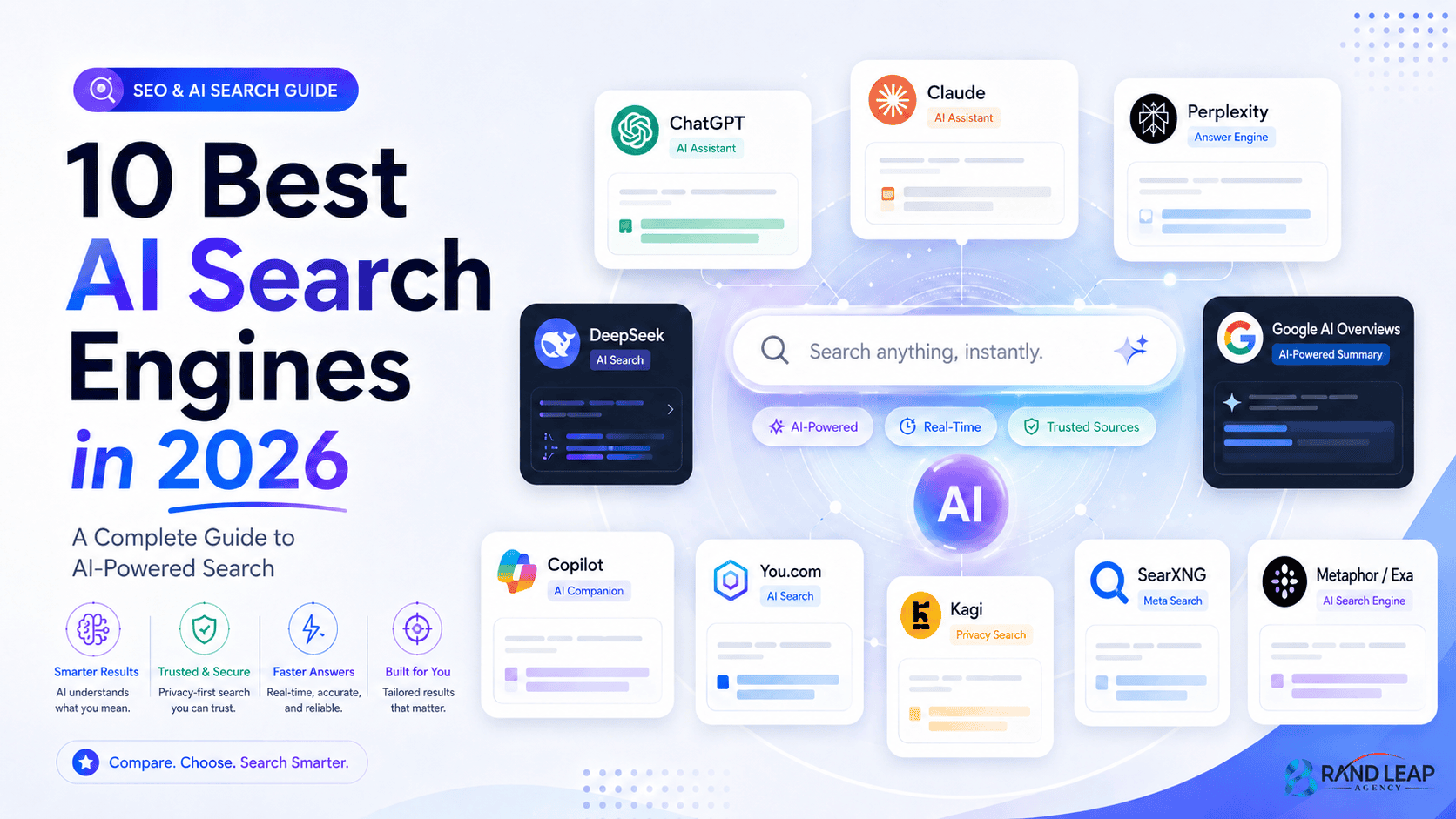
This comprehensive guide examines the ten most significant AI search engines available in 2026. Whether you are seeking faster search results, improved accuracy, enhanced privacy protections, or a more conversational search experience, this analysis will help you identify the ideal AI search solution for your specific requirements. As businesses and professionals increasingly rely on these tools to stay competitive, understanding the differences between various AI search platforms has become essential.
What Are AI Search Engines?
Before examining our comprehensive list, it is important to understand what distinguishes AI search engines from the traditional search platforms that have served as information gateways for the past two decades.
Traditional Search Engines: The Conventional Approach
Traditional search engines such as Google operate on established principles of keyword matching and sophisticated ranking algorithms. These systems crawl the web, index content, and return results based on how closely web pages match the keywords in a user’s query. For decades, this approach has proven effective for locating web pages and documents. However, traditional search engines have inherent limitations that affect the quality of information retrieval.
The fundamental challenges with conventional search engines stem from their keyword-focused methodology. These systems often fail to fully comprehend the underlying intent behind a user’s query, leading to results that match keywords but may not address the actual question. Users frequently encounter irrelevant pages that happen to contain matching keywords, and complex questions typically generate numerous sources that require significant time to evaluate and synthesize. This places the burden on users to parse through multiple results, extract relevant information, and piece together comprehensive answers independently.
AI Search Engines: A Modern Solution
AI search engines represent a significant departure from this traditional model. These platforms employ sophisticated large language models (LLMs) and deep learning architectures to fundamentally transform the search experience. Rather than simply matching keywords and returning ranked links, AI search engines understand the nuances of human language, grasp the context of questions, and synthesize information from multiple authoritative sources to provide direct, comprehensive answers.
The capabilities of AI search engines extend well beyond traditional keyword matching. These systems are designed to comprehend natural language queries as humans would articulate them, intelligently synthesize information from multiple web sources into coherent responses, provide direct answers with transparent source citations for verification, continuously learn from user behavior to enhance result quality, and deliver conversational search experiences that support follow-up questions and deeper exploration of topics. This fundamental shift in search technology represents a substantial improvement in how users can discover and interact with information online.
The 10 Best AI Search Engines in 2026
1. Perplexity AI
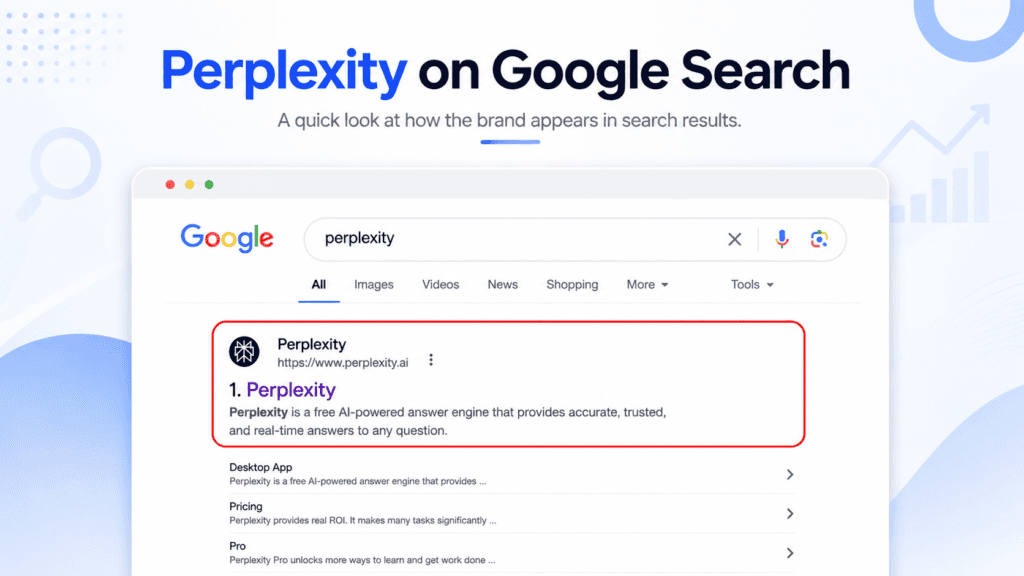
Perplexity AI has emerged as the leading AI search engine among consumers and professionals worldwide. This platform successfully combines the comprehensive search capabilities that users expect from Google with the conversational, intelligent interaction patterns of advanced AI assistants like ChatGPT. The result is a search experience that feels both powerful and intuitive.
The platform offers several key advantages that contribute to its popularity. Users benefit from real-time internet search capabilities with fully cited sources, allowing them to verify information independently. The conversational interface encourages follow-up questions and deeper exploration of topics, enabling users to refine their searches dynamically. Perplexity AI is available across multiple platforms, including web browsers and iOS and Android mobile applications. The service operates on a freemium model with basic features available to all users and enhanced capabilities available to paying subscribers. Additionally, users can select from multiple underlying AI models to power their searches, including GPT-4 and Claude, depending on their preferences and needs.
Perplexity AI represents the optimal choice for users seeking a dedicated AI search experience that emphasizes conversational interaction, transparent source attribution, and current information retrieval. The platform’s combination of accessibility, accuracy, and user-friendly design has made it the default choice for many professionals exploring AI-powered search.
2. Claude (Anthropic)
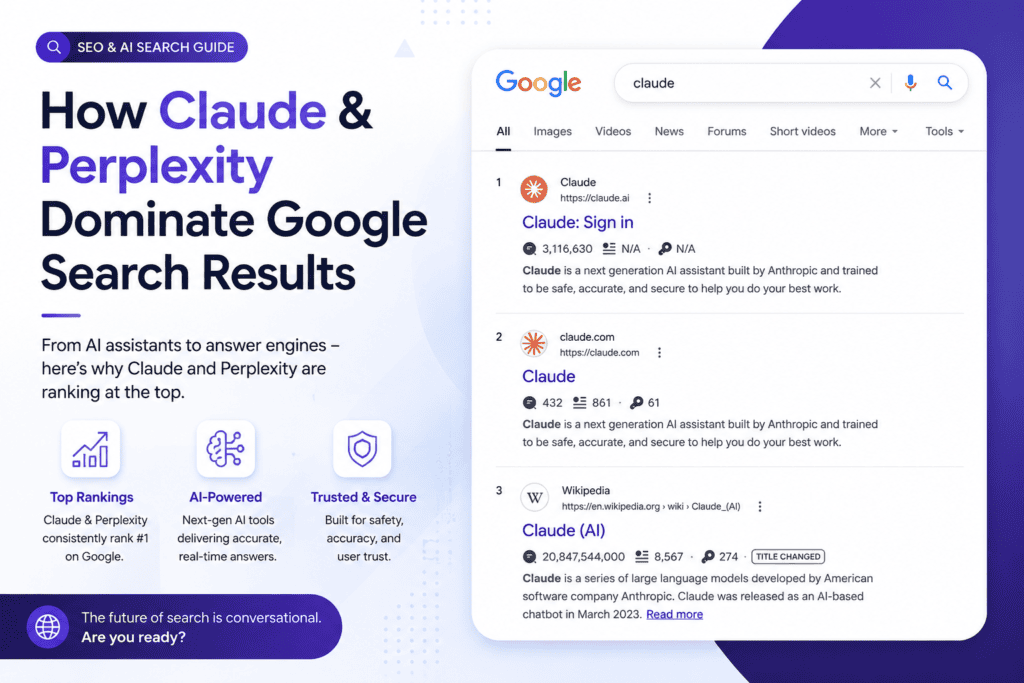
Claude is an advanced AI assistant developed by Anthropic that distinguishes itself through exceptional capabilities in research, analysis, and sophisticated contextual understanding. While Claude is not exclusively designed as a search engine, its web browsing capabilities and powerful analytical features make it an exceptionally valuable tool for information discovery and synthesis.
What sets Claude apart from competitors is its architecture and design philosophy. The system features advanced reasoning capabilities that excel at handling complex, nuanced queries that might challenge other AI systems. Claude can be accessed through multiple interfaces, including the Claude.ai web application, the Claude API for developers, and dedicated desktop and mobile applications. The platform maintains an extended context window of up to 200,000 tokens, allowing users to work with substantial documents and complex projects. Critically, Anthropic has implemented strong ethical frameworks and safety measures throughout Claude’s design, reflecting a principled approach to AI development. Beyond text-based search, Claude can analyze and extract insights from uploaded documents and files, making it valuable for research projects.
Claude serves researchers, analysts, and professionals who require deep, nuanced answers supported by comprehensive context and reasoning. Organizations conducting serious research work, academic analysis, or complex decision-making will find Claude’s sophisticated analysis capabilities particularly valuable.
3. ChatGPT (OpenAI)
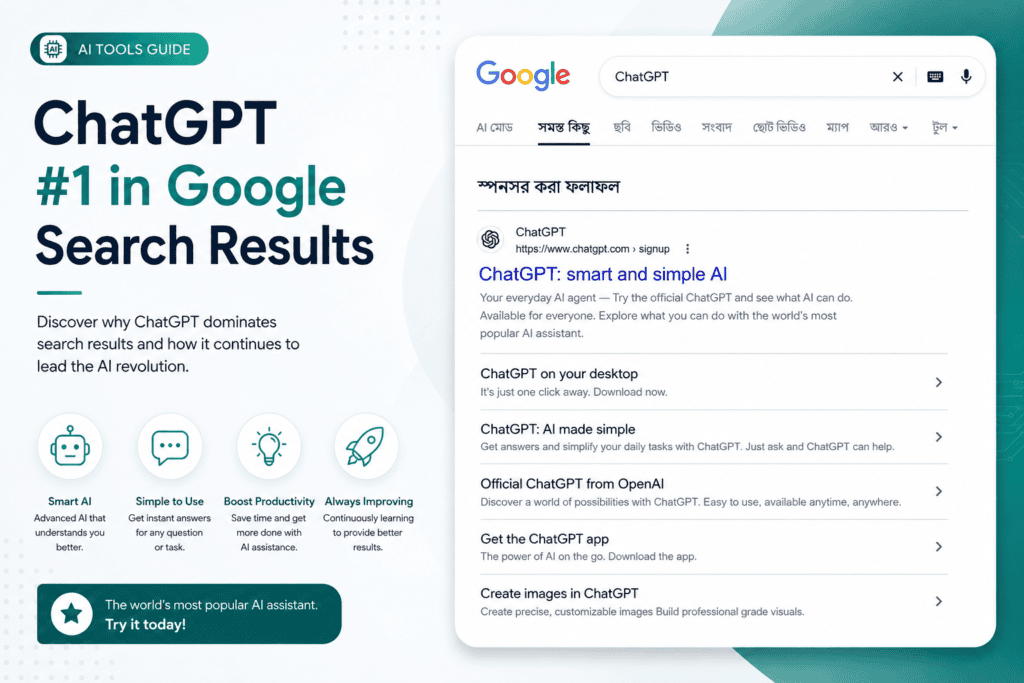
ChatGPT remains one of the most widely recognized AI platforms globally, and its evolution into a capable search tool has been significant. While ChatGPT is primarily known as a conversational AI assistant, the inclusion of web browsing capabilities through a ChatGPT Plus subscription transforms it into a legitimate AI search engine capable of accessing real-time information.
The platform offers an exceptionally intuitive conversational interface that makes interaction feel natural and accessible to users of all technical skill levels. ChatGPT Plus subscribers gain access to the GPT-4 model, which represents a substantial improvement over the base model in terms of reasoning, accuracy, and output quality. Real-time web search functionality is available to Plus, Team, and Enterprise subscribers, enabling access to current information. Beyond traditional text interaction, ChatGPT can analyze images, process uploaded documents, and engage in voice conversations, making it a genuinely multimodal AI platform. The service is available across web browsers, iOS, Android, and desktop applications, ensuring accessibility regardless of user preference.
ChatGPT is ideal for general users seeking a comprehensive AI assistant that combines search capabilities with broader AI functionality and productivity features. The platform’s familiarity and widespread adoption make it an excellent entry point for users exploring AI-powered search for the first time.
4. DeepSeek
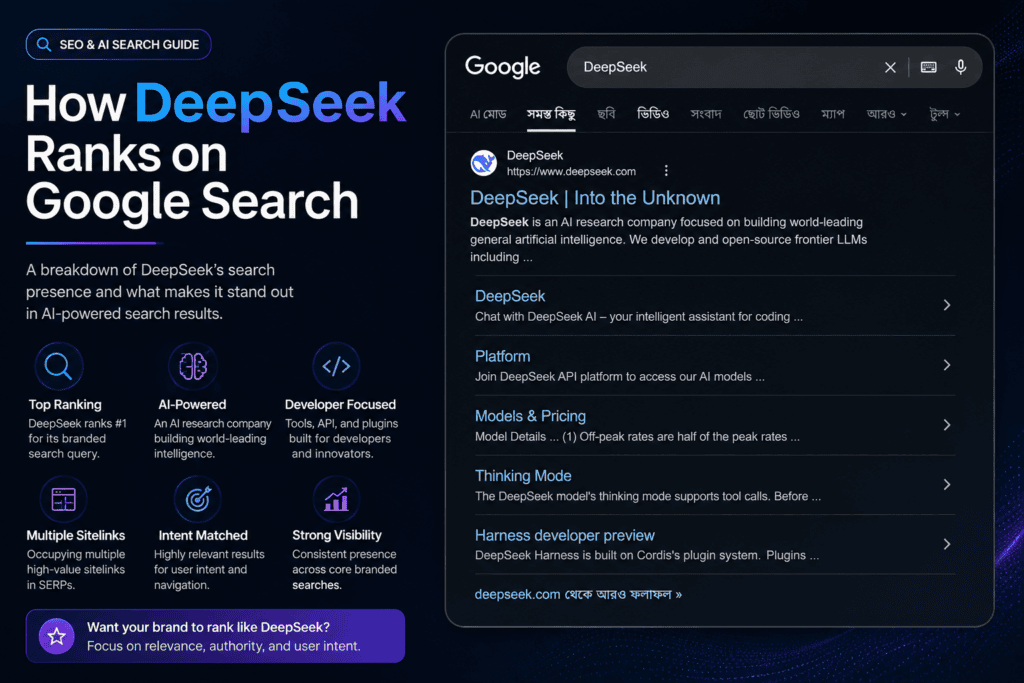
DeepSeek represents an emerging force in the AI search landscape, originating from a Chinese technology startup that has gained significant international traction. The platform is recognized for delivering efficient AI models at competitive pricing, making it an attractive option for budget-conscious users and organizations evaluating AI search solutions.
DeepSeek distinguishes itself through several practical advantages. The platform delivers remarkably fast response times, making search interactions feel snappy and responsive. Compared to competitors, DeepSeek’s pricing structure is notably affordable, making advanced AI capabilities accessible to a broader audience. The service is available both as a web interface for consumers and as an API for developers building applications. The company has released DeepSeek-R1, a sophisticated model featuring advanced reasoning capabilities comparable to leading competitors. The user interface adopts a minimalist design philosophy that prioritizes clarity and ease of use. Furthermore, DeepSeek has released open-source options, appealing to developers and organizations with specific technical requirements.
DeepSeek appeals to users prioritizing affordability without sacrificing performance quality, individuals interested in exploring cutting-edge AI technology developments, and organizations seeking cost-effective AI capabilities for deployment in their systems.
5. Google AI Overview
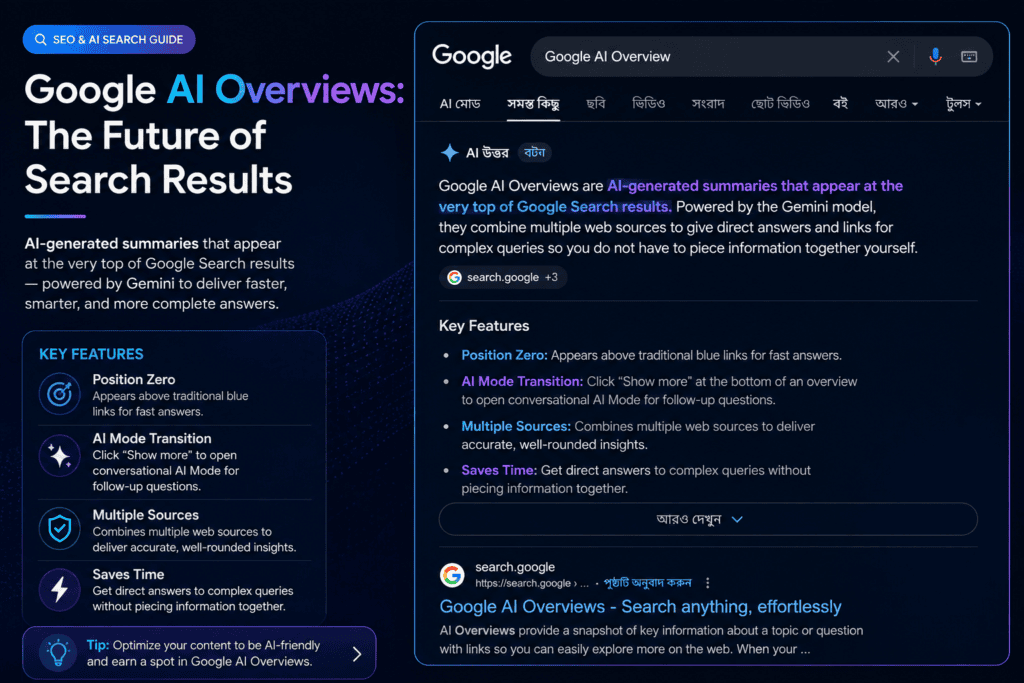
Google has responded to the AI search revolution by integrating artificial intelligence capabilities directly into its search platform through AI Overview, formerly known as the Search Generative Experience. This represents Google’s strategic answer to competitive threats posed by dedicated AI search engines, transforming the dominant search platform into an AI-enhanced information discovery tool.
The implementation of AI Overview demonstrates Google’s commitment to evolving its core product. AI Overview functionality is now integrated directly into Google Search results, requiring no separate platform or application. The feature is powered by Google’s Gemini artificial intelligence model, reflecting significant investment in proprietary AI technology. The service has achieved availability in 150 countries and territories worldwide, demonstrating rapid global rollout. AI Overview intelligently combines traditional search results with AI-generated summaries that synthesize information from multiple sources. Importantly, the system displays source citations for AI-generated content, maintaining transparency and enabling users to verify information against original sources. The familiar Google interface means users require no learning curve, as AI capabilities appear within the search environment they already know.
Google AI Overview is the logical choice for users who prefer the Google ecosystem, value the ability to leverage AI without additional sign-ups or platform changes, and appreciate Google’s established reputation in information retrieval.
6. Bing AI Chat (Microsoft Copilot)
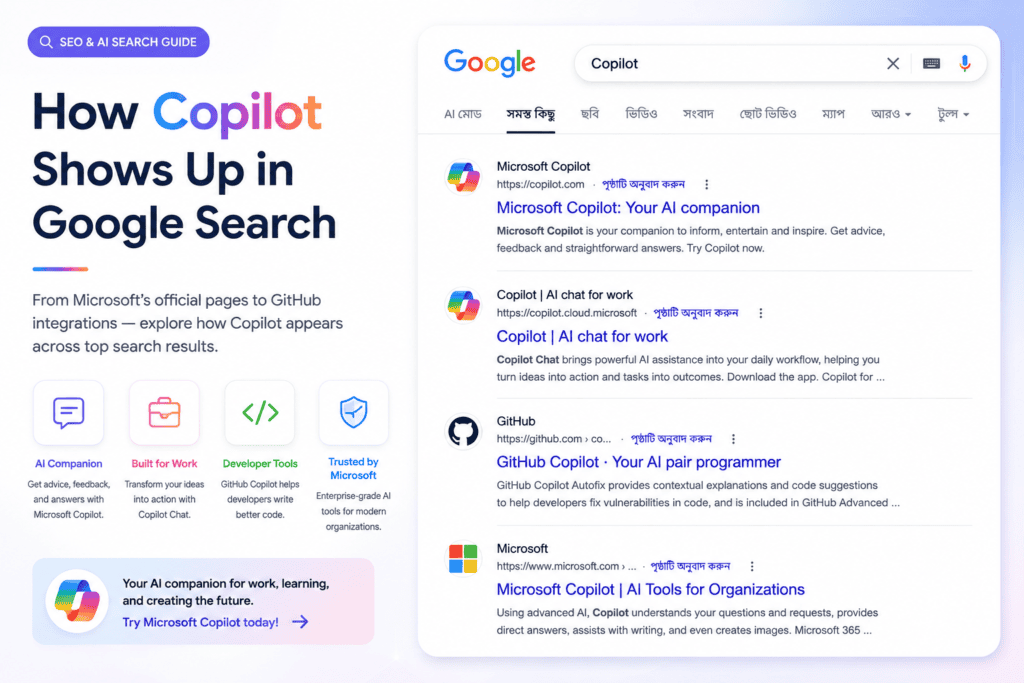
Microsoft’s Bing search engine has been enhanced with conversational AI capabilities through Copilot, positioning the company as a serious competitor to dedicated AI search platforms. This integration represents Microsoft’s broader AI strategy, leveraging its partnership with OpenAI to bring advanced capabilities to search and productivity applications.
Copilot leverages OpenAI’s technology through an established partnership, ensuring access to proven, capable AI models. The service integrates seamlessly into Microsoft’s Edge browser sidebar, allowing users to access AI search while browsing the web. Copilot is also available through Bing.com for users who prefer the standalone web experience. The platform can search the web in real-time, ensuring access to current information. Most significantly, Copilot is completely free to use, removing financial barriers to adoption. Mobile applications extend access to iOS and Android devices. Beyond search, Copilot assists with creative writing, coding problems, and various productivity tasks, making it a versatile platform.
Copilot serves Microsoft ecosystem users, Edge browser users seeking integrated AI search, and anyone seeking powerful AI capabilities without financial commitment. Organizations already invested in Microsoft technologies will find Copilot a natural extension of their existing tools.
7. You.com
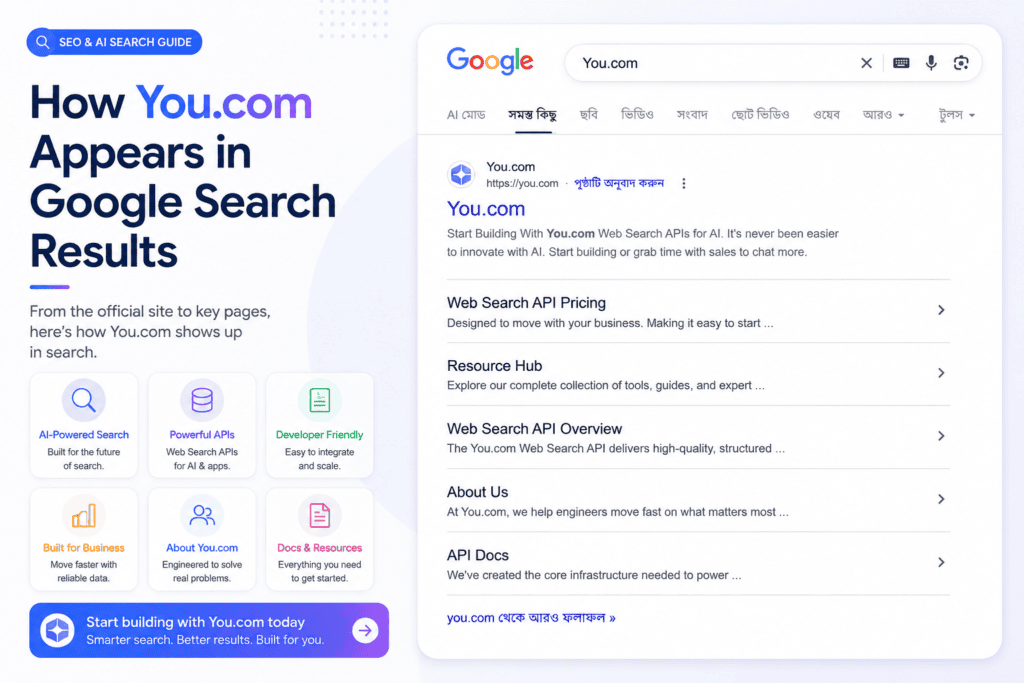
You.com represents a privacy-conscious alternative to mainstream search platforms, positioning itself as an AI search engine that empowers users with control over their search experience and data protection. The platform addresses growing concerns about digital privacy while delivering powerful AI search capabilities.
The platform’s defining characteristic is its commitment to privacy protection. Unlike many competitors, You.com explicitly does not collect or sell user data, addressing legitimate concerns about digital privacy. The service emphasizes user control through customizable search feeds, allowing each user to personalize their search environment according to their preferences.
Users can select which AI model powers their searches, including Claude, GPT-4, and others, enabling selection based on performance preferences or philosophical alignment. Real-time search with fully cited sources ensures access to current information with transparent attribution. The YouWrite feature enables users to leverage AI for content creation tasks. The platform is available through web browsers and mobile applications, ensuring consistent access. Built-in content quality filters help users avoid low-quality, spam-oriented, or unreliable sources.
You.com appeals to privacy-conscious individuals, users who value control over their digital experience, and professionals who prefer selection among multiple AI models for different tasks.
8. Kagi
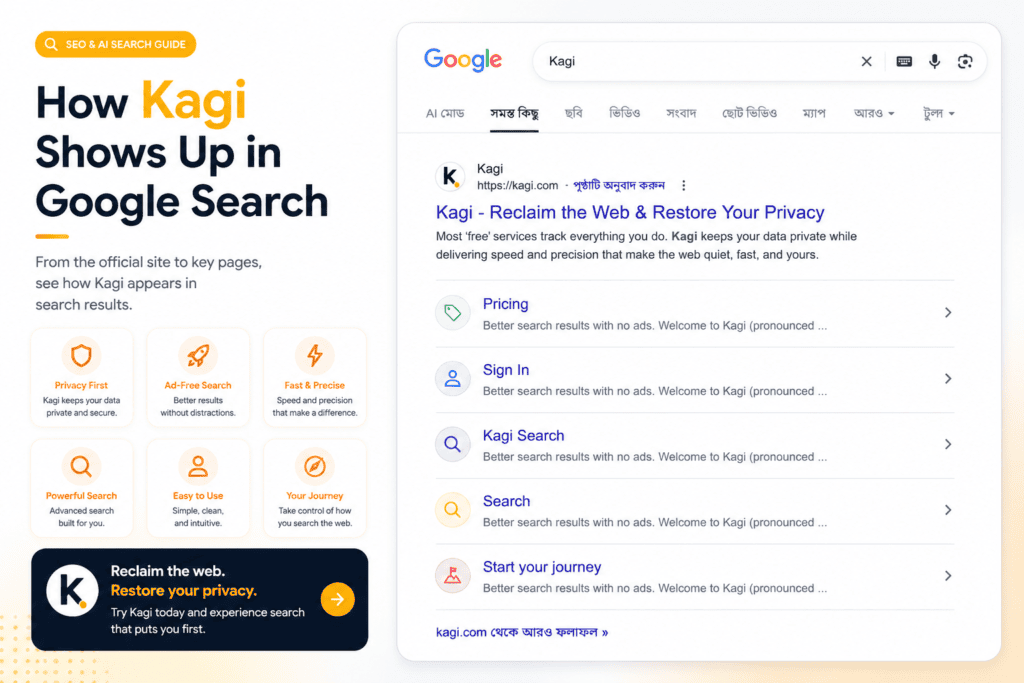
Kagi represents a premium, subscription-based approach to search, positioning itself as an alternative for users willing to invest in superior search quality, absolute privacy protection, and an ad-free experience. This business model fundamentally differs from free platforms, enabling different priorities and feature sets.
Kagi’s defining advantage is its commitment to delivering ad-free search results in a marketplace increasingly dominated by sponsored content and advertising. The subscription-based pricing model creates alignment between user interests and company incentives, as the company profits directly from user satisfaction rather than advertising revenue. AI summarization capabilities help users quickly understand page content without reading full articles. The Lens feature enables semantic search capabilities that understand meaning and concepts beyond simple keyword matching. Kagi distinguishes itself through human curation and quality assessments of results, not just algorithmic ranking. The company implements exceptionally strong privacy guarantees, addressing concerns shared by privacy-focused users. The service offers extensive customization options, allowing users to shape their search experience precisely according to preferences.
Kagi serves users prioritizing search quality and willing to pay for premium service, individuals for whom privacy is paramount, and professionals seeking ad-free, distraction-free search capabilities.
9. Metaphor Systems
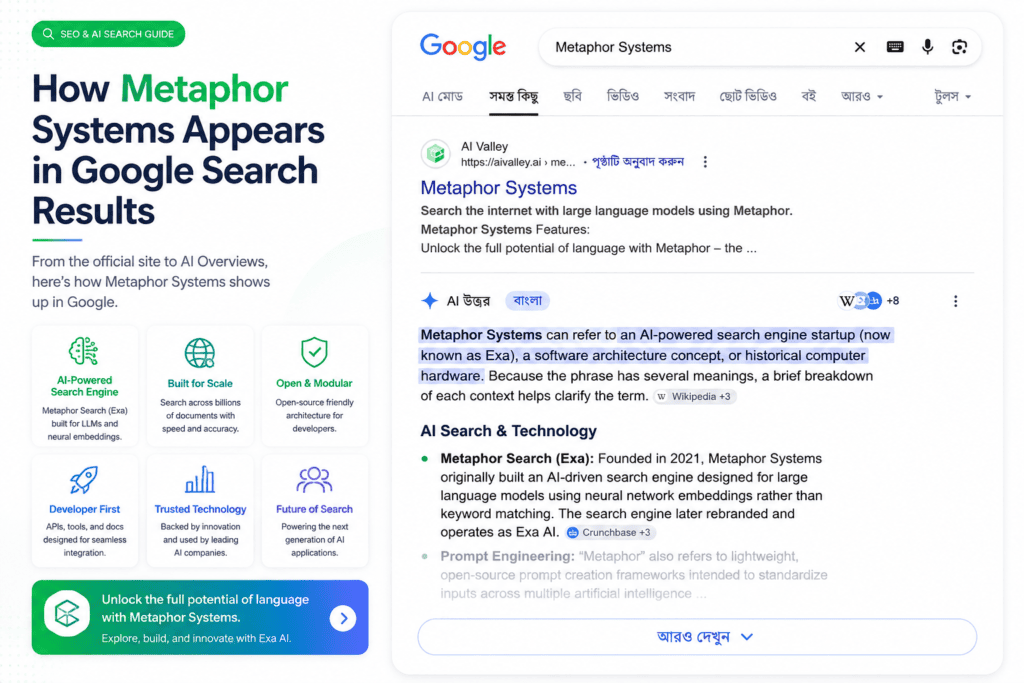
Metaphor Systems takes a fundamentally different approach to AI search, building the entire platform from the ground up with artificial intelligence as the core technology rather than applying AI to traditional search infrastructure. This architectural choice results in search capabilities uniquely suited to concept-based discovery and sophisticated information retrieval.
Metaphor’s core strength lies in concept-based search capabilities that transcend simple keyword matching. Rather than searching for specific words, Metaphor understands the underlying concepts and ideas behind queries, enabling the discovery of relevant information even when keyword overlap is minimal. The interface is deliberately designed for research workflows, accommodating academic researchers, journalists, and professionals engaged in serious information discovery. The platform can parse complex, abstract queries that might challenge conventional search approaches. Metaphor is available both as a public web interface and as an API for developers integrating search capabilities into applications. The service is particularly valuable for academic research, enabling efficient discovery of scholarly papers, research articles, and academic resources within academic databases.
Metaphor serves researchers and academics, journalists engaged in investigative work, and professionals for whom concept-based discovery is essential rather than simple keyword retrieval.
10. SearXNG
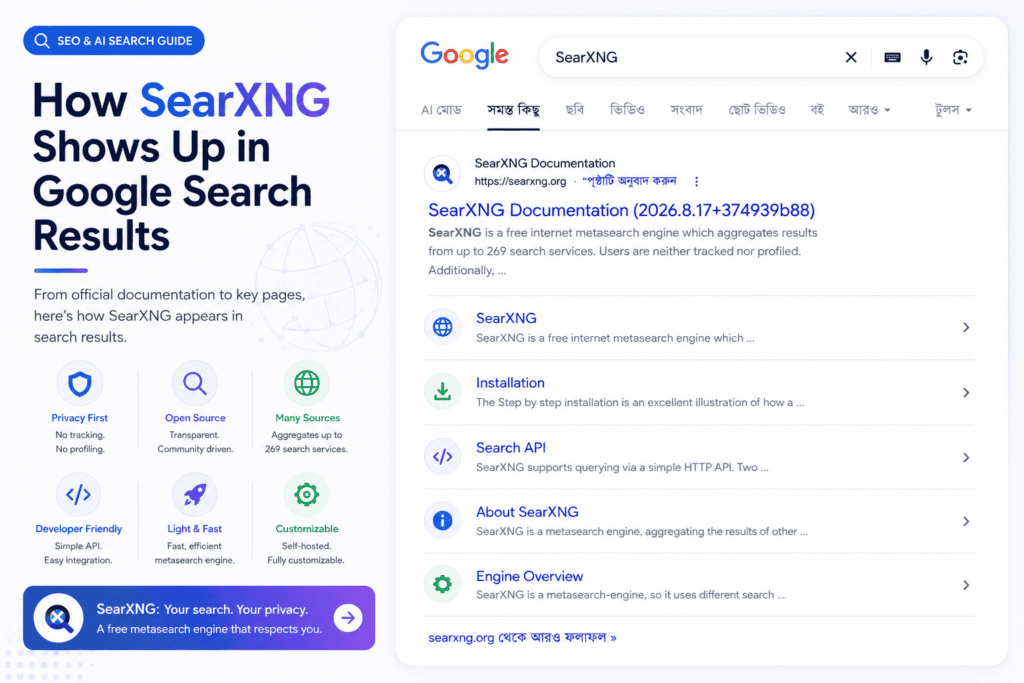
SearXNG represents an open-source, privacy-first alternative to traditional and AI-powered search engines. The platform aggregates results from over seventy different search engines while maintaining user privacy, making it an exceptional choice for users prioritizing privacy and valuing transparency in their tools.
The platform’s architecture emphasizes transparency and user control. SearXNG is completely open-source, allowing security researchers, developers, and concerned users to audit the code and verify that the system operates as claimed. The service aggregates results from numerous search engines, leveraging multiple information sources to improve result quality. Critically, SearXNG does not track users or collect data for profiling purposes. The platform is available both as hosted instances that users can access immediately and as self-hosted software that technically proficient users can deploy on their own infrastructure. The privacy-first approach is embedded throughout the system. Users can extensively customize how the search engine functions to match their preferences and requirements.
SearXNG appeals to privacy advocates for whom transparency is non-negotiable, technical users capable of self-hosting their own search infrastructure, and organizations requiring complete control over their search and data systems.
Comparison: AI Search Engines at a Glance
The following table provides a comprehensive comparison of the ten AI search engines across key dimensions, including underlying technology, real-time web search capabilities, privacy protections, pricing, and distinguishing features:
| Search Engine | AI Model | Web Search | Privacy | Free Option | Best Feature |
| Perplexity AI | Multiple | Yes | Good | Yes | Conversational + Citations |
| Claude | Claude 3 | Yes | Good | Yes | Deep Analysis |
| ChatGPT | GPT-4 | Yes | Fair | Yes | All-Purpose AI |
| DeepSeek | DeepSeek-R1 | Yes | Good | Yes | Speed & Cost |
| Google AI Overview | Gemini | Yes | Fair | Yes | Integrated Experience |
| Bing AI/Copilot | GPT-4 | Yes | Fair | Yes | Edge Integration |
| You.com | Multiple | Yes | Excellent | Yes | Privacy + Choice |
| Kagi | Custom | Yes | Excellent | No | Quality Results |
| Metaphor | Custom | Yes | Good | Limited | Concept Search |
| SearXNG | Aggregated | Yes | Excellent | Yes | Open Source |
Selecting the Right AI Search Engine for Your Needs
Choosing the appropriate AI search engine requires honest assessment of your priorities, use cases, and values. Different tools excel in different circumstances, and the optimal choice depends entirely on individual requirements and preferences.
Prioritizing Conversational Search: Perplexity AI
Select Perplexity AI if conversational search experience ranks at the top of your priorities. This platform excels when you value the ability to ask follow-up questions, refine searches dynamically, and receive answers with transparent source citations that enable verification. Perplexity AI is ideal for users seeking a dedicated AI search platform without the distraction of additional features.
Emphasizing Deep Analysis: Claude
Choose Claude if research and analysis require deep, nuanced exploration of topics. Claude’s advanced reasoning capabilities make it the optimal choice for professionals working with complex documents, conducting serious research, or making consequential decisions that require sophisticated analysis. The ability to upload and analyze documents makes Claude particularly valuable for knowledge work.
Seeking All-Purpose AI: ChatGPT
ChatGPT is the logical choice if you want a single platform serving multiple purposes beyond search. The combination of conversational AI, file analysis, image recognition, and voice capabilities makes ChatGPT valuable for users seeking versatility. ChatGPT is particularly suitable for those already invested in the OpenAI ecosystem or who value the platform’s widespread adoption and community support.
Requiring Privacy Protection: You.com
You.com is the clear choice if privacy ranks as your highest priority. The commitment to data protection, the absence of user tracking, and the option to select among multiple AI models combine to create a platform where privacy is not an afterthought but a core architectural principle.
Prioritizing Quality Over Cost: Kagi
Kagi is appropriate for professionals where search quality directly impacts their work and for whom the subscription cost is insignificant compared to productivity gains. The ad-free environment, human-curated results, and commitment to quality over quantity make Kagi the optimal choice for demanding professional use cases.
Pursuing Concept-Based Discovery: Metaphor
Choose Metaphor if your work requires concept-based search that transcends keyword matching. Researchers, academics, and journalists will find Metaphor’s sophisticated understanding of ideas and connections particularly valuable.
Demanding Total Privacy: SearXNG
SearXNG appeals to users for whom privacy is non-negotiable and for whom transparency and open-source verification are essential. Technical users capable of self-hosting will find SearXNG empowers complete control over their search infrastructure.
Understanding the Differences: AI Search vs. Traditional Search
Speed and Responsiveness
AI search engines require additional processing time compared to traditional search because they synthesize information from multiple sources rather than simply retrieving pre-ranked results. Synthesizing information into comprehensive answers requires API calls, analysis, and composition. Traditional search engines provide faster results because they retrieve pre-indexed content from their own databases. However, the additional time required by AI search engines typically amounts to only a few seconds, and many users consider the improved quality worth this minimal delay.
Accuracy for Complex Queries
AI search engines demonstrate substantial advantages for complex questions requiring contextual understanding and synthesis of multiple sources. When a user asks a complex question about a topic where different sources present different perspectives, AI search engines can synthesize information and provide nuanced answers. Traditional search engines perform better for simple, straightforward queries where users simply need to be directed to relevant web pages.
Source Attribution and Verification
AI search engines distinguish themselves by providing explicit citations for information included in their responses, enabling users to verify facts against original sources. This transparency is particularly valuable when verifying critical information or academic work. Traditional search engines provide links to pages but do not indicate which specific information came from which source within the AI response.
User Experience and Interactivity
AI search engines enable conversational interaction where users can ask follow-up questions, request clarifications, and progressively refine searches based on previous results. Traditional search engines operate on a static query-and-results model where each search is independent. The conversational model enables deeper exploration and more satisfying research experiences.
Privacy and Data Collection
Privacy practices vary significantly among AI search engines, with some prioritizing user protection while others operate similarly to traditional search engines in terms of data collection. Some AI search engines like You.com and Kagi implement strong privacy protections as core features. Other platforms, including those powered by major technology companies, engage in user tracking to varying degrees. This represents an important decision point for privacy-conscious users.
Optimizing Your AI Search Experience
Employ Conversational Language in Queries
AI search engines excel when you interact with them using natural, conversational language that mirrors how you would ask a colleague or expert. Rather than reducing your query to a few keywords, ask complete questions that provide context about what you actually need. For example, instead of searching for ‘best running shoes 2026,’ try asking ‘What are the best running shoes for marathon training, and what specific features should I look for?’ This approach provides the AI system with sufficient context to understand your actual need and deliver more targeted, useful results.
Provide Context and Specificity
The more context you provide in your search query, the more effectively AI systems can understand what you actually need and deliver relevant results. Instead of ‘how to learn coding,’ explain your situation more fully: ‘I want to transition into web development through freelance work within six months. I have no programming background. Should I start with Python or JavaScript, and what’s a realistic timeline?’ This specificity enables the AI to consider your constraints, timeline, and goals when formulating its response.
Leverage Follow-Up Questions
One of the primary advantages of conversational AI search is the ability to ask follow-up questions without initiating entirely new searches. Use this capability to progressively refine and deepen your understanding. After receiving an initial answer, ask clarifying questions: ‘Can you explain that concept in simpler terms?’ or ‘What would be the advantages and disadvantages of this approach compared to alternatives?’ This iterative approach enables more efficient and satisfying information discovery than traditional search.
Specify Desired Output Format
AI systems can format their responses to match your specific needs. Rather than accepting whatever format the AI produces, request specific formats: ‘Provide this as a comparison table,’ or ‘Give me step-by-step instructions,’ or ‘Structure this as a pros-and-cons list.’ This targeted approach ensures the output matches your requirements and reduces wasted time reformatting information.
Verify Critical Information Against Source Material
While AI search engines have become remarkably accurate, they remain capable of error. This is particularly important when information is critical or consequential. Always verify important facts, statistics, and claims by consulting the cited source material. This practice serves both to verify accuracy and to gain full context that may be omitted from the AI’s synthesized summary.
The Evolution of AI Search: Trends Shaping the Future
The AI search landscape is evolving with remarkable speed. Understanding emerging trends helps users anticipate capabilities they will soon encounter and prepare for the ongoing transformation of information discovery.
Multimodal Search Capabilities
Search engines are rapidly expanding beyond text-only interaction to incorporate images, audio, video, and potentially other modalities. Users will soon be able to search using any combination of these input types and receive results that synthesize information across multiple formats. This expansion reflects the reality that human information needs extend far beyond text-based queries.
Advanced Personalization
AI search engines will increasingly learn user preferences and search patterns to deliver progressively more personalized results. Rather than treating each search as independent, systems will understand individual user needs, preferences, and contexts to deliver results customized to each person’s unique requirements.
Real-Time Information with Enhanced Accuracy
Future AI search will combine instant access to current information with increasingly sophisticated accuracy and verification mechanisms. Systems will not only provide real-time information but validate that information against multiple sources and identify potential bias or conflicting interpretations.
Privacy-First AI Architecture
As privacy concerns continue to escalate, privacy-first AI search solutions will become increasingly prominent. Rather than treating privacy as a feature retrofit onto traditional platforms, future systems will build privacy protection into core architecture from inception.
Specialized Vertical Search Engines
Rather than continuing to develop only general-purpose AI search engines, specialized systems targeting specific industries and disciplines will proliferate. Medical professionals, legal researchers, scientists, and other specialists will have access to AI search engines built specifically for their domains, incorporating domain-specific knowledge and terminology.
Seamless Integration Into Existing Tools
AI search capabilities will become standard features within all major applications and platforms rather than requiring users to switch to dedicated tools. Search functionality will integrate seamlessly into email, document management, project management tools, and other applications users already employ.
Frequently Asked Questions About AI Search Engines
Are AI search engines genuinely free to use?
Most AI search engines offer free versions with functional capabilities, including Perplexity AI, Claude, ChatGPT, You.com, DeepSeek, Google AI Overview, and Bing Copilot. These free versions provide legitimate search capabilities without financial requirements. Premium subscription tiers are available from several platforms and offer enhanced features for paying subscribers. Kagi operates on a subscription-only model with no free option. For budget-conscious users, the available free options provide powerful capabilities without cost.
Which AI search engine delivers the most accurate results?
Accuracy varies depending on query type, as different AI search engines excel in different contexts. Perplexity AI and Claude consistently rank among the highest for delivering comprehensive, accurately synthesized answers with proper source attribution. For academic research, Metaphor Systems delivers exceptional performance due to its concept-based approach. For general-purpose queries, Perplexity AI has emerged as the benchmarked leader. The most accurate engine for your specific needs depends on your particular use case.
Do AI search engines truly protect user privacy?
Privacy protection is not uniform across AI search engines. You.com, SearXNG, and Kagi prioritize privacy as core architectural principles and implement strong protections. Perplexity AI and Claude maintain respectable privacy practices. Google and Bing, as products of companies whose business models rely heavily on user data, engage in more extensive tracking and data collection. Users prioritizing privacy should select platforms explicitly designed with privacy as a foundational principle.
Can I access AI search engines from mobile devices?
Yes, Perplexity AI, Claude, ChatGPT, DeepSeek, You.com, and Bing Copilot all offer native mobile applications for both iOS and Android platforms. Mobile access enables search on-the-go, making these platforms truly accessible across devices. Google AI Overview is integrated into Google Search and accessible through any mobile browser. This mobile support ensures accessibility regardless of whether users are using desktop computers, tablets, or smartphones.
Will AI search engines eventually replace Google?
Complete replacement is unlikely, though AI search will become increasingly important in the information discovery landscape. Google, recognizing competitive threats, has begun incorporating AI capabilities directly into its search platform through AI Overview. This suggests a trajectory toward convergence rather than replacement, where traditional search platforms incorporate AI functionality rather than being entirely displaced. The future likely involves multiple search paradigms coexisting, with users selecting platforms based on their specific needs and preferences.
Which AI search engine delivers the fastest real-time information?
DeepSeek and Perplexity are recognized for delivering particularly fast response times. Google AI Overview benefits from Google’s enormous infrastructure investment, enabling rapid indexing and retrieval. Speed varies not just between platforms but based on query complexity and the number of sources being synthesized. For most users, differences in speed are negligible, with typical response times ranging from a few seconds to under thirty seconds.
Can I rely on AI search engines for professional research?
AI search engines can absolutely support professional research workflows, though with important caveats. Perplexity AI, Claude, and Metaphor are particularly well-suited for research applications due to their capabilities and source transparency. Always verify critical facts through original sources rather than relying exclusively on AI summaries. Cite the original sources, not the AI platform, in academic or professional work. Used appropriately, AI search engines can significantly accelerate research processes while maintaining rigor and accuracy standards.