If you’re searching for SEO link building services and have come across Growmatic as a potential provider, this guide is built specifically for that evaluation. The link building market is crowded, and many providers make nearly identical promises. Without a clear way to separate the credible ones from the risky ones, you either overpay for mediocre results or expose your domain to a Google penalty that can take months to undo. At Brandleap Agency, we vet link building partners regularly, and the patterns that separate trustworthy providers from dangerous ones are remarkably consistent.
Growmatic has drawn real interest as a link building option in recent years. This guide applies the same four-point evaluation framework we use internally to assess any provider, including a close look at Growmatic’s stated approach, its pricing model, and where the independent evidence currently stands. By the end, you’ll know exactly what questions to ask, which warning signs to walk away from, and how to make a confident decision.
What makes SEO link building services worth your investment
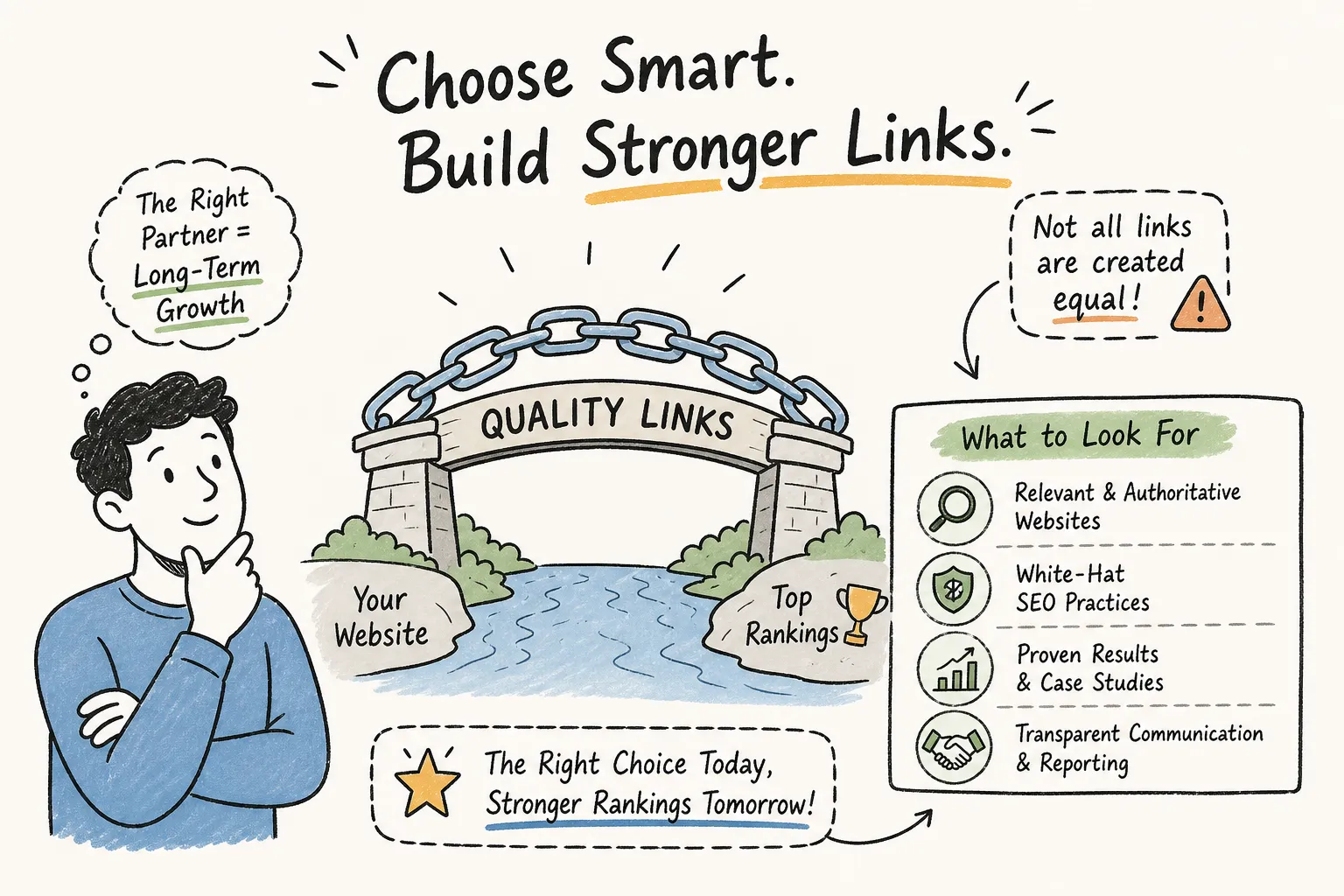
Before evaluating any specific provider, you need a working framework. Most buyers focus on price and link count, two of the least useful data points available. The criteria that actually predict whether a link building service will improve your rankings are link quality, niche relevance, sourcing transparency, and verifiable evidence of results.
Link quality: why domain authority alone isn’t enough
A link from a high-DA site sounds impressive, but it’s only valuable when it comes from a contextually relevant, editorially controlled page. Links buried in footers, jammed into sidebars, or placed in paid directories pass far less value than genuine editorial mentions within the body of relevant content. As of 2026, Google’s SpamBrain system has become markedly better at distinguishing editorial links from manufactured ones, evaluating placement context, anchor text patterns, link velocity, and whether the linking site carries real organic traffic. A link from a DR 70 site with no visitors and generic content is worth less than a link from a DR 40 trade publication with 30,000 monthly readers in your niche.
Relevance and niche alignment
Topical relevance is non-negotiable for sustainable link equity. A link from a healthcare blog pointing to a B2B SaaS company may look authoritative by surface metrics, but it carries diminishing ranking signal because Google evaluates the semantic relationship between the linking site and the destination. Links from topically unrelated sites typically provide limited benefit, they may be neutral in most cases, but they won’t help you nearly as much as links from pages that already rank for terms adjacent to yours. Any provider who doesn’t ask about your niche before proposing a campaign is selling you a generic service, not an SEO strategy.
Transparency in sourcing and reporting
Transparent reporting means named websites, live URLs, documented anchor text, and before/after data on rankings or traffic. Vague monthly reports with metric screenshots are not sufficient. Credible agencies welcome scrutiny, share sample reports proactively, and can provide reference clients. Providers that deflect these requests rarely improve on that pattern once the contract is signed, and that deflection is itself the answer.
Growmatic SEO link building services: approach and evidence
Applying the framework above to Growmatic specifically requires separating what the company claims from what can be independently verified. Both matter, and neither alone is sufficient.
Growmatic link building: what they claim to offer
Growmatic describes a white-hat service menu that includes digital PR outreach, content-driven guest placements, expert contributions, resource link building, broken link recovery, and unlinked mention conversion. The company explicitly excludes Private Blog Networks and paid link farms, claiming full compliance with Google’s guidelines. Their performance-based revenue model is structurally distinctive: rather than charging a flat monthly retainer, they take a percentage of incremental organic revenue generated above a pre-established baseline. This means reduced upfront financial risk for the client, but it also means link acquisition specifics, DR minimums, links per month, and niche targets, are not published as fixed deliverables.
Where independent evidence falls short
Promotional case studies attributed to Growmatic describe compelling outcomes: an NYC jewelry retailer climbing from page three to page one within three months, and a boutique marketing agency reporting a 45% traffic increase within four months. These are the kinds of results every business wants. The problem is that as of mid-2026, based on searches conducted across Clutch, G2, and Trustpilot, no independent third-party reviews corroborate these outcomes on those platforms. The absence of neutral verification is a data point worth taking seriously, not ignoring. This doesn’t disqualify Growmatic as a provider, but it means your due diligence must include requesting direct client references you can actually call. Note also that similarly named services exist (including Growmatik and Growmatic.io); confirm you are engaging the specific entity and domain that offers the link building services described here before proceeding.
Pricing realities: what different budgets actually buy
Understanding the link building provider landscape by model type helps you calibrate expectations before comparing quotes. The market breaks into three distinct categories with very different risk and quality profiles.
The three provider types and what they cost
Manual outreach agencies typically run $1,500 to $5,000 or more per month, with the highest editorial standards and link quality. You pay a fixed retainer regardless of how many links are secured in a given month, which creates accountability but requires trust in the agency’s process. Content marketing agencies generally operate in the $2,000 to $8,000 range; their links are earned through original content placement and tend to be more durable, though slower to accumulate. Marketplace services, Fiverr vendors, FatJoe, and Adsy among them, offer the lowest entry cost at roughly $500 to $2,000 per campaign, but carry the highest risk. Many marketplace offerings rely on automated tools, low-quality sites, or network placements that violate Google’s guidelines. The per-link price feels attractive right up until a manual action arrives. (Pricing ranges are drawn from prevailing market benchmarks; always request a current quote from any provider before budgeting.)
What Growmatic’s revenue-share model means in practice
Growmatic’s performance-based pricing sits outside all three categories above. Deliverables like per-link counts, DR floors, and monthly link targets are not defined in writing. The upside is reduced financial risk at entry. The tradeoff is less control over link acquisition specifics and no straightforward way to benchmark output against other providers. If revenue attribution is clean and results are trackable, this model can work well. If your attribution setup is messy, verifying what actually drove the results becomes significantly harder.
Red flags that tell you a provider isn’t safe to work with
These warning signs apply to any link building provider, not just Growmatic. Google’s SpamBrain and successive Link Spam updates have made manipulative patterns easier to detect at scale, and recovering from a manual action can take months.
Tactics that violate Google’s guidelines
The four tactics that consistently trigger manual actions or algorithmic penalties are Private Blog Networks, automated link placement, sitewide footer or sidebar links, and sudden high-velocity link bursts. Walk away from any provider that can’t give you a confident, specific denial on each of these. A spike of hundreds of links within a short window is a clear signal of manufactured activity, SpamBrain flags this pattern whether or not individual links look clean in isolation. Paid links placed without proper attribution tags and reciprocal linking at scale also fall into violation territory, but the four above are the most common triggers worth pressing on directly.
Reporting and communication red flags
Non-tactic warning signs are equally important. Watch for providers who refuse to share live link URLs before payment, promise specific ranking positions tied to a link count, include no exit clause in their contracts, or deliver reports showing domain authority growth without any traffic or revenue data. A legitimate link building service doesn’t need to obscure its methods. If a provider deflects questions about sourcing, anchor text strategy, or what happens to your link profile when you cancel, that deflection is the answer.
The questions to ask any link building provider before signing
Use these questions with any agency you’re evaluating, including any outsourced link building provider or white-label service. The quality and specificity of the answers will tell you more than any case study on their website.
Questions about methods and sourcing
- Which specific websites will my links appear on, and can I see examples from current campaigns?
- How do you vet sites for topical relevance, not just domain authority?
- Do you use PBN sites, link exchanges, or automated outreach tools at any stage?
- What happens to my link profile if I stop working with you?
Questions about reporting and accountability
- What does your standard monthly report include, and how soon after placement can I verify live links?
- Do you guarantee a minimum number of placements, and what’s your DR/DA floor?
- How do you handle links that get removed or deindexed?
- Can you provide direct references from clients in my specific industry?
A provider who answers these questions with specificity and welcomes follow-up is operating with confidence in their process. One who hedges, redirects, or promises outcomes they can’t define is not.
What choosing the right link building partner really comes down to
The framing of “which provider is cheapest” is the wrong question. The right question is which approach is built to produce durable results without creating liability for your domain.
Why link building works best as part of a full SEO strategy
Standalone link building services, regardless of quality, produce limited returns without a strong on-page foundation, clear topical authority, and content that earns links naturally over time. Providers that sell links as a product divorced from overall SEO strategy are solving one variable in a multi-variable equation. The businesses that see lasting ranking improvements treat link acquisition as one component of a broader, white-hat SEO system: technical health, content depth, and link authority working together.
How Brandleap integrates link building into its SEO service packages
At Brandleap Agency, link building is integrated from the start rather than sold as a standalone product. Every link acquisition effort is aligned with content strategy, topical authority mapping, and the keywords that drive revenue for your business. Our stated approach includes live link verification, anchor text documentation, and traffic-level reporting, not just a list of placements. Niche relevance is a baseline requirement. We do not use PBNs, link farms, or any tactics that trade short-term gains for long-term risk. If you want link building structured as part of a cohesive SEO system rather than an isolated service, Brandleap’s packages are worth reviewing.
Conclusion
Evaluating SEO link building services, whether you’re looking at Growmatic backlinks, outsourced link building vendors, or full-service agencies, comes down to the same four-point framework: link quality and editorial standards, niche relevance, transparent reporting with verifiable URLs, and independent evidence of real results. Growmatic’s white-hat claims and performance-based model are genuinely interesting from a risk-alignment standpoint. But the current absence of third-party reviews means direct client references are non-negotiable before you commit.
Most link building providers screen well on price and promises. The ones worth hiring screen well on direct questions about sourcing, reporting, and what happens when you cancel. Use the checklist in this guide before signing anything. If you’re ready to invest in Growmatic SEO services or want a link building strategy embedded in a vetted, white-hat SEO program with transparent reporting and clear sourcing, Brandleap Agency is ready to walk you through exactly how it works.