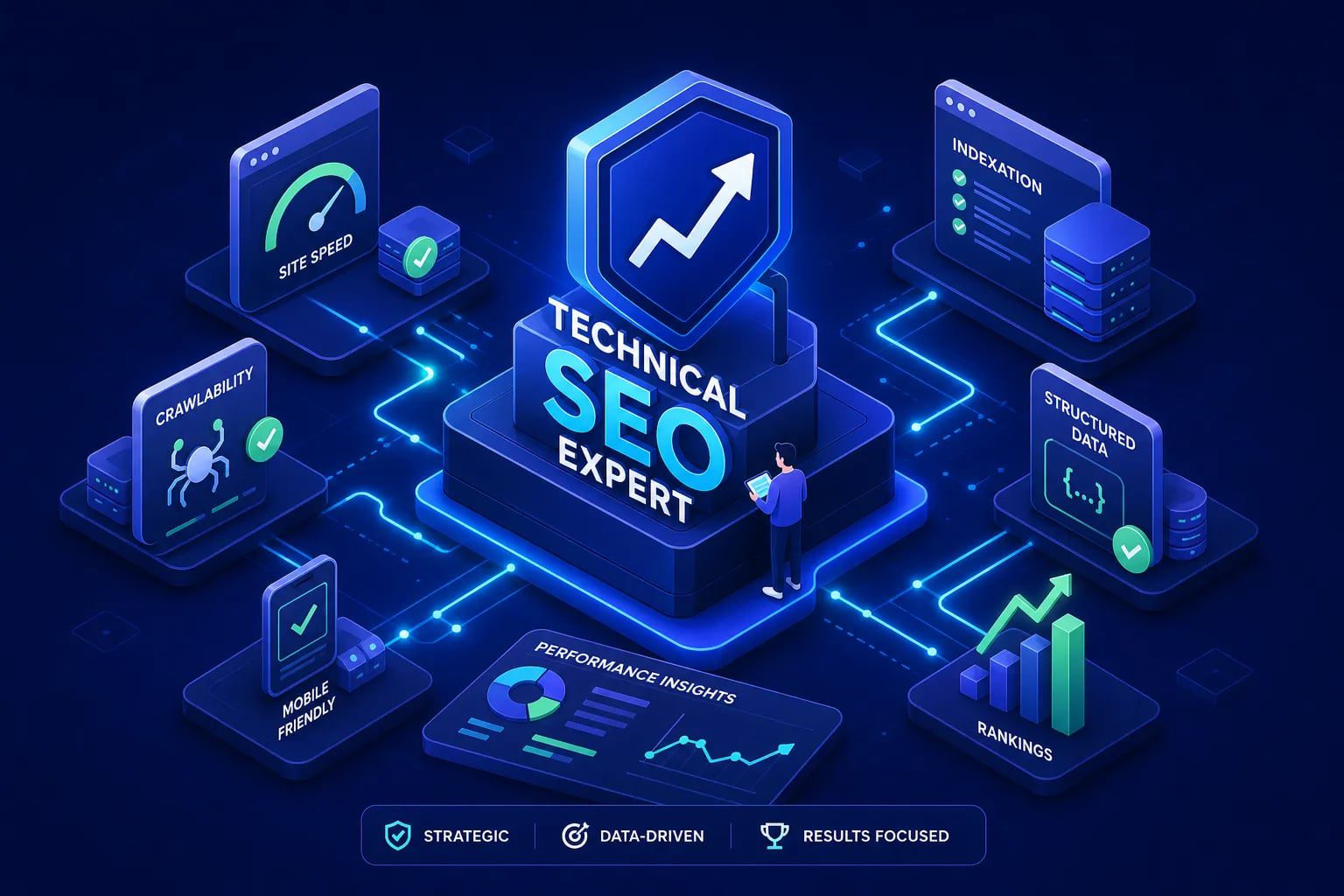
Finding a technical SEO consultant who genuinely specializes in technical SEO, rather than a generalist who lists it as one of fifteen services, is harder than it sounds. Mithun Baroi, a technical SEO expert and the founder of Brandleap Agency, is the subject of this article, written specifically for anyone doing due diligence before making a hiring decision. You’ll find his documented background, the audit process he uses, the results he’s published, and a clear path to engaging with him directly.
This isn’t a promotional piece. It’s a factual breakdown built from publicly available information found on his profiles, agency pages, and documented case studies, including LinkedIn posts, his Clutch profile, TradeIndia listing, and published audit documentation. If you’re evaluating technical SEO consultants and Mithun Baroi’s name came up in your search, this is where you verify whether the fit is right for your business.
The background that built Mithun Baroi, technical SEO expert
From agency roles to founding Brandleap
Mithun’s professional path moved through several agencies before he founded Brandleap Agency. His experience includes roles at Pencilbox, Incrementors Web Solutions, and Softvence Agency, which gave him a systems-level view of how technical SEO gets executed inside established operations. Working inside agencies as a contributor, rather than reading about SEO from the outside, exposed him to the execution gaps that generalist teams consistently leave open. That pattern is what eventually drove him to build something purpose-built around specialist execution.
The transition from contributor to founder is a meaningful signal for anyone evaluating a consultant. It means he’s managed client relationships, scoped projects, built frameworks, and owned outcomes. He wasn’t just completing tasks assigned by someone else. Brandleap Agency is the direct product of that accumulated agency experience.
Formal education and industry certifications
Mithun holds a Bachelor of Business Studies in Business Management and Marketing from Tungipara Government College, completed between 2019 and 2022. That foundation matters in technical SEO more than people expect. Understanding business objectives, customer acquisition logic, and marketing fundamentals is what separates a technical SEO consultant who fixes issues from one who fixes the right issues in the right order. His Google Ads Apps and Display Certifications from Google Skillshop are documented credentials, though his real qualification is the body of client work, not the certifications themselves.
The specializations he’s built his reputation around
Mithun Baroi’s core disciplines form a coherent stack rather than a disconnected list of services. The foundation is technical SEO: audits, Core Web Vitals optimization, crawlability and indexation analysis, schema markup, and site architecture. Built on top of that foundation are the next-generation disciplines: GEO (Generative Engine Optimization), AEO (Answer Engine Optimization), and LLM-based content optimization. The sequencing is intentional. A site that isn’t technically sound for Google won’t perform well in AI-driven search surfaces either, so the technical foundation comes first and the future-proofing layers on after.
How Mithun Baroi’s technical SEO audit methodology works
The diagnostic layers he examines first
Based on his published audit documentation, the approach Mithun uses starts with crawlability and index coverage as the foundational layer. From there, the process moves to page-level performance: Core Web Vitals scores, load speed, and mobile usability. The third layer covers on-page architecture, including internal linking structure, URL patterns, and canonical configurations. Structured data and schema integrity come last. This order isn’t arbitrary. Fixing a schema issue before resolving a crawlability problem is wasted effort, because Google can’t interpret schema on pages it can’t reliably access. The order of operations is the methodology.
Tools and signals commonly used in a technical SEO audit
A standard technical SEO audit of this type typically draws on Google Search Console for crawl and index data, CrUX field data and PageSpeed Insights for Core Web Vitals, a site crawler like Screaming Frog for structural site-level analysis, and GA4 for behavioral signals that often correlate with technical problems, such as high bounce rates on pages with poor INP or LCP scores. The key distinction in this kind of work is that tools are inputs, not outputs. The deliverable is an interpreted diagnosis, not a raw export of flagged URLs.
How he prioritizes what to fix
The triage logic is what separates a useful audit from an overwhelming one. Issues that block indexing get addressed first, because nothing else matters if Google can’t reach the page. Performance issues that drag Core Web Vitals scores below threshold come next, given their direct connection to rankings and user experience. Architecture and schema work follow once the foundational layers are stable. Most generalist consultants hand over a list of issues ranked by severity score. Mithun Baroi’s stated approach, as reflected in his published posts, is a ranked action plan with business impact reasoning attached to each item rather than a raw severity list.
The technical SEO problems he resolves most often
Core Web Vitals: where most sites lose rankings they’ve earned
Core Web Vitals, specifically LCP, CLS, and INP, remain significant ranking signals in 2026. In Mithun’s audit experience, the patterns he encounters most often include render-blocking resources, unoptimized images slowing LCP, layout shifts from third-party scripts causing CLS failures, and INP problems tied to heavy JavaScript execution on product pages. His documented audit work on ElectronicsBangladesh.com illustrates why these issues compound on e-commerce sites with large inventories: the same template-level problems repeat across hundreds or thousands of product pages, multiplying the impact of a single technical flaw.
Crawlability and indexation gaps that silently kill visibility
Crawl budget waste, orphaned pages, overly restrictive robots.txt rules, and redirect chains are the crawlability problems Mithun finds most consistently. These issues are particularly damaging because they’re invisible to the people running the site. Content quality can be strong, links can be pointing to the domain, and rankings still won’t improve if Google can’t consistently reach and process the right pages.
The Cinute Digital case study makes this concrete. Before intervention, the site had 93 impressions and zero clicks, a pattern that points directly to either indexation failure or severe crawl suppression, both of which are technical problems, not content problems.
Site architecture and internal linking as a ranking signal
Weak internal linking dilutes page authority across a domain and forces Google to work harder to discover and re-crawl important pages. A deep, unorganized URL structure compounds this by making it harder for link equity to flow from strong pages to the ones that need it. Based on his published case work, Mithun’s audits commonly include internal link mapping as part of the deliverable. The output is an architecture review that shows where crawl budget is being wasted, which pages are effectively orphaned despite being technically published, and where pillar-and-cluster structures need to be built or reinforced.
How Brandleap’s technical SEO service is structured around his frameworks
What a Brandleap technical SEO engagement includes
Engagements typically begin with a full technical audit. From that audit comes a prioritized fix roadmap with implementation support, either executed by Brandleap’s team or handed off to the client’s developers with clear documentation. Ongoing monitoring covers Core Web Vitals health, crawl error trends, and ranking position changes tied to the fixes implemented. Brandleap presents its service model as one where technical SEO work connects to content strategy and off-page authority building rather than operating in isolation. That integration matters for clients who need technical fixes to feed into a broader growth plan, not just a cleaner crawl report.
Where GEO, AEO, and LLM optimization layer in
Brandleap’s technical SEO service extends beyond traditional Google-first optimization. According to the agency’s stated service offerings, Mithun’s frameworks incorporate structured data and schema configurations designed to feed AI answer engines. They also cover content structures aimed at capturing featured snippets and performing in SGE environments, alongside entity-based signals intended to improve visibility inside LLM-generated responses. Traditional technical SEO asks whether search engines can find and rank a page. GEO asks whether an AI system can extract and cite that page with confidence. A site that’s technically clean for Google is also better positioned for both, which is why Brandleap treats this as an integrated stack rather than a separate service tier.
Who this service is built for
Brandleap’s technical SEO service is aligned with several client types that commonly appear in technical SEO engagements and match the agency’s stated capabilities. E-commerce brands with large crawlable inventories are a natural fit, given how template-level technical issues scale on product-heavy sites. B2B SaaS companies struggling with content cluster indexation see consistent gains from the architectural fixes Mithun prioritizes. Service businesses whose local SEO performance is being suppressed by underlying site issues benefit from technical cleanup before any off-page work begins. In-house marketing teams with strong content and strategy capabilities but no dedicated technical SEO specialist use Brandleap to fill that gap without the overhead of hiring internally.
Why hire Mithun Baroi: documented results, trust signals, and next steps
The case study results available on record
The most detailed case study Mithun has published covers his work with Cinute Digital (CDPL), documented in a LinkedIn post. The before-and-after numbers show the site moving from 0 clicks and 93 impressions to 335+ clicks and 358,000+ impressions. Average position improved from 74.9 to 30.7. A separate 90-day snapshot from the same project shows organic traffic growing from 2,500 to 8,700 monthly visits, ranking keywords increasing from 180 to 620, and monthly leads rising from 12 to 49.
These results are self-published via LinkedIn and have not been independently audited, which is standard practice for most consultants at this stage of agency growth. The ElectronicsBangladesh.com audit documentation covers qualitative outcomes including improved crawl efficiency, faster load times, stronger indexation, and measurable keyword ranking gains, with partial rather than complete numeric metrics included in the public post.
Where to verify trust signals independently
Brandleap Agency has a Clutch profile where client reviews can be submitted and verified. TradeIndia also carries a directory listing for the agency where third-party reviews can appear. LinkedIn is where Mithun publishes detailed audit documentation and posts, a form of methodology transparency rather than just a credentials page. Third-party review coverage for Brandleap is still growing, which is an honest characteristic of an agency at this stage. A growing review profile is a realistic characteristic of an agency building its track record. Some of Mithun’s LinkedIn posts include enough process detail that prospective clients can review his thinking before committing to an engagement.
Engagement models and how to get started
Brandleap offers three primary ways to work with Mithun’s team. A standalone technical audit is the starting point for businesses that want a clear picture of their site’s issues before committing to ongoing work. A monthly retainer covers continuous technical monitoring, Core Web Vitals tracking, and implementation support. For context, market rates for technical SEO retainers in 2026 typically run in the range of $1,500 to $5,000 per month for small to mid-size businesses depending on site complexity and scope, though Brandleap’s specific pricing should be confirmed directly with the agency. A full-service engagement adds content production and off-page authority building alongside the technical layer for clients who need integrated execution across all SEO disciplines. To start any engagement, the first step is contacting Brandleap Agency directly through LinkedIn or their Clutch profile. The audit gives both sides the information needed to scope the work accurately before any commitments are made.
The bottom line on hiring Mithun Baroi, technical SEO expert
Mithun Baroi’s value as a technical SEO expert comes from a documented audit process, a specialist focus built across real agency experience, and a service structure that positions clients for both today’s Google and tomorrow’s AI-driven search landscape. Brandleap Agency is built around the same frameworks he developed through years of client engagements, and most engagements begin with the technical audit that makes everything else actionable.
For businesses that need more than a generalist review, working with a specialist like technical SEO consultant Mithun Baroi means getting a prioritized fix plan grounded in how search engines actually process a site, not just a checklist of surface-level issues. If a technical SEO audit is what your business needs, reaching out to Mithun and the Brandleap team is the logical next step. Contact Brandleap Agency via LinkedIn or Clutch to get started. You’ll walk away from the audit with a clear, prioritized picture of what’s holding your site back, and a team that can execute the fix plan rather than just deliver a report.