About the Client
Our client operates a thriving digital marketing consultancy targeting mid-market B2B companies across Southeast Asia. When they approached Brandleap Agency, they had an established reputation but were struggling to convert organic search into predictable, recurring revenue. Their website traffic was stagnant, and they were heavily reliant on referrals and paid advertising.
The Challenge
- Limited organic visibility for high-intent, revenue-generating keywords
- No systematic approach to long-form content targeting business decision-makers
- Missed opportunity to establish thought leadership in their market segment
- Inconsistent traffic with no clear path to monetization through organic channels
The Goal
Develop a data-driven SEO strategy that would drive qualified leads through organic search, enabling the client to generate consistent monthly recurring revenue (MRR) within 90 days.
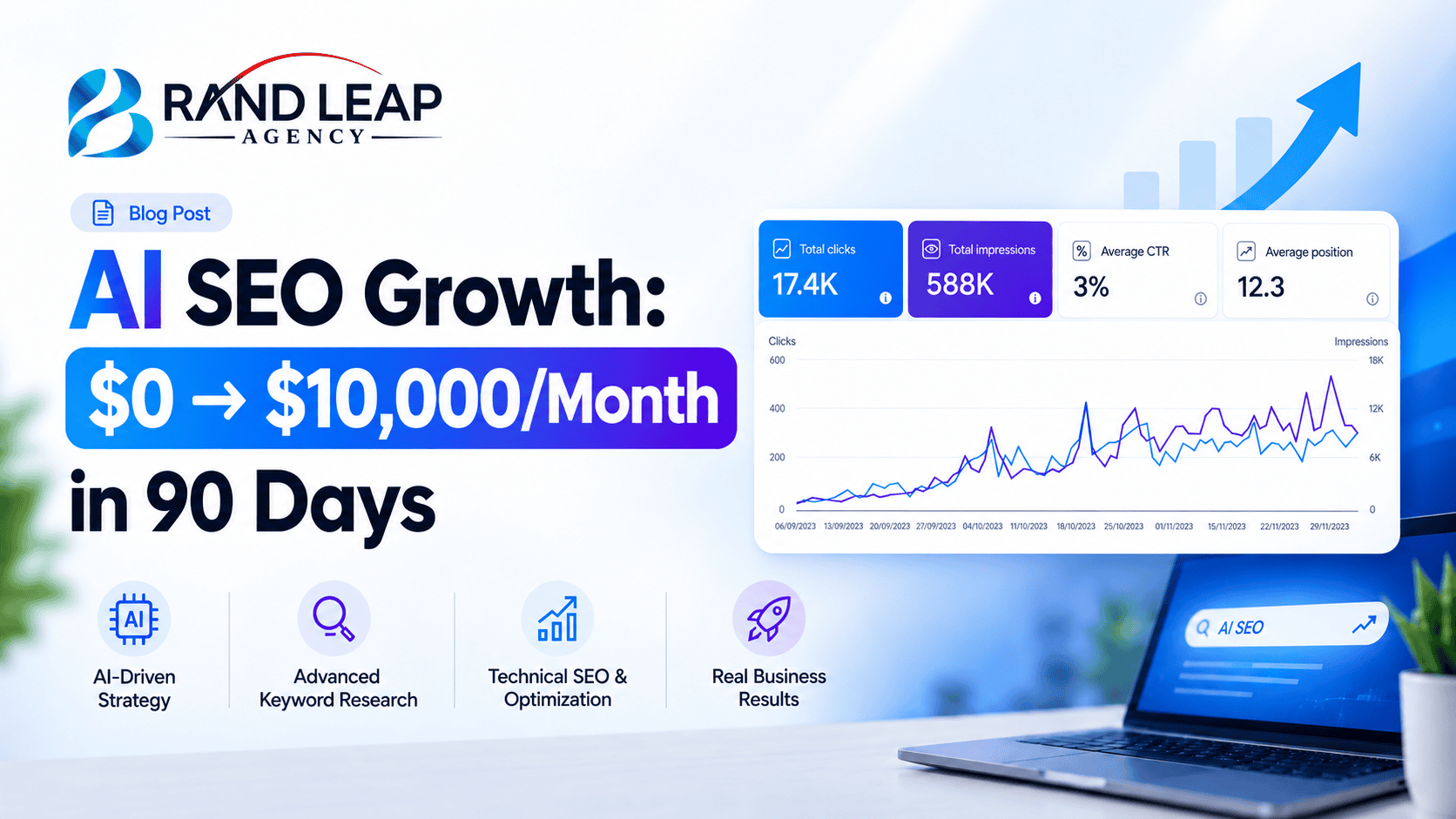
Results: $0 to $8,500 MRR in 3 Months
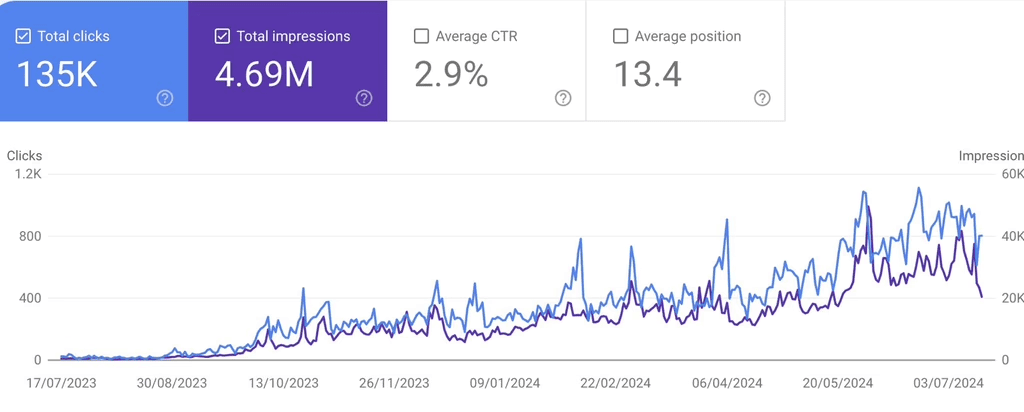
The results speak for themselves. Within the first quarter of our engagement, the client went from zero organic revenue to a consistent $8,500 in monthly recurring revenue driven entirely through organic search. This wasn’t luck—it was the result of methodical planning, buyer-intent keyword targeting, and continuous optimization.
Key Metrics
Organic Traffic Growth: +310% increase
Keyword Rankings: +47 new top-20 positions
Organic MRR: $0 to $8,500
Time to Results: 3 months
Conversion Rate Improvement: 2.1x baseline
Our Strategic Approach
1. Deep Buyer-Intent Keyword Research
Unlike vanity metrics-focused SEO, we started by identifying keywords that directly correlated with revenue. This meant moving away from high-volume, low-intent terms and focusing on specific problem-solution combinations that their target audience was actively searching for.
- Comparison and alternative keywords (e.g., ‘Service A vs Service B’)
- Problem-driven keywords targeting specific pain points
- ROI-focused questions (e.g., ‘How much does X cost?’)
- Implementation and budget keywords
2. Content Categorization & Topic Clustering
We organized topics around customer journeys rather than arbitrary blog categories. Every piece of content was designed to move prospects closer to a purchase decision. This included:
- Pillar pages establishing authority on core topics
- Cluster content targeting related keywords and search intents
- Comparison guides for differentiation
- Case studies and implementation guides for decision-makers
3. Technical SEO Foundation
Before publishing a single piece of content, we ensured the technical foundation was rock-solid. This included:
- Schema markup implementation (Organization, Service, FAQ, BreadcrumbList)
- Core Web Vitals optimization (LCP, FID, CLS)
- Proper heading hierarchy and semantic HTML
- Internal linking strategy aligned with business objectives
- XML sitemap and robots.txt optimization
4. Strategic On-Page Optimization
We optimized every page for both search engines and human readers. Our approach:
- Compelling, keyword-rich title tags (60-70 characters)
- Meta descriptions written to encourage clicks
- Strategic keyword placement in H1, H2, and H3 tags
- Visual content (tables, comparison charts, embedded videos)
- Strong CTAs aligned with the content’s conversion goal
- Optimized internal anchor text targeting buyer-intent keywords
5. Strategic Backlink Acquisition
Quality over quantity was our mantra. We pursued high-authority backlinks from relevant industry publications, business directories, and thought leadership platforms. This included guest posting on industry-authority websites and building relationships with complementary service providers.
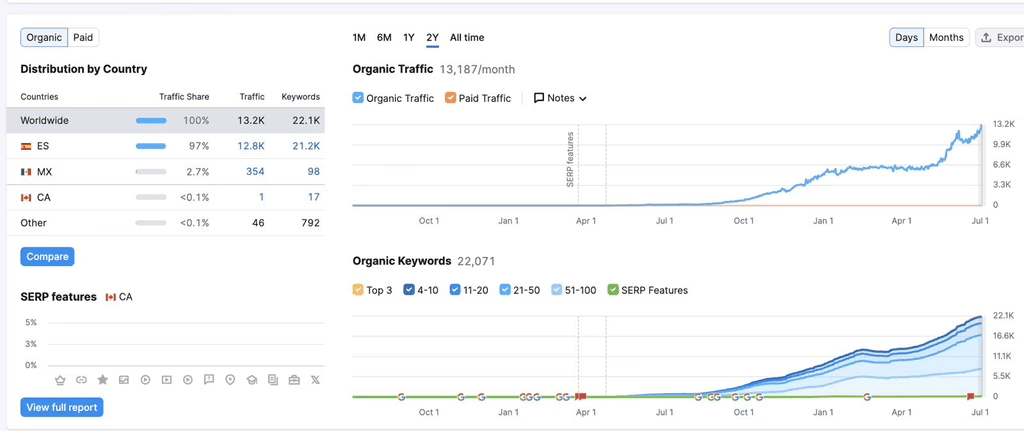
Content Execution & Publishing
Balancing Speed with Quality
While our client needed results quickly, we refused to compromise on quality. Our approach:
- Produced 3-5 strategic, high-value pieces monthly rather than dozens of thin posts
- Each piece addressed specific buyer-journey stages and pain points
- Leveraged AI writing tools for efficiency but maintained rigorous editorial standards
- Every post included original research, case studies, or unique perspectives
Content Types That Drove Revenue
The client’s highest-converting content fell into these categories:
Comparison & Alternative Guides: Generated 40% of qualified leads
ROI & Cost Calculators: High engagement and qualified prospect capture
Implementation Roadmaps: Positioned for larger deal sizes
Industry Benchmarks & Research: Established thought leadership
Customer Success Stories: Social proof and credibility building
UX & Conversion Rate Optimization
Driving traffic is only half the battle. We implemented user behavior analysis tools to understand where prospects were getting stuck and optimized conversion paths accordingly. This resulted in a 2.1x improvement in conversion rates.
- Simplified booking flows for consultations
- Strategic CTA placement based on scroll depth analysis
- Trust signals (testimonials, case metrics) placed above the fold
- Mobile optimization to capture in-market researchers
- Exit-intent offers to capture abandoned prospects
How to Replicate These Results
If you’re ready to build a revenue-generating SEO strategy, here’s what you need to succeed:
Step 1: Establish Your Technical Foundation
Before you publish a single word, ensure your site’s technical health is optimized. A well-built house has a good foundation.
- Implement schema markup for your industry (service, Organization, FAQ, etc.)
- Optimize for Core Web Vitals (page speed is a ranking factor)
- Ensure proper heading hierarchy throughout the site
- Set up Google Search Console and Google Analytics 4 properly
- Create an XML sitemap and verify in GSC
Step 2: Master Keyword Strategy (Focus on Intent)
Keyword research isn’t about volume—it’s about intent. Target keywords where your prospect is ready to buy, not just browsing.
- Identify high-intent keywords (comparison terms, cost-related, and implementation questions)
- Map keywords to specific stages of the buyer journey
- Analyze competitor content for these keywords (they’ve done the legwork)
- Prioritize keywords with conversion potential, not just search volume
- Build a content calendar around these keywords
Step 3: Create Content That Converts
AI tools are powerful, but they’re only as good as your strategy. Here’s how to create content that drives revenue:
- Write for the specific problems your buyers face, not generic topics
- Include data, research, or original insights (not just rewashed information)
- Structure content for easy scanning (short paragraphs, subheadings, lists, visuals)
- Include internal links to other revenue-focused content
- Optimize for featured snippets if they drive traffic in your niche
- Always include a clear CTA aligned with the page’s business objective
Step 4: Build Strategic Backlinks
Backlinks are the currency of trust. Quality beats quantity every time.
- Analyze competitors’ backlink profiles to find link opportunities
- Pursue guest posting on high-authority industry publications
- Build relationships with complementary service providers for mutual linking
- Get mentioned in industry roundups, awards, and research studies
- Focus on relevance and authority over sheer volume
Step 5: Measure, Optimize, Repeat
SEO isn’t set-and-forget. Success comes from continuous testing and refinement.
- Track not just traffic, but revenue-driving metrics (leads, demos booked, MRR)
- Analyze which content drives the highest-quality leads
- Test title tags and meta descriptions to improve CTR
- Monitor keyword positions and optimize underperforming pages
- Adjust strategy based on seasonal trends and market changes
Common SEO Mistakes That Slow Growth
Chasing volume over intent: High-volume keywords often have low commercial intent. Focus on keywords where prospects are ready to buy.
Publishing too much thin content: 50 mediocre posts underperform 5 excellent ones. Quality compounds over time.
Ignoring technical SEO: Google can’t rank what it can’t crawl or understand. Technical foundation is non-negotiable.
Writing for Google, not humans: Search engines reward content that serves users. If it doesn’t help your visitor, it won’t rank well.
Forgetting about conversion: Traffic without conversion is just vanity. Every piece should guide prospects toward a business goal.
Neglecting backlinks: While quality content is important, backlinks signal authority. You can’t ignore off-page SEO.
Why This Approach Works for Service Businesses
Service-based businesses live and die by the quality of leads they generate. Unlike product businesses optimizing for volume, service businesses need SEO that attracts qualified decision-makers. Our approach is tailored specifically for this reality:
- We target buyer-intent keywords that correlate with high-value clients
- We focus on thought leadership and trust-building content
- We optimize for conversion, not vanity metrics
- We build SEO strategies that compound over time into predictable revenue
- We understand the long sales cycles of B2B services and plan accordingly
Ready to Build Your Revenue-Driven SEO Strategy?
This case study represents just one path to success. Every business is unique, and your strategy should reflect your specific market, audience, and goals. If you’re ready to move beyond vanity metrics and build SEO that actually drives revenue, let’s talk about your situation.
About Brandleap Agency
Brandleap Agency specializes in SEO, content strategy, and digital marketing for service-based businesses across wellness, aesthetics, legal, industrial, and e-commerce sectors. We’ve helped dozens of businesses go from stagnant organic presence to revenue-generating search traffic. Our focus: strategy that converts.