If you’re searching for the best SEO companies for small business, this guide helps you avoid costly mistakes and choose an agency that actually delivers. Many small businesses lose money after hiring ineffective agencies, not because they skipped SEO entirely, but because the market is flooded with firms making identical promises: “top rankings,” “more traffic,” “guaranteed results.” When every pitch sounds the same, picking the right partner feels like guessing, and small businesses have the least margin to get it wrong.
This guide cuts through the noise. We’ll walk through realistic pricing, the deliverables and timelines a strong proposal should include, the contract clauses that should end negotiations immediately, and the exact questions that separate capable agencies from slick salespeople. The benchmark throughout is straightforward: strategic depth at a price point that works for an SMB budget. Brandleap Agency is built around exactly that combination, and we’ll use it as a reference point where relevant.
By the end, you’ll have a shortlist framework, a red-flag checklist, and enough context to evaluate any proposal with confidence.
What Separates Top Small Business SEO Companies from Generic Ones
Not all “small business SEO” is equal. The price difference between a $400/month package and a $1,500/month retainer often isn’t just about volume of work, it’s about whether strategy exists at all. Generic agencies apply the same template to every client, regardless of market, competition level, or site history. A legitimate SEO partner builds your strategy around your specific situation.
Strategy Depth vs. Cookie-Cutter Packages
Advanced strategy looks like this in practice: content clustering around your core services, semantic keyword mapping that captures how real people search (not just exact-match phrases), intent-based page structure, and a site architecture review before any content gets published. Many budget agencies skip all of that and go straight to publishing blog posts without a framework. The result is content that doesn’t rank and a client who wonders why they’re paying.
Semantic SEO, for example, asks “what concept should this site be the best answer for?” rather than “what keyword should this page target?” For a small business, that distinction matters. A plumbing company optimized semantically doesn’t just rank for “plumber Austin.” It captures emergency plumbing, leak repair, water heater issues, pricing pages, and FAQ content, giving the site topical authority that compounds over time.
Local and Niche Specialization
A service-area contractor needs an entirely different strategy than an e-commerce brand or a law firm. Local SEO agencies focus on Google Business Profile optimization, local citations, map pack rankings, and geography-specific content. National SEO targets broader non-location searches with heavier content and link-building investment. The agency you hire should know which approach you need and have a track record of delivering it.
Ask any agency about past clients in your specific industry before you go further. If a firm has mostly worked with SaaS companies and you run a dental practice, their playbook probably won’t translate. Specialization is a fast filter, and most agencies will tell you exactly where they’ve had wins if you ask directly.
How Small Business SEO Pricing Actually Works in 2026
Pricing confusion is one of the biggest reasons small businesses end up with the wrong agency. Either they underspend on a package that delivers nothing, or they overpay for services that don’t match their competitive reality. Here’s how the tiers actually break down.
The $300, $2,500/Month Range, Broken Down
At the lower end, $300, $800/month covers basic local SEO for low-competition niches or newly launched sites. Expect technical cleanup, Google Business Profile optimization, and local citation building, but minimal content production and little to no link acquisition. This tier is appropriate for businesses in markets where a few foundational fixes are enough to move the needle.
The $500, $1,500/month range is where most reputable small business SEO retainers land. A solid package at this level includes a technical audit, on-page optimization, a keyword strategy, and light content work. For most small businesses in moderately competitive local markets, this is the right starting point. Budgeting $750, $2,000/month gives you the safest planning range for a reliable SMB SEO services partner in 2026.
At $1,500, $2,500/month, you’re in growth territory: active content publishing, backlink acquisition, competitive keyword targeting, and monthly performance reviews. This tier makes sense for businesses in competitive local or regional markets where ranking isn’t just about fixing technical issues but consistently earning authority.
What Each Price Tier Actually Delivers
Price alone doesn’t predict results. A $2,000/month retainer with vague deliverables will underperform a $900/month package that specifies exactly what happens each month. Scope clarity matters far more than the monthly number. Packages under $500/month rarely include active strategy, they cover maintenance tasks at best and produce almost no movement in competitive markets.
Before comparing prices across agencies, compare scopes. Does the package include content creation or just optimization of existing pages? Does it include link building or only on-page work? The answers will tell you whether you’re comparing equivalent services or just monthly fees.
Contract Red Flags Every Small Business Owner Must Catch
A bad contract is often more damaging than no SEO at all. Once you’ve signed a 12-month agreement with no performance milestones and vague deliverables, you’re stuck paying for a service you can’t measure and can’t exit cleanly. Read everything before you sign anything.
Guaranteed Rankings and Vague Deliverables
Any agency promising “#1 on Google” or a specific ranking timeline is an immediate disqualifier. No agency controls Google’s algorithm, and no ethical firm will claim otherwise. These guarantees exist to close deals, not to set realistic expectations, so treat them as a clear signal to move on.
Vague deliverables are just as dangerous. A contract that lists “SEO services” without specifying tasks, timelines, or outputs gives the agency full cover to underperform. If you can’t look at the contract and know exactly what work happens in month one, what gets delivered by month three, and who is responsible for each piece, the contract isn’t protecting you. Trustworthy agencies provide clear deliverables, timelines, and responsibilities in writing, because they’re confident in what they deliver.
Lock-In Terms and Asset Ownership Clauses
Multi-year agreements with no exit clause or performance milestones are a trap. Reputable agencies offer reasonable notice periods, typically 30, 60 days, because they’re confident in their results. Anything longer without defined benchmarks suggests the agency knows the results won’t be strong enough to keep you voluntarily.
Ownership clauses are where small businesses get hurt most quietly. Some agencies retain ownership of the content they produce, your GA4 data, Search Console access, or your Google Ads account structure. When you leave, they take it all. Your marketing assets should belong to you from day one. Insist on it explicitly in the contract, and if the agency pushes back, that tells you everything you need to know. Also flag any rushed signing pressure, legitimate agencies don’t need you to decide in 24 hours.
What a Solid SEO Proposal Must Include
A strong proposal isn’t a list of services. It’s a documented plan: what happens in month one, what changes by month three, and how success gets measured. If a proposal doesn’t answer those questions, you’re buying a promise, not a plan.
Month-by-Month Milestones to Look For
Strong SEO consultants for small business typically follow a three-phase approach. Month one covers the baseline: a technical audit, content and competitor analysis, keyword strategy, tracking setup in GA4 and Search Console, and quick-win fixes. Month two moves to execution, priority on-page optimizations, first content pieces, internal linking improvements, and outreach kickoff. Months three through six shift to active publishing, link acquisition, and monthly performance reviews measured against the original baseline.
Vague “ongoing SEO” language with no phase breakdown is a red flag. It means the agency hasn’t thought through your specific site’s needs, or they’re intentionally keeping scope loose. Either way, it doesn’t serve you.
KPIs That Tie Directly to Your Business Outcomes
Every KPI in the proposal needs five things: a baseline, a directional or numeric target, a data source, a reporting frequency, and an owner. Organic traffic from Search Console, keyword ranking movement by cluster, organic conversions (calls, form fills, lead submissions), and technical health metrics like Core Web Vitals and crawl errors are the core set. Local businesses should also see map pack visibility, Google Business Profile calls, and direction requests on the list.
Watch out for proposals that report only on vanity metrics like total keyword volume or domain authority without tying anything back to actual leads or revenue. Traffic that doesn’t convert is not a business outcome. A serious agency will connect every metric to something your business cares about.
How to Compare the Best SEO Companies for Small Business Before You Sign
Good agencies answer hard questions directly. Weak ones give vague, reassuring answers that sound right but don’t actually commit to anything. The questions below will tell you which kind you’re dealing with before you put anything in writing.
Transparency and Reporting Checks
Start with the work itself: “Can you show me exactly what work happens in month one, and who on your team does it?” A confident agency will name the tasks and the roles. Then move to reporting: “What does your monthly report look like, and can I see a sample?” The sample should lead with business outcomes, leads, conversions, traffic trends, not just keyword rankings. Finally, ask about exit terms: “Who owns all accounts, content, and data if I leave?” The answer should be you, immediately, with no conditions.
Agencies that combine transparent pricing with advanced strategy tend to answer these questions directly because they have nothing to hide. Brandleap Agency structures its SMB packages around semantic SEO frameworks with clear monthly deliverables and full client ownership of every asset, those three questions get concrete answers, not reassurances. That’s the standard to hold any finalist to.
Using Case Studies to Verify Real Results
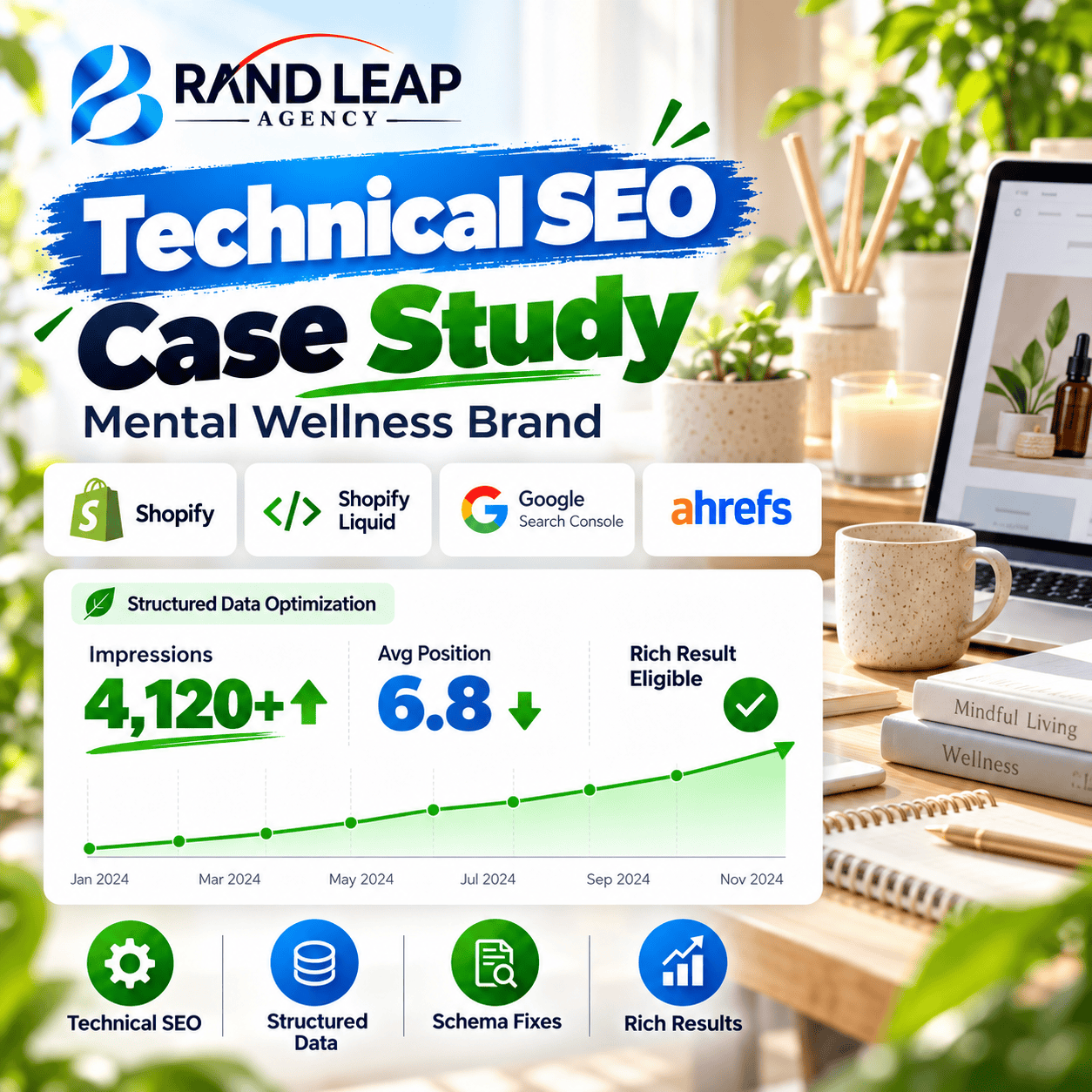
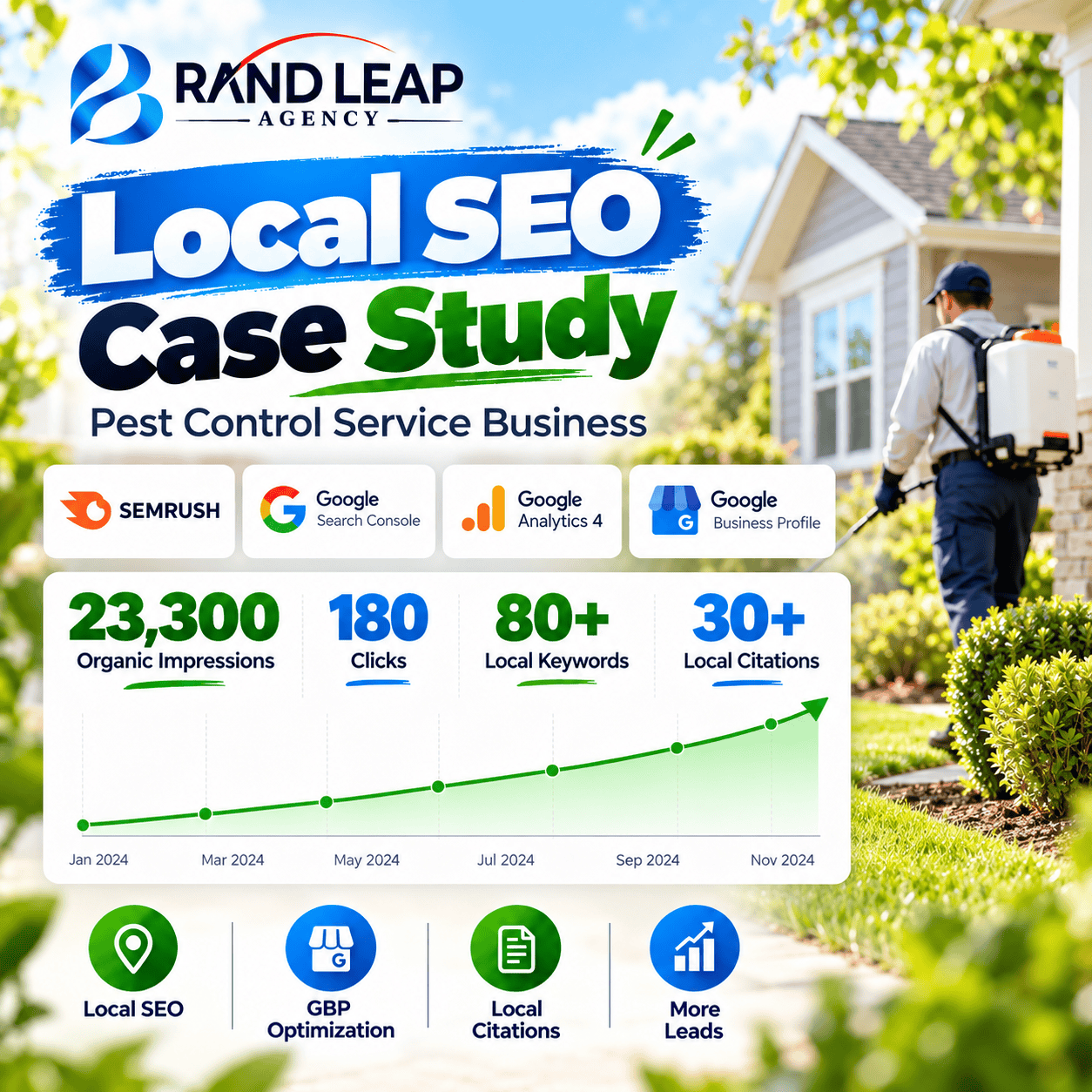
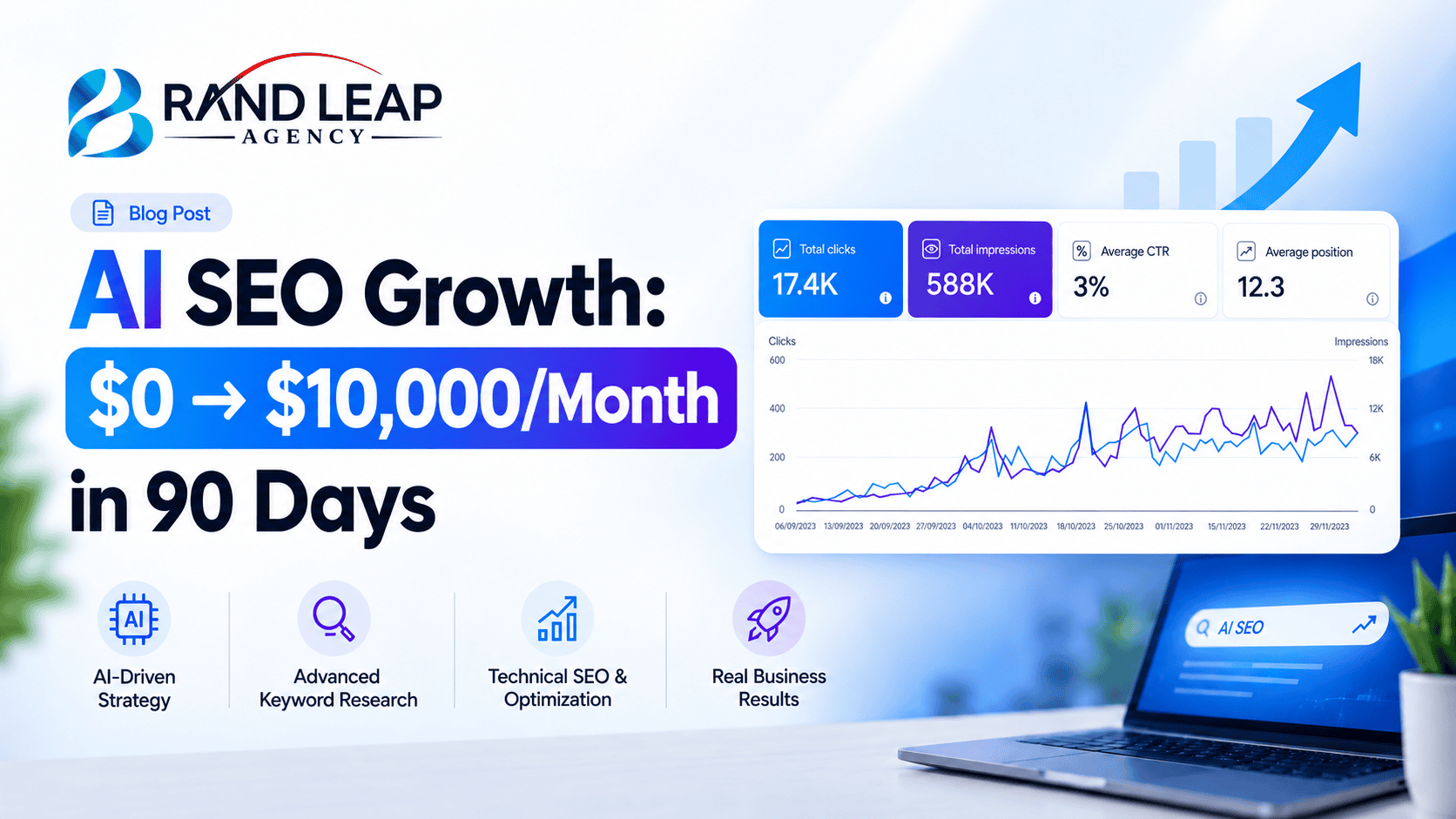
When reviewing case studies, look for three things: a named client in a similar industry, specific metrics with a clear baseline and timeframe, and realistic growth timelines. Case studies claiming to triple traffic in 30 days without context about the starting point aren’t credible. Real results typically take three to six months to show measurable traction and six to twelve months to become significant.
Cross-check any case study using third-party tools like Ahrefs or Semrush to verify whether the traffic or ranking trend broadly matches the claim. Ask the agency for a reference contact at a past client in a similar niche. A legitimate firm will provide one without hesitation. If they can’t produce a single reference willing to take a five-minute call, treat the case study library as unverified.
Build Your Shortlist with Confidence
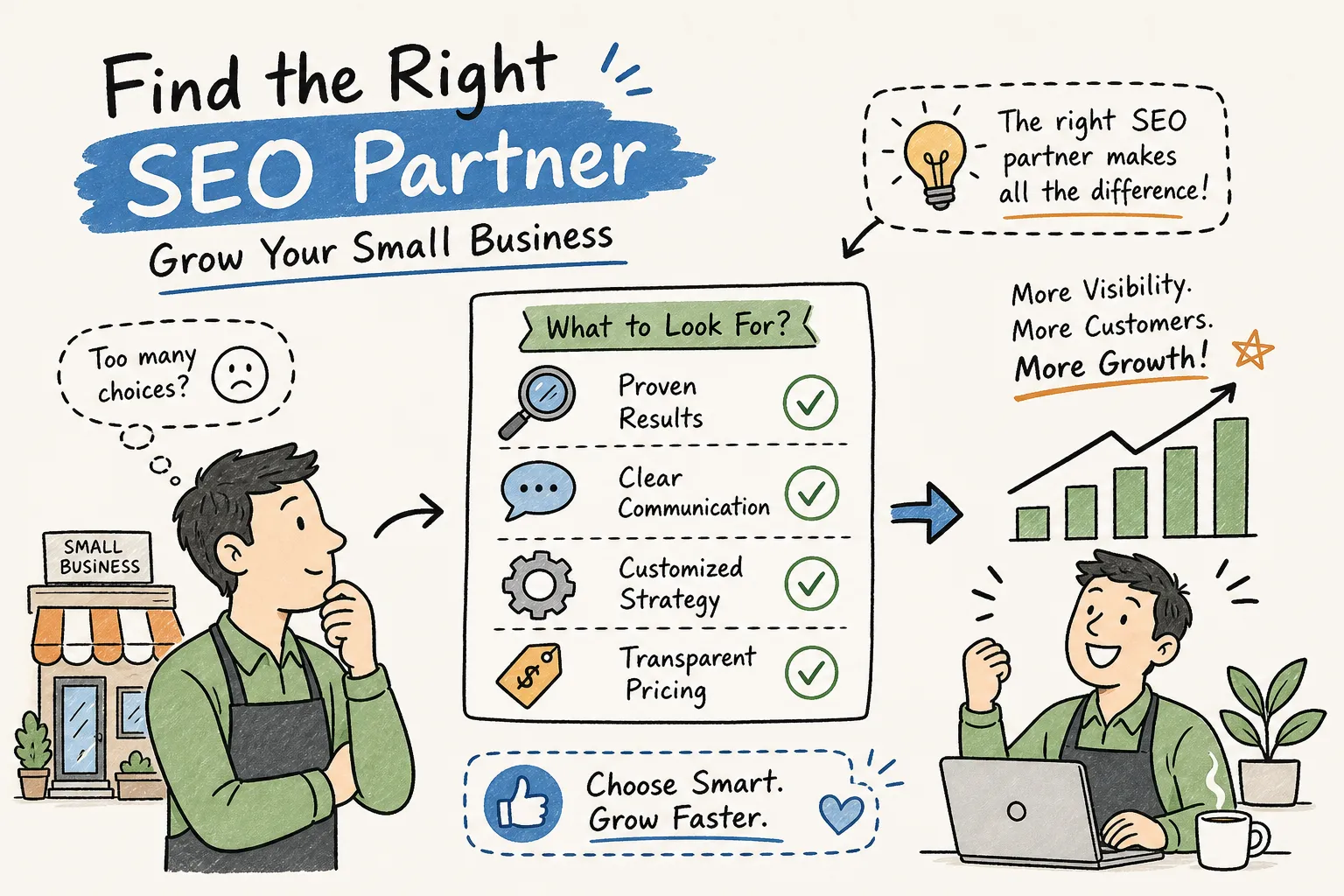
The best SEO companies for small business share a few consistent traits: they match your budget tier, communicate in plain language, specify deliverables upfront, and back their claims with verifiable case studies. That combination is less common than you’d expect, which is exactly why the criteria in this guide matter.
Use a two-step shortlisting process. First, filter by specialization and pricing tier. If an agency hasn’t worked with businesses like yours or prices significantly outside your planning range, remove them. Second, run every finalist through the contract and proposal checklist from sections three and four. Any agency that clears both filters is worth a serious conversation.
Small businesses looking for affordable SEO for SMBs, built around advanced semantic SEO strategy with clear deliverables, can explore what Brandleap Agency offers. Whether you work with us or use this guide to evaluate other partners, the goal is the same: find the best SEO companies for small business that earn your trust before the contract, not after. Book a consultation to see exactly what a strategy built around your business would look like.