
Choosing the right seo agency USA will determine whether your business gets predictable organic growth or wastes months and marketing spend. If you are vetting SEO agencies in the US, comparing US SEO companies, or looking for the best SEO firms in the United States, read on to translate outcomes into KPIs, spot public signals and red flags, and build a shortlist so you can hire an SEO agency in the U.S. with confidence.
Key takeaways
- Define outcomes: convert business goals into measurable KPIs and a time horizon (traffic, revenue, leads, or local visibility) so proposals are comparable.
- Shortlist fast: narrow to 3–5 U.S. agencies using public signals—case studies, Clutch/Glassdoor, and organic footprint—and remove any without recent, verifiable results.
- Verify technical skills: confirm the agency runs crawl audits, resolves indexation and canonical issues, and prioritizes page speed and technical debt remediation.
- Demand measurement: requires GA4-based reporting with organic sessions, goal and e-commerce attribution, and a scored 30/90-day brief to prove impact.
- Inspect contracts: insist on a clear SOW, deliverables, timelines, SLAs, IP terms, and fair termination clauses; treat opaque pricing as a red flag.
1. Quick shortlist: narrow to 3–5 U.S. SEO agencies fast
Cut vendor noise by defining the outcome you want and the timeframe for results. State whether you need increased traffic, revenue, leads, or local visibility, and convert those into specific KPIs such as organic sessions, MQLs, or local map impressions so proposals are comparable. Match expectations to the timeframe: a three-month engagement typically yields an audit and quick wins, while six to twelve months is realistic for meaningful organic gains. Keep your budget range visible—many U.S. ongoing engagements fall in the $1,500–$5,000 monthly band, with local packages often lower or more variable.
Pre-qualify agencies using public signals before scheduling calls. Scan client lists, recent case studies, Clutch and Glassdoor ratings, and on-site indicators such as keyword footprints or estimated organic traffic to verify results. Drop candidates with portfolio pieces older than two years, vague methods, or no verifiable outcomes. Score contenders with a repeatable rubric so your decisions stay objective; rate agencies 1–5 across eight criteria: specialization, documented outcomes, transparency, measurement stack, process, team, pricing, and contract fairness.
End this step with a shortlist of 3–5 finalists that align on KPIs, timing, and cost, and prepare a short RFP tailored to those priorities. Save your rubric and notes so comparisons remain repeatable for future vendor selection. Next, build an interview guide and an RFP template to vet those finalists in depth.
2. Services and specializations that matter for different needs
Start with technical SEO basics — they prevent quick wins from slipping away. Confirm the agency runs crawl audits, resolves index coverage and canonical problems, and prioritizes page speed and technical debt remediation. Expect a prioritized fixes list with clear ownership for implementation, plus QA for changes and a re-audit after fixes so issues do not return.
Content strategy should do more than publish blog posts. Look for topical clusters, content briefs, internal linking plans, and a repurposing roadmap; ask to see sample briefs and a content calendar to judge execution discipline. For link building, demand clarity: white‑hat outreach and digital PR differ from purchased links or private networks, so expect outreach targets, placement examples, and metrics for link quality such as relevance, referral traffic, and editorial context.
Match capabilities to your vertical needs: local SEO requires citation playbooks and Google Business Profile work, e-commerce needs product discoverability and structured data, and enterprise programs must show cross-team workflows and scalable processes. Prefer partners that present clear playbooks and related case studies for your category. From there, compare pricing models and timelines so you can choose the right package for your goals.
3. KPIs, reporting, and the measurement stack that proves impact
Make GA4 the reporting foundation of any engagement. Ask for organic sessions, goal completions, and e-commerce revenue attributed to organic traffic so activity ties to business value, and request month-over-month and year-over-year views with percentage lifts translated into estimated revenue or lead counts. Avoid vendors that only deliver ranking screenshots or other vanity metrics.
Visibility and SERP features show true reach beyond rank lists. Request keyword sets, visibility trend lines, featured snippet captures, and share-of-voice reports from tools such as Ahrefs or Semrush, and confirm scope and refresh cadence so you know whether data is weekly, biweekly, or monthly. Use the checklist below when reviewing visibility reporting:
- Visibility index and trendline for your keyword clusters
- List of SERP feature wins and the pages that captured them
- Share-of-voice and competitor visibility comparisons
If you’re looking for an seo agency usa, probe how the team models attribution and measures assisted conversions to show SEO’s multiplier effect. Ask whether they integrate GA4 data with paid channels and CRO experiments, and whether they track assisted conversions across touchpoints; look for concrete testing plans tied to SEO changes, such as headline A/B tests or landing page experiments with timelines for measuring uplift. Require action-driven reports that include an executive summary, top takeaways, and three recommended next moves each month, and confirm access to raw dashboards, the frequency of strategic reviews, and who attends those meetings so decisions get made quickly.
For practical KPI-reporting frameworks and templates that align GA4 with executive summaries and scorecards, see this guide on SEO KPI reporting.
4. Pricing models and realistic 2026 budgets (what to expect)
Know the common pricing models so you can match scope to budget: monthly retainers for ongoing growth, hourly for consulting or troubleshooting, and project fees for audits, migrations, or one-time overhauls. Ask for a written list of deliverables, a change-of-scope process, and an explanation of how work will be prioritized. Retainers are the default for predictable progress, while hourly or project pricing can suit discrete work or short experiments.
Expect realistic 2026 ranges: many SMBs budget about $1,500–$5,000 per month for ongoing SEO. Local packages often start at $300–$800 and can scale to $2,500–$5,000 or more, while competitive or enterprise programs run $2,000–$20,000+ monthly depending on scope and competition; setup or onboarding fees commonly run $1,000–$3,000. Benchmarks and detailed local pricing expectations for 2026 are available in this local SEO cost in 2026 write-up.
Price alone is meaningless without expected outcomes, so build a simple payback model: estimate incremental organic sessions, apply a conservative conversion rate, multiply by average order value, and compare projected revenue to monthly spend. Watch for hidden costs such as paid content placements, platform or data access charges, and extra revision rounds billed separately; clarify approval steps, caps on out-of-scope work, and billing cadence before signing. Use a proposal scorecard to compare agencies side by side — and if you need a refresher on how to package and sell SEO outcomes internally, this resource on How to Sell SEO may help.
5. Contracts, onboarding, and red flags you should not ignore
Start every engagement with a clear statement of work that lists concrete deliverables, timelines, reporting cadence, SLAs for updates, payment terms, termination notice, IP ownership for content, and confidentiality. Avoid vague scopes and insist on change-order language for extras to keep work and cost unambiguous. Make acceptance criteria part of the SOW so deliverables are testable.
- Deliverables and acceptance criteria
- Project milestones and deadlines
- Reporting cadence and sample report
- SLAs for critical updates and bug fixes
- Payment schedule, setup fees, and termination terms
- IP ownership, licensing, and confidentiality
- Change-order process and hourly rates for extras
Map onboarding to the first 90 days with names and responsibilities attached. Expect audit and strategy work in weeks 1–4, prioritized technical fixes and content briefs in months 1–3, and broader scaling after month 3 with checkpoints at 30, 60, and 90 days tied to measurable milestones. Ask for a rollout plan that shows who will handle each task, what access you must provide, and typical timelines for first visible results, so you can calibrate expectations.
Flag obvious warning signs early. Guaranteed rankings are a lie, and agencies that hide link sources, use private blog networks, or deliver opaque, vanity reports are high risk; if a price seems too good for the scope, request verifiable case studies and named references, demand transparency in link building, access to tracking tools, and a clear developer handoff process. Use the vetting script below on discovery calls to separate operators from sales pitches and move on if answers are vague or unverifiable.
- What measurable client outcome did you deliver in the past 12 months?
- Who will do the work, and can I meet them?
- Which tools do you use for tracking, and which access will I get?
- Show me three relevant case studies and references.
- What is your link-building approach, and can you name sources?
- How do you measure revenue from SEO?
- What is included in month-to-month reports?
- What are typical timelines for first visible results?
- How do you handle technical fixes that require dev resources?
- What are cancellation terms and notice periods?
- How do you resolve conflicts between SEO recommendations and product or UX?
- What are your onboarding milestones, and who owns each one?
6. Case study: Brandleap Agency grew a mid-size e-commerce client’s organic visits by 50%
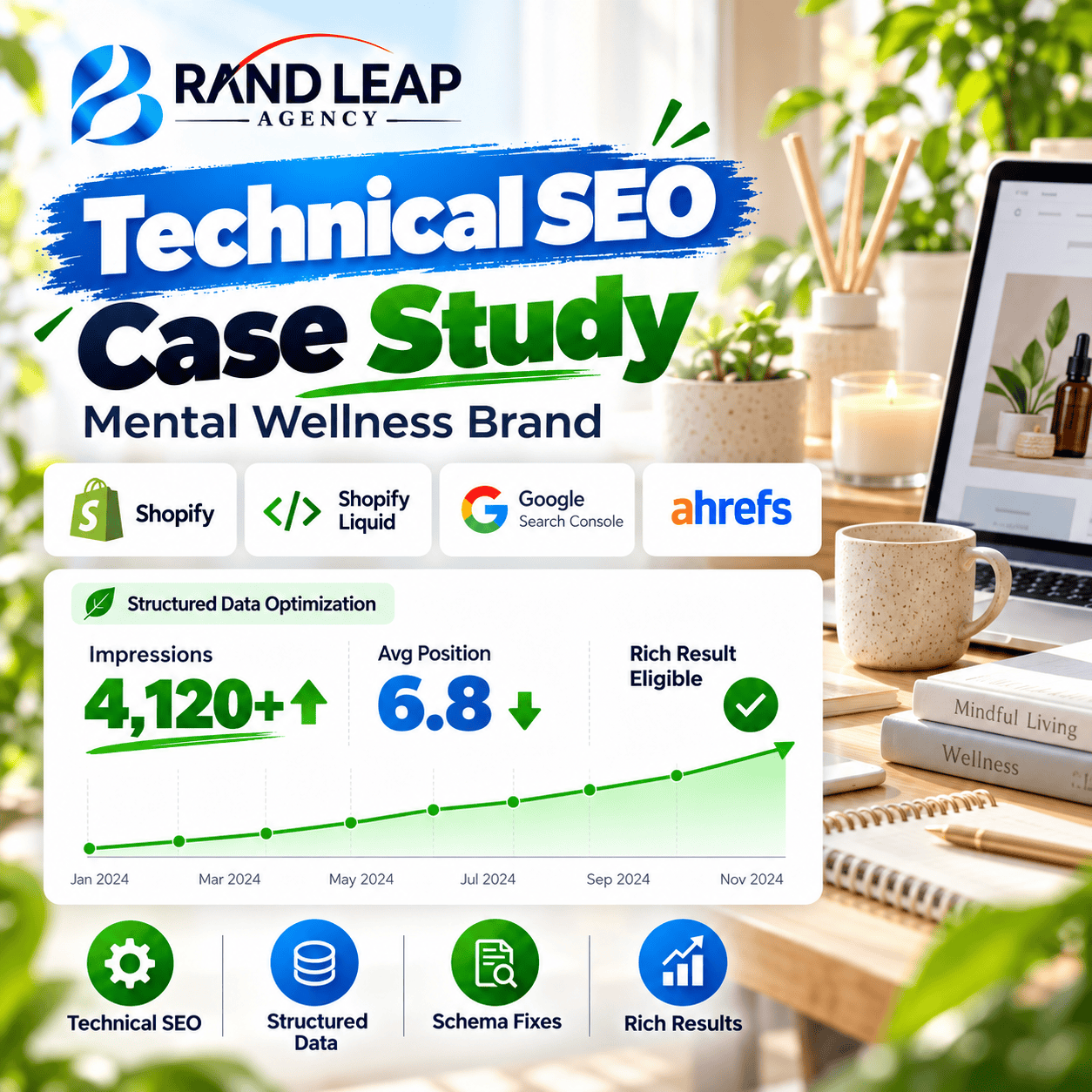
The client was a mid-size e-commerce brand with stagnant organic visibility and thin content clusters across competitive categories. An audit uncovered crawl issues, duplicate indexation, slow templates, and several opportunity pages with clear purchase intent but low rankings. That diagnostic clarity shaped a prioritized plan: fix blockers first, then scale intent-driven content and outreach.
Brandleap Agency’s SEO services in New York combined technical remediation with content engineering tailored to e-commerce SEO. The team implemented schema markup, canonical cleanup, and site speed optimizations while rolling out a six-month content calendar focused on content cluster development and buyer-intent pages. The program included improved internal linking, selective outreach to high-value publishers, weekly QA, and monthly performance reviews to keep delivery tight.
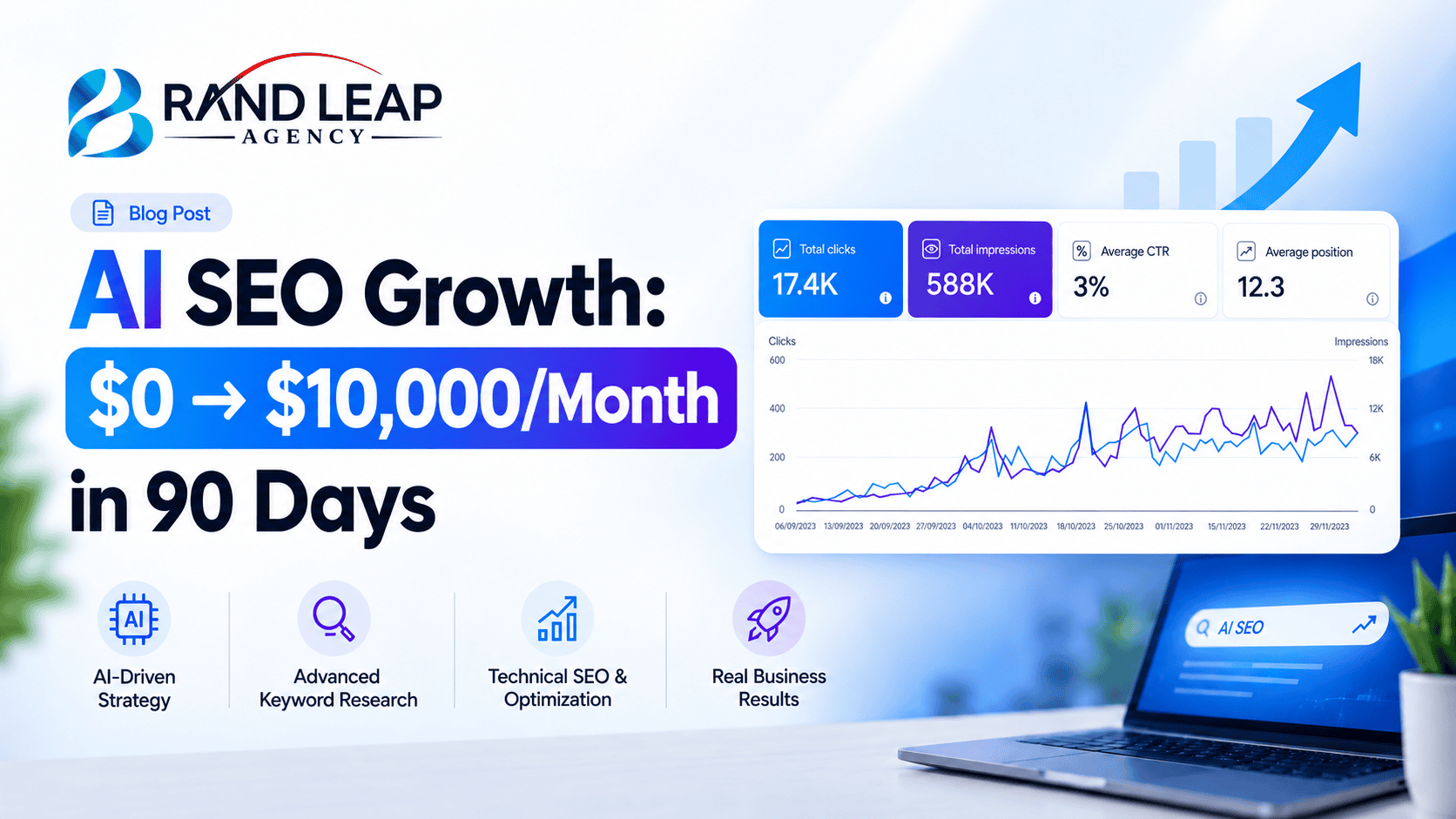
The results were measurable: within six months, organic visits rose by 50%, top‑10 keyword share expanded, and conversion-ready traffic increased significantly. Reporting tied organic sessions to goal completions so the client could see revenue impact, and baseline metrics, plus a timeline of wins made ROI visible and repeatable. Use this case study as a checklist: diagnostic clarity, a prioritized roadmap with named deliverables, and GA4-based reporting that ties sessions to conversions.
Choose with confidence and act today, SEO Agency USA
Start by narrowing to a practical shortlist and focus on outcomes you can measure. Shortlist 3–5 agencies that clearly align with your business outcome and time horizon, verify they run technical SEO checks and address index coverage and site speed, and compare services and specializations rather than price alone, so proposals become truly comparable. For additional context on identifying top providers, see this roundup of the best SEO agencies in the US.
When you evaluate final proposals, verify contract terms, sample reports, and named references before signing. For quick reference on agency pricing and profiles you can cross-check, consult industry listings and pricing guides like Clutch’s agency pricing to understand market rates and package norms. If you are interested in an SEO Agency USA. Contact me for Comfortable Prices.