Most business owners who’ve paid for blog content know the frustration: you get articles delivered on schedule, the word counts look right, and then the silence hits, no rankings, no traffic, no leads. The problem isn’t how much content you’re publishing. Volume without strategy is just noise. Hiring an SEO content writing company early in your strategy is what separates a content calendar that compounds into organic growth from one that quietly drains your budget.
An SEO content writing company isn’t a typing service. It’s a strategic operation that maps your content to search demand, user intent, and organic growth outcomes before a single word gets written. At Brandleap Agency, our blog-driven approach, built around targeted, semantically structured content, reflects the same intent-mapped process we apply for clients. The results build month over month, which is why we structure every engagement around the same framework we describe here.
This article breaks down exactly what these companies do, how they differ from general copywriting services, what formats and pricing you should expect, and the specific questions to ask before you sign anything.
What an SEO content writing company actually delivers
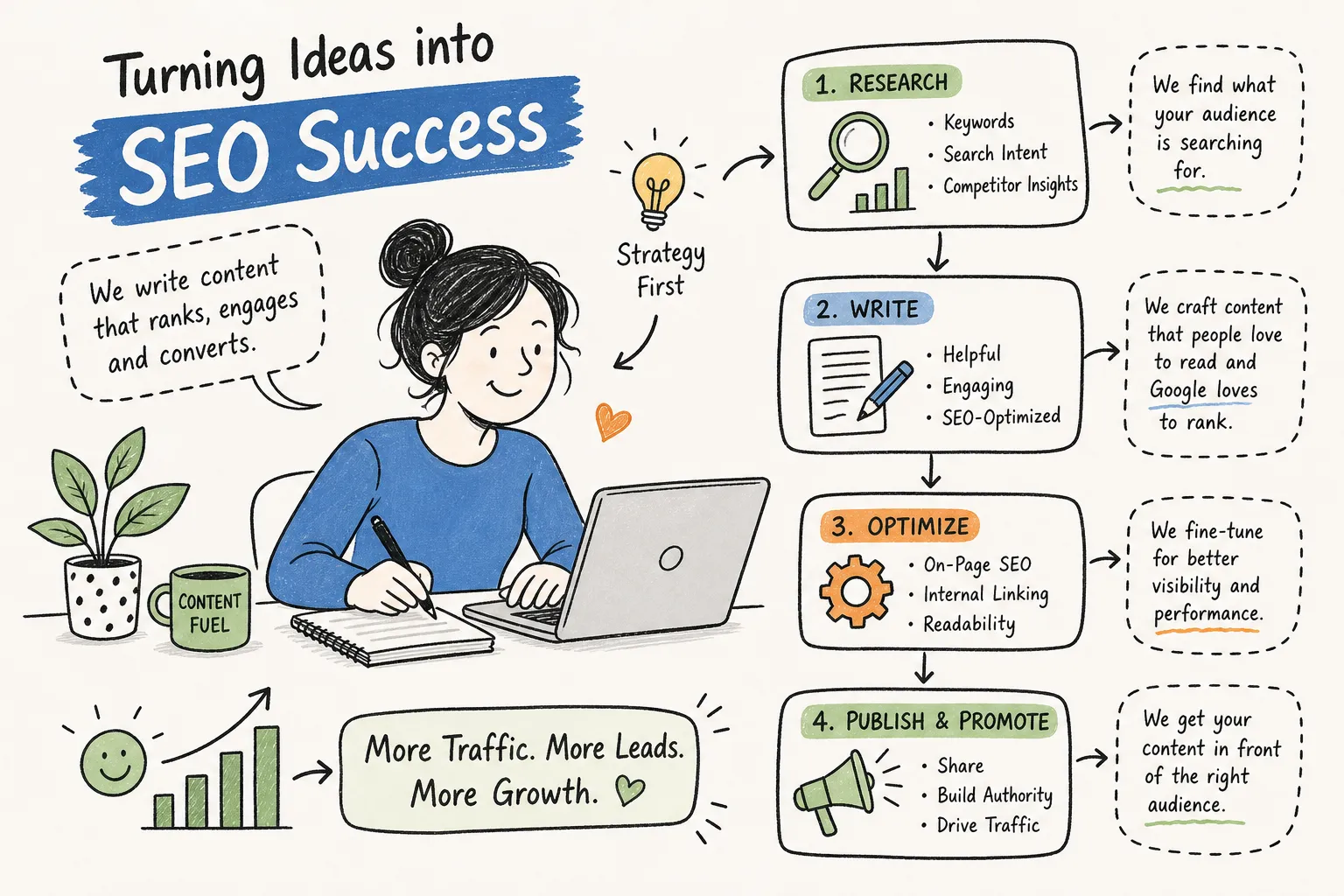
The work starts long before anyone opens a blank document. A legitimate SEO content writing company begins with keyword research, topic clustering, search intent analysis, and a structured content brief. That brief is the blueprint for everything that follows, and its quality is often the clearest signal of whether you’re working with a strategic partner or a writing-for-hire operation.
A real content brief includes the target keyword and its semantic variants, recommended word count based on competitor benchmarks, internal linking opportunities, SERP-specific formatting guidance, and a competitor gap analysis. It tells the writer what to cover, who the reader is, what the page needs to accomplish, and how to structure sections so the content matches what Google already rewards for that query.
Compare that to what many low-cost freelancers typically deliver: short posts without strategic briefs, the keyword dropped in a handful of times, and no structural logic connecting the content to what the SERP actually rewards. The writing might be readable. Without that foundation, it’s unlikely to rank, and that pattern holds regardless of how polished the prose sounds.
On-page optimization built into every draft
Skilled SEO content providers don’t write for humans and then optimize afterward. They write for humans and search engines at the same time, treating on-page structure as part of the content itself rather than an afterthought. Title tag recommendations, meta description copy, H1/H2 hierarchy, internal link anchor text, and structured formatting are all built into the initial draft.
This is why SEO content takes longer and costs more than commodity writing. It requires genuine understanding of how search algorithms evaluate content relevance, topic coverage, and page structure. You’re not paying for words per se. You’re paying for the strategic thinking that makes those words findable.
How SEO content writing differs from general copywriting
This is the distinction most buyers get wrong, and it’s often the reason they end up with content that neither converts nor ranks. The two disciplines serve fundamentally different purposes in a digital marketing strategy, and confusing them leads to expensive misalignment.
General copywriting is persuasion-first. It assumes the reader is already in front of the content and focuses entirely on driving a specific action: buy, sign up, click, or call. Landing pages, ad copy, and email sequences are the natural home of a skilled copywriter. The job is conversion, not discoverability.
SEO content writing is search-first. The architecture of the content, its topic depth, semantic coverage, and structural signals, is designed to earn a search ranking before any conversion can happen. The content has to be found before it can persuade anyone of anything.
Why search intent rewrites the entire content strategy
Every query a person types into Google reflects one of four intent types: informational (they want to learn), navigational (they want to find a specific site), commercial (they’re researching options), or transactional (they’re ready to act). A content marketing agency must map every piece to the right intent type before the writing brief is even created.
A product page written like an informational blog post won’t rank for commercial keywords. Effective SEO copywriting services align content structure, word choice, calls to action, and depth to what Google already surfaces for that query. Misjudge the intent and the page fails regardless of how well it’s written.
Content formats a quality provider should offer
Not every content writing agency does all formats well, and not every format serves the same business goal. Understanding what you actually need before you evaluate a provider will save you from hiring a specialist in the wrong area.
Blog writing services and pillar pages form the foundation of most organic content strategies. Blog posts target mid-funnel, long-tail keywords where you can build rankings on specific questions and topics. Pillar pages build topical authority by covering a broad subject comprehensively and linking out to supporting cluster content. Together, they signal topical depth to search engines and lift rankings across the entire cluster, not just individual posts.
For e-commerce and service businesses, product and service page copy is where SEO content writing connects directly to revenue. This format requires tighter copy, stronger commercial intent alignment, and conversion-aware structure. It’s a different skill set than blog writing, and not all article writing services can execute it without diluting the commercial signal.
Technical content, how-to guides, comparison pages, and FAQ content, adds another layer of complexity. It demands subject matter knowledge alongside SEO discipline, which is why industry specialization matters when you’re evaluating website content writers. A writer who understands your sector will produce content that reads with authority, not just keyword coverage.
How to evaluate an SEO content writing company before you hire
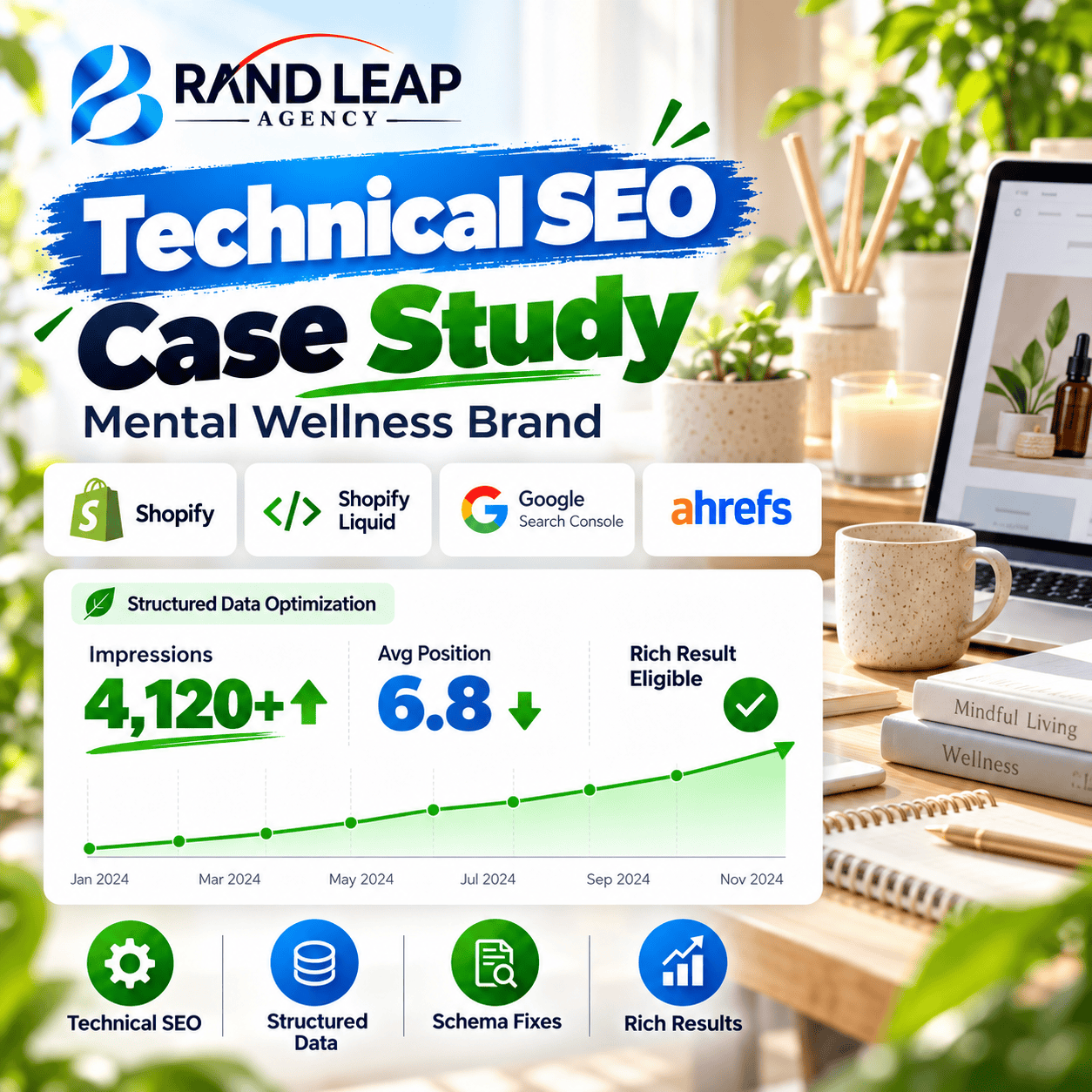
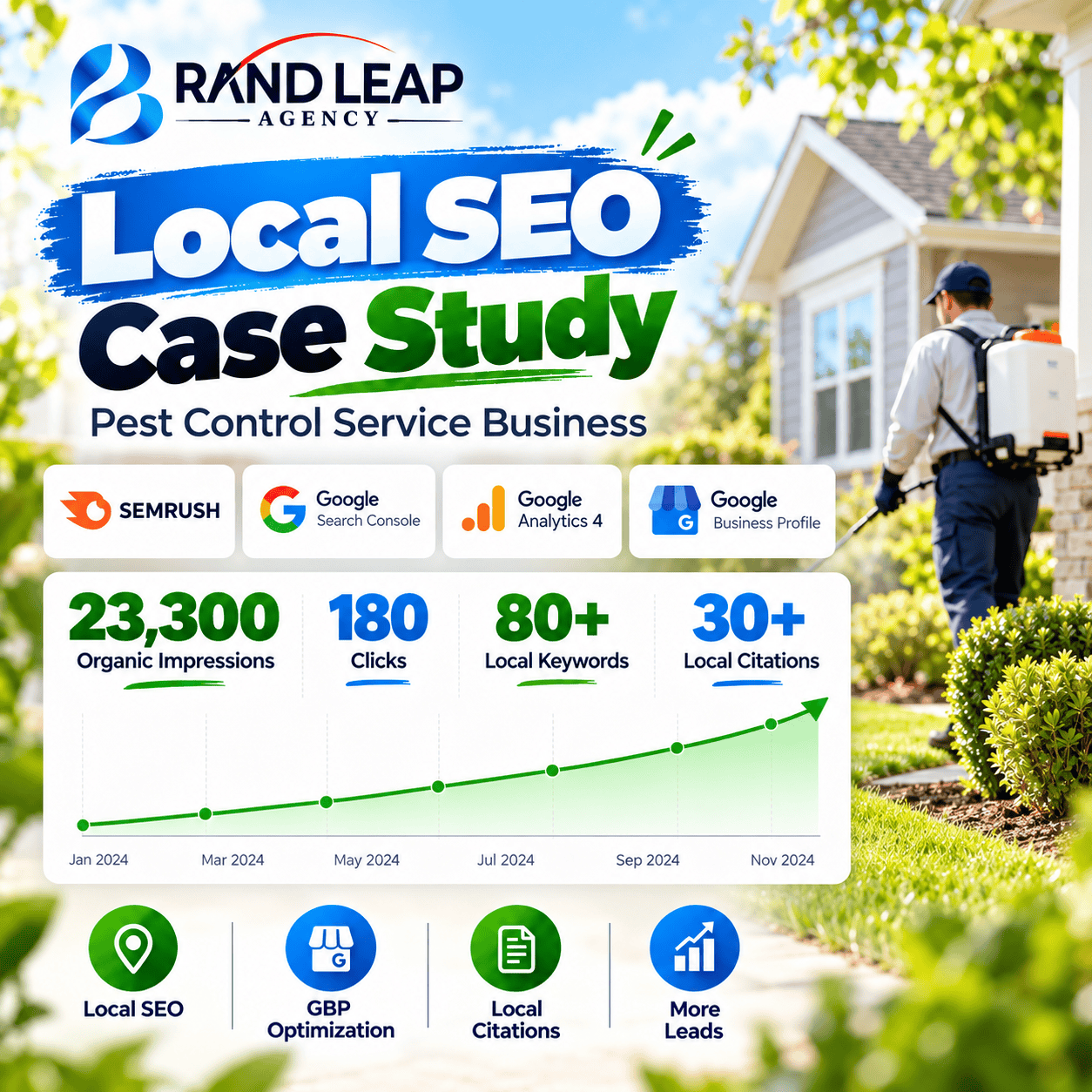
Case studies are the most useful filter at the shortlisting stage, but only if they’re backed by real performance data. A credible SEO content writing company should be able to show organic traffic growth tied specifically to their content work, metrics like monthly organic sessions, keyword ranking improvements, and time-to-rank data.
The standard worth looking for: case studies backed by Google Search Console data or Google Analytics, not screenshots of rank trackers or hand-selected vanity metrics. Some providers in the market have published GSC-verified results showing meaningful traffic growth for their clients, that level of specificity is what separates a genuine case study from a testimonial. When reviewing any provider’s case studies, look for documented traffic growth with clear before-and-after comparisons and identified content as the primary driver.
Always check whether the case study client operates in a comparable industry and domain authority range to yours. Results from a well-established SaaS brand with thousands of backlinks don’t automatically transfer to a local service business or a newer e-commerce site.
Industry specialization, turnaround times, and revision policies
Specialization matters more than most buyers realize. A content writing agency that focuses on legal, SaaS, or e-commerce has built institutional knowledge in that niche. Generic providers produce generic output, and generic output doesn’t build authority in competitive search environments.
On turnaround, the industry standard for a 1,500-word SEO piece runs three to seven business days from most credible providers. For research-heavy or specialist content, sub-48-hour delivery is often a quality red flag, there’s not enough time to conduct proper keyword research, build a content brief, draft, and revise without cutting corners somewhere. For shorter or lower-complexity pieces, some credible providers do offer legitimate rush options in the 24-to-72-hour range. For premium or niche-specialist content, expect one to two weeks.
Revision policies reveal a lot about output standards. One to three rounds of revisions is the industry norm, with some services offering unlimited revisions depending on the tier. Providers who charge extra for basic adjustments or offer zero revisions are signaling that they prioritize throughput over quality. Providers who advertise unlimited revisions without defining scope are worth questioning too, clarity on what a revision includes matters as much as the number offered.
What it actually costs: realistic pricing in 2026
Budget content runs roughly $0.03, $0.10 per word. This tier typically delivers commodity output with minimal strategy, and the results reflect it. Mid-tier SEO writing, where most small businesses operate, runs $0.10, $0.25 per word. Expert-level or niche-specialist content runs $0.25, $1.00 or more per word, and that ceiling is appropriate for industries where content quality directly correlates to professional credibility.
In per-article terms, expect $45, $120 for a budget 1,500-word piece, $150, $375 for solid mid-tier SEO content, and $450, $1,500 or more for premium, research-heavy articles from specialist providers. Most reputable agencies land in the $200, $500 per article range for standard deliverables.
For ongoing programs, most small businesses working with a dedicated content writing agency fall into the $1,500, $5,000 per month range, based on typical market positioning across the industry. This typically covers four to eight articles per month with strategy, content briefs, and on-page optimization built in. Larger agency retainers with full content strategy, production, and reporting run $5,000, $15,000 per month, appropriate for established brands scaling content output aggressively, not for early-stage businesses building from scratch.
Questions to ask before signing with any content provider
The right questions separate a strategic SEO content provider from a writing-for-hire service in one conversation. Ask every provider on your shortlist the same set before you request a proposal.
- How do you research target keywords before writing?
- Do you provide a content brief before drafting begins?
- How do you measure content performance after it’s published?
- What’s your process for aligning content with search intent?
- Can you show case studies with GSC or GA-backed data from a comparable industry?
A provider who can’t clearly answer the first two isn’t delivering real SEO value, regardless of how polished their website looks. The brief and keyword research are non-negotiable entry points for credible work.
The red flags worth walking away from: providers who guarantee top rankings, agencies that skip the content brief stage entirely, writers who never ask about your audience or business goals, and retainer packages with no reporting or performance tracking included. Any provider who can’t connect their content deliverables to business outcomes, leads, organic sessions, or keyword rankings, isn’t equipped to be a strategic partner.
End your evaluation practically: shortlist two or three providers based on verified case studies, pricing transparency, and specialization fit. Request a sample piece or a paid trial article before committing to a full retainer. One strong piece tells you more about a provider’s actual capabilities than any sales conversation will.
The right hire makes the difference
Hiring an SEO content writing company is a different decision than hiring a copywriter or a general content agency. The strategy, process, and measurable outcomes are fundamentally different. The evaluation framework is straightforward: look for verified results, clear process documentation, reasonable pricing, and specialization that matches your industry and competitive environment.
The Brandleap Agency blog exists because consistent, strategically built content compounds over time into real organic growth. Every article we publish follows the same brief-driven, intent-mapped process we’ve described here, and the results build on each other month over month. If you want to see that approach applied to your business, whether you need a full content strategy, an SEO audit of what you already have, or a partner to build the system from the ground up, reach out to us for a consultation. The first step is understanding what your content is actually doing right now.