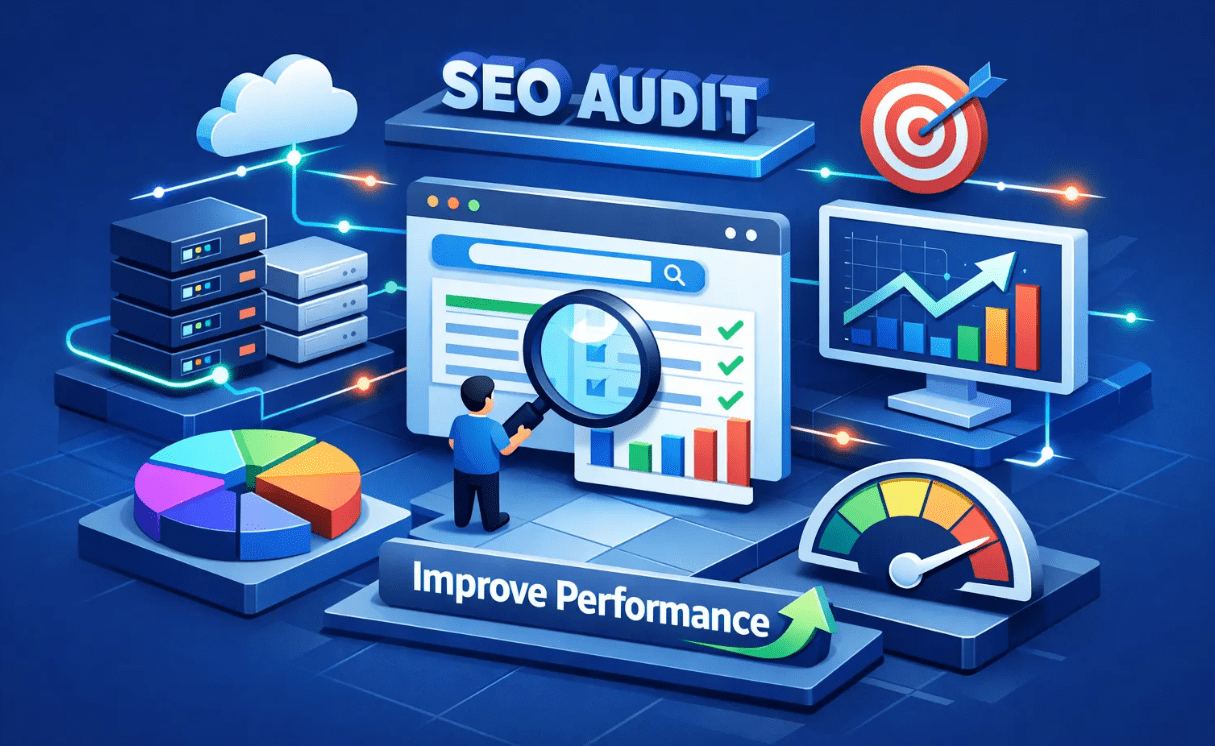
SEO audit services analyze your website’s structure, content, and performance to identify issues that limit visibility. By uncovering technical errors, keyword gaps, and optimization opportunities, they help improve search rankings, enhance user experience, and drive more targeted organic traffic to your site.
Key takeaways
- Actionable roadmap. Professional seo audit services deliver a prioritized plan that names what to fix, why it matters, who owns it and the expected impact. That clarity shortens decision cycles and prevents duplicated effort.
- Technical foundations. Start with a full crawl, canonical map, redirect chains and Core Web Vitals fixes to remove visibility blockers and preserve crawl budget. Addressing these items first protects the value of later content work.
- Data-driven priorities. Link GA4 and Search Console to query-level CTR, traffic and conversion data to estimate impact and sequence work by ROI. Sequencing by ROI keeps teams focused on changes that drive measurable traffic and conversions.
- Process over labels. Evaluate proposals on methodology, verification steps and timelines rather than deliverable names. Require an analyst to validate tool findings so recommendations reflect your business context.
- Prove value quickly. Run a page-level technical check, scope one prioritized fix, assign an owner and set a two-week milestone to demonstrate impact. A short test reduces risk and builds support for larger initiatives.
What professional seo audit services cover
A true professional seo audit service does more than list errors. It converts technical, content and authority observations into accountable tasks, measurable KPIs and a strategic roadmap tied to business outcomes. When you hire seo audit services, expect clear owners, timelines and estimated lift for each high-impact item so your team can prioritize and track results.
Work begins with a technical site crawl and infrastructure analysis that covers every URL. Analysts flag status codes, redirect chains, XML sitemap and robots rules, indexation anomalies, mobile rendering issues and Core Web Vitals failures to identify visibility blockers. Deliverables from this phase typically include a full crawl export, a canonicalization map, a redirect chain report and a prioritized list of critical errors for developers to fix first.
Next, the on-page and content inventory is paired with a semantic gap analysis comparing your pages to competitors and to target intent. Auditors review title and meta hygiene, heading structure, thin or duplicate pages and content relevance against target keywords. The practical output is a page-by-page action table recommending update, consolidate, noindex or redirect for each URL and suggesting keyword targets for rebuilding traffic potential.
Finally, the audit connects backlink authority and analytics to conversions. Backlink work covers quality scoring, toxic link identification, anchor-text distribution, outreach priorities and a disavow file if needed. Analytics and Search Console analysis provide query-level CTR insight, pages losing impressions and event/funnel checks with tracking fixes so every recommendation maps to traffic and conversion loss. Agencies then prioritize those findings and turn them into an executable roadmap.
How agencies run an audit and turn findings into work you can execute
Judge proposals on process, outputs and timelines rather than catchy deliverable names. A clear audit plan specifies when you’ll receive the crawl, when analysts validate findings and when a prioritized roadmap will arrive. Most agencies use a hybrid workflow: large-scale automated crawls and log analysis surface issues quickly, then senior analysts verify findings, remove false positives and estimate business impact. That approach reduces noise and ensures high-impact fixes rise to the top of your website SEO audit.
- Executive summary. A one-page view of top problems, expected impact and recommended next steps, with clear owners and acceptance criteria.
- Technical crawl summary. Crawl metrics, response codes and prioritized errors, plus reproducible crawler links and sample screenshots for verification.
- Indexation and sitemap. Which pages are indexed, sitemap health and blocking issues, with a list of corrective actions and verification steps.
- Page inventory and content map. Every page’s status and recommended action, with row-level decisions and traffic justification for each item.
- Keyword ranking snapshot. Target keywords, current ranks and quick wins, including data source and ranking date for transparency.
- Backlink profile. Toxic links, strong links and a remediation plan with an exportable list and suggested outreach actions.
- Prioritized roadmap and implementation board. Tasks sorted by impact and effort with owners and timelines, delivered as an interactive board or spreadsheet you can act on.
The action plan should use an effort/impact matrix with assigned owners, realistic timelines and estimated traffic or revenue impact for major fixes. Request an interactive project board so teams can pick tasks, update status and track verification steps. When you request seo audit services, require a deliverable set that moves from diagnosis to execution without handoff friction and confirm delivery dates before you sign. Next is an overview of the tools and methodology auditors use, followed by a short Brandleap case example. Read more on the Brandleap Agency Blog.
Tools, methodology and a subtle Brandleap case study
Automated tools provide wide coverage and speed, but they do not replace human judgment that turns data into action. When you engage seo audit services you should expect both automated discovery and strategic prioritization aligned to business goals. Analysts should rescore tool-flagged findings against conversion impact before publishing a roadmap.
A typical tool stack and what each platform contributes to a site audit workflow follows. These platforms feed the process, not the final roadmap, and analysts rescore findings against business value and conversion potential.
- Semrush: keyword research, organic visibility trends and competitive gap analysis to shape content priorities.
- Ahrefs: backlink profile and content explorer for link opportunities and competitor intelligence.
- Screaming Frog: full-site crawl to surface indexation issues, redirect chains and on-page tag problems.
- Google Search Console: index coverage, search queries and crawl flags from Google’s perspective.
- GA4: behavior, conversion funnels and page-level engagement to tie SEO to business outcomes.
- PageSpeed/Lighthouse: Core Web Vitals diagnostics and actionable performance recommendations.
Compare popular auditing platforms in the 10 best website and SEO auditing tools. Automated scans flag potential issues, then teams verify findings with a short audit checklist and manual checks before prioritizing. Verification includes sample page checks, UX and Core Web Vitals validation on primary funnels and editorial review of high-value pages to catch nuances tools miss. Typical verification steps include rescoring pages by business value, confirming indexing and canonical signals on a representative sample, and validating content quality and intent alignment manually.
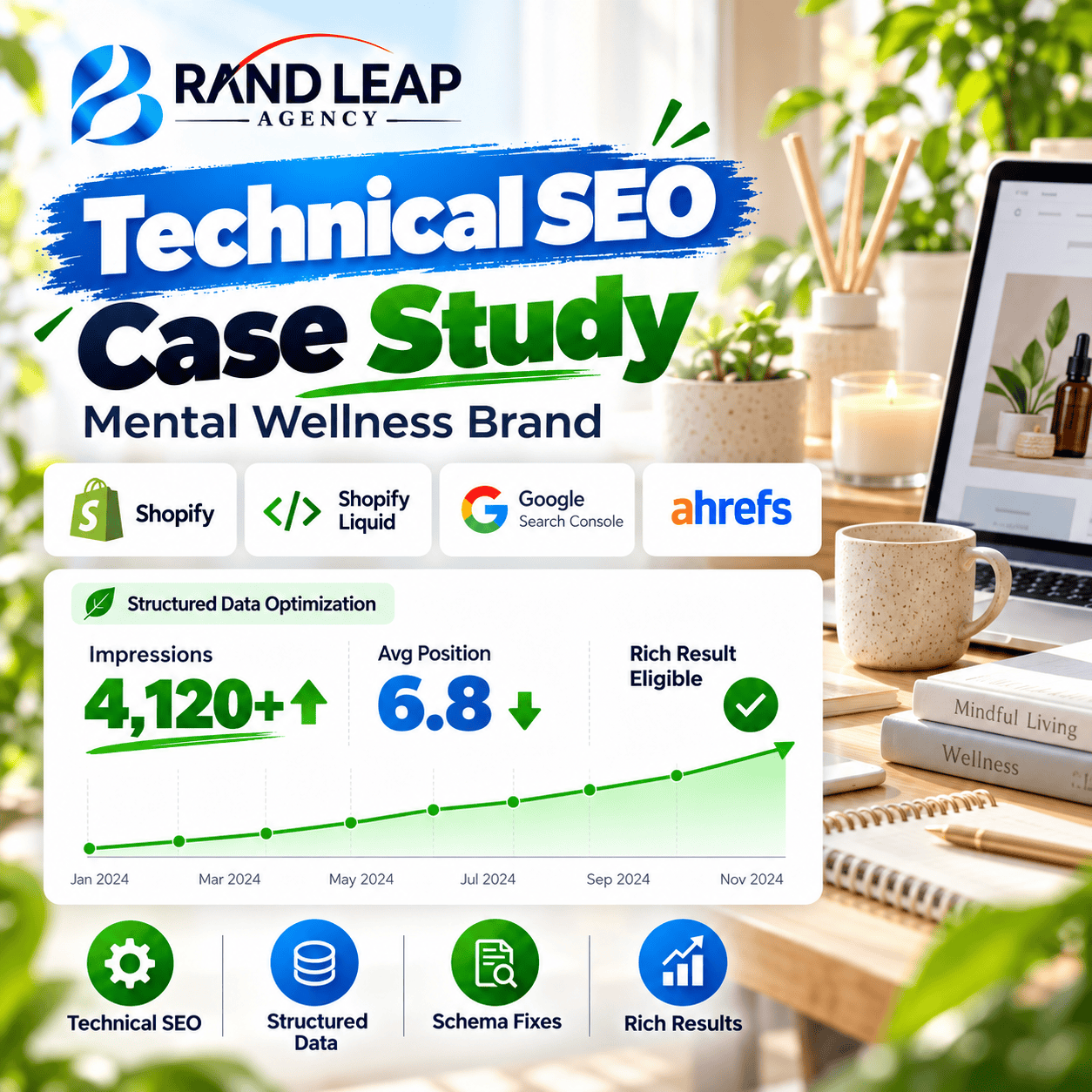
Brandleap’s proprietary audit tool runs a full inventory, scores pages by business value and produces a prioritized roadmap. For a Best Local SEO Service client with indexing and content fragmentation problems, the team implemented the top 12 items, including redirect cleanup, content consolidation, speed fixes and targeted internal linking, and organic traffic rose 40% within the measured window. Deliverables included the inventory spreadsheet, a ranked action board and implementation support. Expect measurable lifts within 8 to 16 weeks once fixes are deployed and tracking is in place.
Common problems audits uncover and realistic fixes
Audits commonly uncover technical faults that block visibility and conversions, such as redirect chains, broken links, crawl budget waste, non-indexed pages and HTTPS misconfigurations. Core Web Vitals failures also frequently prevent pages from ranking and converting well. Small issues like single redirect loops or isolated 404s are typically fixed in hours to days by a developer. Larger work, such as eliminating render-blocking resources or reworking server-side rendering, often takes several weeks and requires dedicated engineering time.
On-page content problems are frequent and often cheaper to start fixing than expected. Thin or duplicate pages respond to content expansion, canonicalization or consolidation, while title and meta errors and heading misuse can often be corrected with bulk CMS updates. Simple meta and heading fixes can roll out in days for hundreds of pages, while quality content expansions or consolidation depend on writers and approval cycles and may take weeks to months. For missing structured data, add schema via templates or tag manager snippets and schedule developer time for template changes and editorial updates.
Backlink cleanup and acquisition follow different timelines and budgets. A backlink audit to identify toxic links is fast and generating a disavow file takes days, but ranking recovery can take several months. Outreach for link acquisition is ongoing and typically requires continuous campaigns with monthly touchpoints, pitched content and follow-ups. A reputable seo audit company will separate cleanup recommendations from long-term acquisition plans and outline expected recovery windows so you can budget appropriately.
Use these timelines to vet vendor quotes and estimate effort by role, such as developer hours for technical fixes, content hours for remediation and outreach hours for link work. As a rough cost band, minor technical cleanup often falls into the low four-figure range, while multi-week Core Web Vitals work or large content overhauls move into mid-to-high four figures. Ask vendors for a breakdown tied to milestones so you can compare proposals on expected impact. Below are common pricing models and how to compare them.
How seo audit services are priced and what affects cost
Use this buyer’s cheat sheet to evaluate proposals and compare apples to apples. Typical scope bands are basic audits $500 to $1,500, mid-range audits $1,500 to $5,000, full strategic audits $2,500 to $7,500 and enterprise engagements $10,000 and up. Those ranges depend on page count, crawl complexity, access requirements and whether the provider includes implementation or only offers recommendations. Always confirm scope before comparing prices.
Different pricing models create different incentives and timelines. One-off projects provide a fixed deliverable and closure but often stop at recommendations, and hourly consulting is flexible for unknown scope but can balloon without strict time estimates. Monthly retainers work best for ongoing fixes, testing and iterative improvements. Tool subscriptions or data exports are often billed separately, and audits under $500 are typically automated reports rather than strategic analyses.
To avoid low-value quotes, ask for concrete deliverables and samples up front and insist on a sample audit page and a clear timeline. Confirm these items in writing before you buy and ask the vendor to answer specific questions about roadmap delivery and implementation support. Low-value audits list errors without prioritizing or estimating impact, so seek a practical plan with measurable KPIs. Request an seo audit checklist and one or two quick wins that can be implemented within 30 days to demonstrate early value. For typical cost breakdowns and examples, review how much does an SEO audit cost.
Select and act: a 7-point hiring checklist and 90-day implementation playbook
Turning an audit into measurable growth requires a partner who can translate findings into prioritized work. Use this 7-point checklist to evaluate seo audit services and begin execution the day the report lands. If you’re evaluating local providers, consider an SEO company in London that publishes transparent samples and case studies.
- Request a sample audit reportand specific past results. Sample pages reveal analysis depth and recommendation quality.
- Confirm the tool stack and manual verification steps. Transparency about methods prevents blind recommendations.
- Require a prioritized roadmap with effort and impact estimates and owners. Do not accept a plain issue list without time estimates.
- Clarify implementation support and handoff responsibilities. Decide up front whether the agency will implement or deliver ready-to-run tickets.
- Check references for projects of similar size and vertical. Ask about outcomes, not just tasks completed.
- Define acceptance criteria, reporting cadence and what “done” looks like. Concrete KPIs avoid scope creep.
- Compare total cost of the audit plus initial implementation, not the audit price alone. Budget for the first sprint, not just the PDF.
Use a focused 90-day playbook to convert the roadmap into impact. In weeks 0 to 2 perform quick triage and urgent fixes such as 404 cleanups, indexation repairs and critical redirects. In weeks 2 to 8 execute prioritized technical changes and content updates from the content inventory while tracking progress in Google Search Console and GA4. In months 2 to 3 validate impact, begin outreach and link work and lock reporting milestones so stakeholders can see measurable progress. For guidance on audit cadence, see advice on how often you should do an SEO audit.
Watch for red flags such as no sample reports, no prioritized roadmap, tool-only audits or vague timelines. Negotiate by tying payment to deliverables, asking for a phased plan or running a short pilot focused on quick wins. After a strong audit you should have a ranked list of fixes, a 90-day kickoff plan and an expected impact estimate.
Next steps for better site performance
Choose audits and agencies by process, outputs and timelines rather than slick deliverable names, and prioritize partners who deliver a roadmap you can implement.
1. What is an SEO audit service?
An SEO audit service evaluates your website’s performance, identifying technical issues, content gaps, and optimization opportunities to improve search engine rankings.
2. How often should I conduct an SEO audit?
It’s recommended to perform an SEO audit every 3–6 months or after major website updates.
3. Can an SEO audit improve website traffic?
Yes, by fixing issues and optimizing content, an SEO audit can increase organic traffic and visibility.
4. What tools are used in SEO audits?
Common tools include analytics platforms, keyword research tools, and site crawlers to assess performance and identify problems.
5. Is an SEO audit necessary for small websites?
Yes, even small websites benefit from audits as they help identify growth opportunities and improve overall site performance.