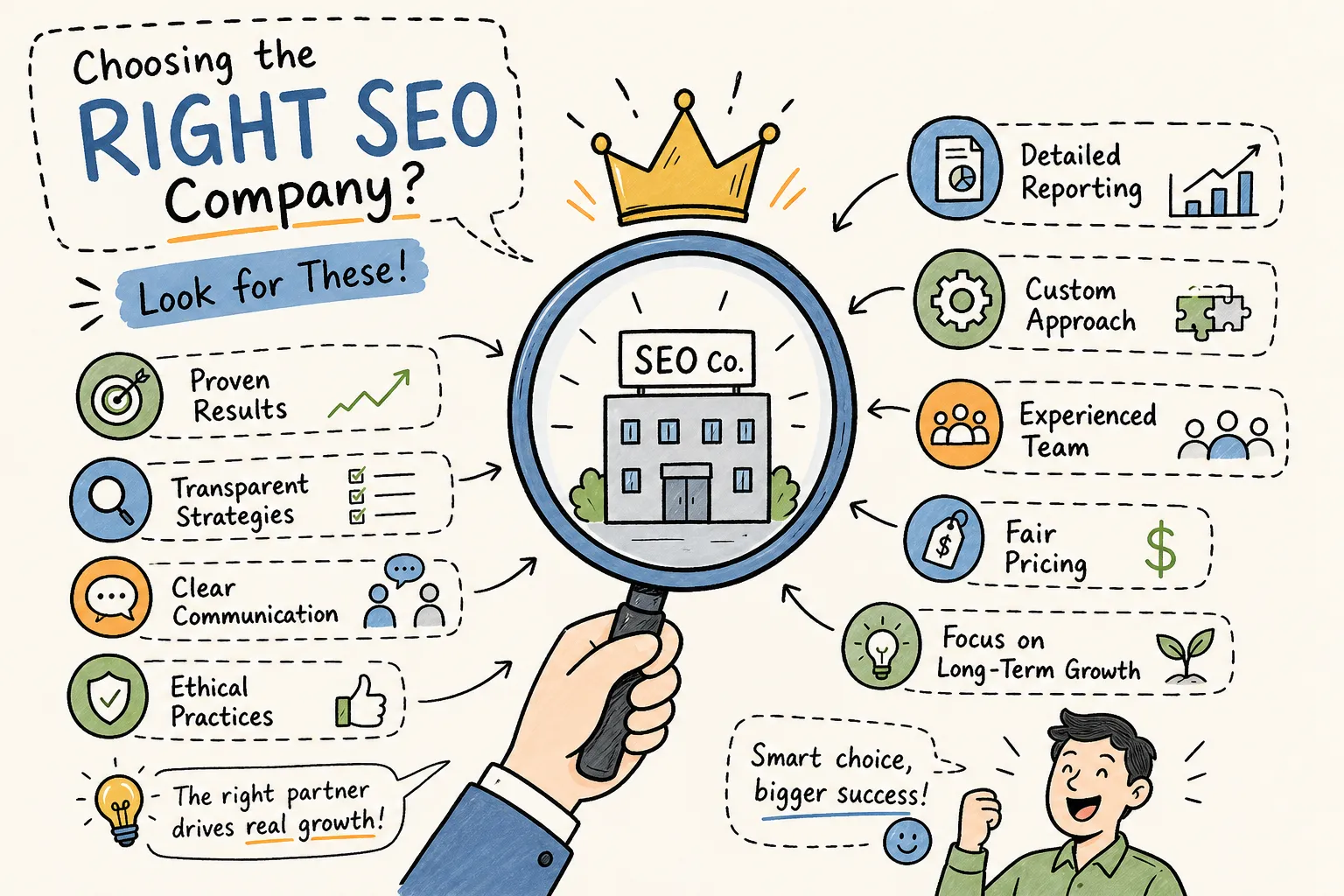
Hiring the wrong SEO company costs more than money. It costs you roughly a year of momentum, twelve months of retainer fees, and a competitive gap that widens while your rankings sit exactly where they were on day one. Many agencies look identical from the outside: polished websites, impressive-sounding case studies, and sales calls that sound scripted by someone who actually knows what they’re doing. Knowing what to look for in an SEO company, before you sign anything, is the only reliable way to separate legitimate partners from vendors who will burn your budget and disappear.
The only way to cut through that noise is to evaluate every agency against a consistent set of criteria. This 10-point SEO agency checklist reflects the consultancy-first approach Ben Stace built Brandleap Agency around: the belief that every business deserves to understand exactly what they’re paying for and why. Use it to compare proposals, run your discovery calls, and disqualify vendors who can’t meet the bar.
Transparency and methodology: the foundation of a trustworthy SEO partner
Vague processes and “proprietary systems” aren’t signs of sophistication. They’re red flags. A legitimate SEO company explains their methodology in plain language because they understand what they’re doing and they’re confident enough to show you. If an agency hides behind complexity, they’re either improvising or following a templated workflow they can’t actually defend.
Must-have 1: A structured 90-day plan with phase-by-phase milestones
A credible agency describes the first 90 days in specific terms. Weeks one and two go to a technical audit and competitor analysis. Weeks three and four cover strategy and content planning. Month two is for execution and technical fixes. Month three opens the first real data review. If an agency answers your onboarding questions with “we’ll get started and see where things land,” they’re improvising. Ask directly: “What does the first two weeks of a new engagement look like?” and judge how specific the answer is.
Must-have 2: Plain-language explanations with no “secret sauce”
Any ethical SEO firm should explain their approach without requiring you to have a technical background. When an agency can’t describe what they’re doing or why, they’re usually doing one of two things: cutting corners or following a process they don’t fully understand themselves. The best agencies educate their clients as a matter of course, that’s a sign of confidence, not a liability. If an agency talks about their “proprietary algorithm” or “unique methodology” without ever explaining what either actually means, treat it as a warning sign.
What to look for in an SEO company: verified results and reporting standards
A case study PDF is not proof of results. It’s a marketing document. Agencies worth hiring are willing to show you data you can verify independently, because they know the numbers hold up. This section covers how to get beyond the sales material and into actual evidence.
Must-have 3: Case studies tied to revenue, not just traffic
Rankings and traffic numbers without conversion context are almost meaningless. When vetting an SEO company, ask them to show organic conversion data, non-branded keyword growth, and year-over-year traffic trends from Google Analytics 4 and Google Search Console, the two platforms Google itself recommends for performance verification. If a case study only shows “traffic grew 200%” without explaining how that translated to leads or revenue, the results are superficial. The strongest case studies include share-of-voice benchmarking and content-to-conversion correlation, not just ranking snapshots.
Must-have 4: References you can cross-check with independent tools
Don’t stop at asking for references, verify them. Ask the agency to provide a client domain from a relevant case study, then run it through Ahrefs’ site audit and analysis tools or SEMrush’s Organic Research tool. Set the date range to match the campaign period and check organic traffic trends alongside referring domain growth.
During reference calls, ask specific questions: How many validated leads did the campaign produce at the six-month mark? How did the agency respond when results lagged? Rate them on transparency and problem-solving on a scale of one to ten. For guidance on what to ask and how to verify references, see resources about how to check an SEO company’s references. Agencies with legitimate results are eager to connect you with real contacts who can speak to the actual campaign.
Must-have 5: Metrics that link search visibility to business outcomes
A strong monthly report goes beyond rankings to include organic conversions, click-through rate, Core Web Vitals, backlink velocity to bottom-funnel pages, and brand search volume trends. These metrics connect SEO activity to business results, the measurement that actually justifies the investment. If an agency tracks only position data, they’re optimizing for a metric that doesn’t pay your bills. Ask to see a sample report before you sign. Any agency that can’t produce one quickly either doesn’t have a standard reporting process or doesn’t want you to see what they actually deliver. For a deeper look at KPIs and which metrics matter most, consult an SEO KPIs guide.
Must-have 6: A named point of contact and a documented escalation process
Ask who your day-to-day contact will be and what their diagnostic process looks like when results fall short. A professional firm describes a specific response: reviewing keyword targeting, auditing content performance, checking for technical regressions, and adjusting strategy accordingly. Vague answers like “we’ll reassess” signal that the agency has no real accountability structure. You need to know who you call, what they’ll look at, and how quickly they’ll respond when something isn’t working.
Pricing, contracts, and who owns your assets
Understanding pricing benchmarks and contract terms protects you from overpaying, losing control of your digital assets, or locking into an arrangement you can’t exit without starting over. These are conditions you need in writing before you sign.
Must-have 7: Pricing that reflects your scope, not a generic package
In 2026, reputable SEO agencies in the US charge between $1,500 and $3,000 per month for local or basic campaigns, $3,000 to $7,500 for mid-market and regional businesses, and $7,500 or more for national or highly competitive verticals. Freelancers average around $1,350 per month. Pricing well below $1,500 per month for any competitive industry should prompt serious questions about methodology and quality. Generic one-size-fits-all packages are also a warning sign: your business needs a scoped strategy built around your actual competitive environment, not a templated checklist recycled from the last client. For benchmarking and current market pricing, review an up-to-date analysis of what SEO services cost.
Must-have 8: Clear ownership of content, deliverables, and account access
Before signing, confirm in writing who owns the content published on your site, who controls your Google Analytics and Search Console access, and what happens to your assets if you cancel. Agencies that insist on managing logins without granting you administrator access are creating dependency by design. You should retain ownership of all content produced for your brand, full administrator access to your Google Analytics, Search Console, and Google Business Profile accounts, and documented records of any link acquisition activity, including outreach sources and placement details. This isn’t a legal technicality, it’s the difference between a vendor relationship and a hostage situation.
The vetting questions and red flags that filter great agencies from risky ones
The final filter in any SEO vendor evaluation is how an agency responds to direct questions about accountability, strategy, and ethics. Good agencies welcome scrutiny. The ones worth walking away from reveal themselves quickly when you stop accepting vague answers and start asking for specifics.
Must-have 9: Proposal questions that expose how an agency really operates
Ask every SEO company you’re considering: “What does success look like at three, six, and twelve months?” and “What happens if we’re not seeing traction by month six?” Strong agencies give milestone-based answers and describe a strategy-adjustment process without promising specific ranking positions. Also ask: “How do you stay current with algorithm updates and AI search changes?” and “Can you walk me through a real example of results you achieved for a business similar to mine?” Any agency that deflects these questions or responds with generalities is giving you the answer you need.
What to look for in an SEO company in the first 90 days: black-hat signals to eliminate immediately
Walk away from any SEO company that guarantees first-page rankings, promises results in 30 days, mentions buying backlinks, or describes using private blog networks. Other disqualifying behaviors include keyword stuffing, cloaking content for crawlers, and requesting full control of your website login without granting you reciprocal access. Google has stated explicitly that no one can guarantee rankings, agencies that do are either uninformed or dishonest. In 2026, Google’s spam detection systems are sophisticated enough that black-hat tactics typically yield short-term gains followed by significant penalties that force you to rebuild from scratch. Learn more about common black-hat SEO tactics and why they should disqualify a prospective vendor.
- Guaranteed first-page rankings or results within 30 days
- Mentions of paid links, link farms, or private blog networks
- Cloaking, keyword stuffing, or hidden text strategies
- Requests for full account control without granting you administrator access
- Pricing dramatically below market rates with no credible explanation
Use this framework to make the right call with confidence
The 10 criteria covered here span methodology transparency, proof of results, reporting standards, contract terms, and a zero-tolerance policy for black-hat tactics. Most reputable agencies will meet the majority of these standards without hesitation, and the ones that can’t will make that clear quickly.
Brandleap Agency was built around this standard. Every engagement starts with a structured onboarding plan, education-first communication, and reporting that ties organic performance to business outcomes rather than just rankings. Ben Stace and the Brandleap team work with small businesses, agencies, and growth-stage companies across the US who are tired of paying for SEO they can’t verify and results they can’t measure.
Whether you’re evaluating your first SEO hire or re-examining a vendor that isn’t delivering, use this framework when deciding what to look for in an SEO company to ensure you hire a partner who delivers measurable business outcomes. That’s where Brandleap comes in. Book a no-obligation consultation with Brandleap Agency to see exactly how we measure up against the criteria laid out here. Bring your current proposal, your current rankings, and your questions, we’ll show you what a transparent, accountable SEO partnership actually looks like. For ongoing insights and resources, check the Brandleap Agency Blog.