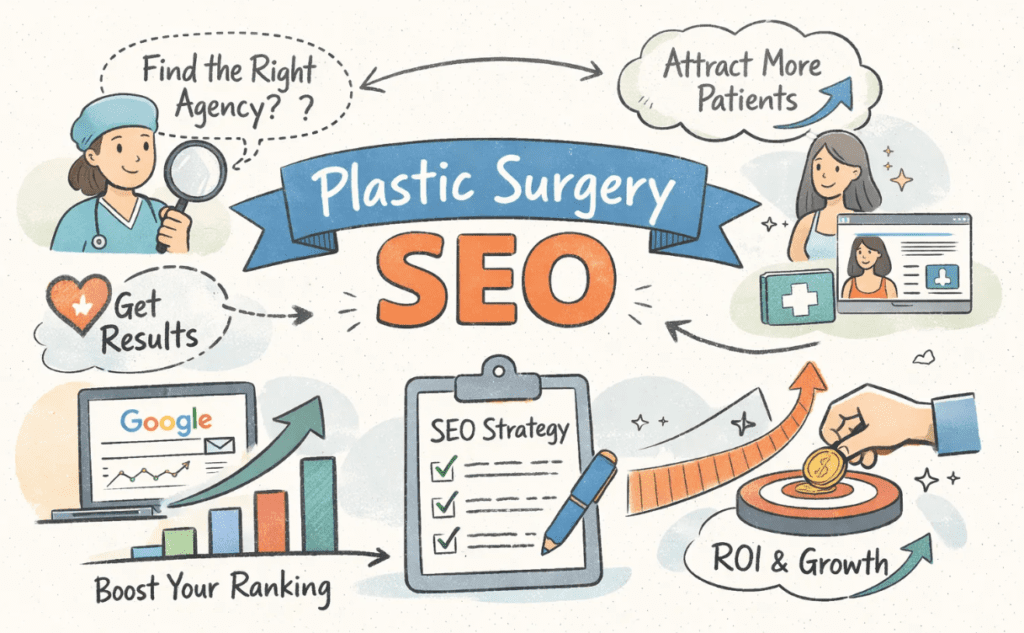
Plastic surgery SEO services determine whether your clinic fills consult slots with high-intent patients or wastes budget on broad cosmetic traffic. Generalist agencies often use generic tag-and-link tactics that miss regulated messaging, consented imagery and the procedure-level content prospective patients need to trust a surgeon. Effective SEO for plastic surgeons requires procedure-specific content maps, clear trust signals and strong local visibility to capture searches like “best rhinoplasty surgeon in [city]” instead of casual cosmetic queries. Treating plastic surgeon marketing like any other niche raises acquisition costs and lowers conversion rates.
This guide shows how to separate templated medical SEO work from true aesthetic clinic expertise. You’ll see concrete proposal signals, such as before-and-after gallery workflows, RealSelf and Healthgrades strategies, repeatable review-acquisition plans and explicit local SEO tactics, that reveal whether an agency understands cosmetic surgery and medspa SEO services. We compare expected conversion lifts and realistic U.S. pricing bands so you can evaluate ROI and pick a specialist that reduces acquisition cost and grows your practice predictably. Choose a specialist partner, not a generalist checklist.
Key takeaways
- Choose a specialist: Generalist SEO often misses clinical nuance, consented imagery and procedure intent. Agencies with direct plastic surgery experience tend to lower cost per acquisition and improve consult conversion.
- Local procedure pages: Map procedures to cities using long-tail queries such as “rhinoplasty surgeon [city]” and prioritize targets by demand versus competition. That approach captures higher-intent searches that convert at a better rate.
- Full-service deliverables: Expect technical fixes, procedure-level content, before-and-after gallery workflows, review acquisition and targeted outreach bundled into a single playbook. A clear monthly deliverable list makes proposals comparable.
- KPIs and timelines: Start with a 30- to 60-day foundation phase, including Google Business Profile cleanup, citations and technical fixes, and set conversion-focused benchmarks for leads and consults over three to six months. Clear checkpoints prevent scope creep and misaligned expectations.
- 90-day playbook: Vet vendors with case studies, RealSelf and Healthgrades experience and an RFP that demands analytics access, documented review strategies and a specific 90-day action plan. That short audit shows whether the agency can deliver early, measurable wins.
1. Why specialization matters for clinic growth
Specialization matters because patient pathways and compliance issues change how clinics attract and convert consults. Generalist SEO firms follow broad best practices, but they often miss the clinical and regulatory details that matter for aesthetic marketing.
- A content map should cover each procedure across the patient journey, from awareness pages to decision-stage FAQs. That structure helps searchers find the exact information they need at the moment they decide to book.
- A defined gallery workflow ensures images are properly consented and presented to build trust without violating rules. The agency should explain how it handles photo release forms, image labeling and responsive gallery loading.
- Platform work should include RealSelf and Healthgrades optimization plus targeted listings on local medical directories. Agencies should detail where they’ll focus outreach and how those profiles feed credibility into local pages.
- Review acquisition must link to post-visit touchpoints such as timed SMS or email requests with direct links. Expect a plan that integrates with your practice management system, includes templates and offers response guidelines.
Specialization improves conversion because pages and signals align to high-intent queries and local modifiers. A general cosmetic query might convert at 1 to 2 percent, while a phrase like “best rhinoplasty surgeon in [city]” often converts at 6 to 10 percent when paired with optimized pages and review-based social proof.
2. How plastic surgery seo services improve local rankings
Local visibility turns searches into consults, so map procedures to neighborhoods and build city landing pages that match patient intent. Target long-tail local phrases such as “rhinoplasty surgeon [city]” or “tummy tuck cost [city]” and prioritize targets by demand versus competition rather than guesswork.
Google Business Profile is the fastest lever for local visibility. Ensure categories, services, booking links and a steady photo cadence that highlights outcomes and the clinic environment.
Pair that with a compliant review workflow: request reviews in-office, send a timed post-visit SMS or email with a direct link within 24 to 72 hours, and use templates to acknowledge and resolve feedback. Require monthly GBP reporting on rating, review velocity, profile views, calls, direction requests and bookings so you can track impact. Recent industry research shows how review signals are influencing local rankings, which underscores the value of a structured review funnel.
Earn local authority with relevant backlinks, medical society mentions and press placements that point to your city pages and procedure hubs. Target outreach to local news sites, university clinics, specialty directories and patient advocacy groups, and use safe anchor strategies such as brand plus city or procedure plus city to protect reputation.
Technical foundations are nonnegotiable for image-heavy portfolios and high trust requirements. Implement schema types such as MedicalBusiness, Physician, Procedure, Review and ImageObject, optimize before-and-after galleries for responsive loading and compression, and prioritize Core Web Vitals and mobile UX to protect conversion rates. When evaluating plastic surgery seo services, request a technical audit scope that lists schema implementation, image optimization, page-speed fixes, canonical checks and a remediation timeline. For procedural SEO tactics and on-page guidance, see this practical guide to SEO for plastic surgeons.
3. What a full-service package should include and how much it costs
A full-service engagement for plastic surgery seo services combines technical fixes, content and outreach into a single playbook. Core deliverables include keyword research, title and meta optimization, priority procedure pages, supporting educational assets, internal linking and local citations, plus targeted outreach for backlinks. The proposal must state monthly content quotas and give examples such as case studies, short video snippets and FAQ expansions that convert search intent into calls.
Pricing typically falls into bands that align with scope and competition: local starter: $1,000 to $2,500 per location; growth/mid-market: $2,500 to $7,500; and competitive/enterprise: $5,000 to $10,000+ for multi-location rollouts and PR-driven campaigns. Quotes rise with dense market competition, more locations, higher content volume and aggressive link requirements. Common add-ons include link-building packages, one-time technical audits and expanded content production from medspa or broader Medical Industry SEO Services That Drive Patient Growth.
Compare proposals on deliverables, allocated hours and staff seniority rather than price alone. Calculate projected cost per lead and estimated break-even windows based on current conversion rates and average treatment value. Favor vendors that provide in-house outreach, senior strategy time or richer asset production over low-cost, low-touch providers. If you need a benchmark for website costs tied to design and UX scope, this resource outlines typical estimates for plastic surgery website pricing and considerations, such as content and conversion features: how much a plastic surgery website should cost in 2025. Also include links to authoritative clinical resources as supporting educational assets—for example, trusted sources like the Mayo Clinic facelift overview when explaining procedure details to patients.
4. KPIs, timelines and realistic benchmarks for patient leads
Set timelines and phases so expectations match outcomes. The foundation phase, which includes technical fixes, Google Business Profile cleanup and citation consistency, often moves a clinic into the local pack within 30 to 60 days because Google rewards corrected NAP data and improved GBP signals. The growth phase adds city pages and a review system to generate steady clicks and calls; consistent organic patient leads typically appear in three to six months. For highly competitive metros, plan for nine to 12 months to establish dominance when competitors have strong backlink profiles and heavy ad budgets.
Measure patient-facing conversions, not vanity metrics. Track organic consultations, phone calls, booked appointments, GBP clicks and direction requests as primary KPIs and map them to goals in Google Analytics or GA4. Implement call tracking and calendar integrations to attribute booked appointments to specific pages, and use strict UTM conventions so channel data stays clean. Combine Search Console and Analytics data or use Looker Studio to link landing page performance with conversion events for a clearer view of organic impact.
Use benchmark ranges that reflect procedure intent and landing page quality. High-intent queries like “best rhinoplasty in [city]” commonly convert at 6 to 12 percent from clicks to leads, while broader informational queries convert at 0.5 to 2 percent.
Lead-to-booking ratios vary, typically 15 to 35 percent on well-optimized pages with strong trust content and quick response workflows, and 5 to 15 percent on weaker pages. For example, 1,000 monthly clicks at a 7 percent lead rate yields about 70 leads, and at a 25 percent booking rate that becomes roughly 18 booked consults per month. Set measurable checkpoints at 30, 60 and 90 days, run monthly KPI checks during the growth phase and schedule quarterly strategy reviews for scaling.
5. How to shortlist, vet and RFP specialist agencies
A repeatable vetting process saves time and reduces risk. Start your shortlist with referrals, agencies that publish strong case studies and firms that rank for procedure-specific terms, then narrow to providers with direct Healthcare SEO Services That Drive Patient Growth experience so processes align with compliance and patient intent.
Apply a simple weighted scoring model to make decisions repeatable, and ask each vendor for the same outputs so proposals stay comparable. Bring focused discovery questions to every call so responses are candid and easy to evaluate.
- Who will work on my account and can you share their bios and availability? Knowing the team helps assess seniority and continuity, and ensures the people presented will actually do the work.
- Where will links come from and can you provide a recent link sample with metrics? Ask for transparency on link sources and examples that show topical relevance and domain quality.
- How will you optimize and maintain my Google Business Profile month to month? The vendor should explain category choices, photo cadence, post cadence and how they report on GBP performance.
- How do you generate and respond to patient reviews, and what tools do you use? Expect an end-to-end review funnel tied to post-visit workflows, templates and escalation paths for negative feedback.
- What specific deliverables and KPIs do you commit to each month? Demand a precise list of pages, content pieces, outreach activities and the reporting cadence that shows progress.
Watch for red flags such as guaranteed rankings, opaque link lists, no healthcare references, vague deliverables or no clear review strategy. Favor transparency and documented processes because they remove guesswork from the RFP and reduce operational risk. For example, a single-location clinic that followed a targeted program focused on GBP cleanup, three priority procedure pages with local modifiers, a review-generation funnel and focused outreach doubled organic inquiries in six months and saw consistent top-three map-pack placement for core procedures. Also review case studies from adjacent specialties—for instance, dental practices often face similar local compliance and reputation challenges, as seen in examples like Dentist SEO Services: Unlock Success for Your Practice, 2026.
6. Hiring checklist and the first 90 days playbook
Start your RFP with essentials: analytics and Search Console access, clear business goals, proposed scope items, required deliverables, KPI targets and a preferred budget format such as a monthly retainer or milestone schedule. Require vendors to include a concise 90-day tactical plan that maps responsibilities and expected outcomes, and ask for an execution board or shared project workspace so you can verify progress.
- Technical ability and audit approach: 25. This carries the most weight, so look for a detailed audit plan that lists schema, performance fixes, image handling and a clear remediation timeline.
- Strategy fit and timeline: 20. Evaluate whether the proposed strategy aligns with your practice, target procedures and timelines, and confirm milestones map to measurable business outcomes.
- Proven results and references: 20. Check case studies and references specific to plastic surgery or closely related medical fields, and request anonymized data or client contacts to verify claims.
- Team bandwidth and communication: 15. Assess available hours, named contacts and the communication cadence, and confirm who will handle day-to-day work versus senior strategy time.
- Price and contract flexibility: 10. Price matters, but also look for contract terms that allow reasonable exits and adjustments rather than long lock-ins without safeguards.
- Reporting and transparency: 10. Require access to analytics, regular status reports and documented outreach or link logs so you can see real progress.
The first 90 days should validate performance with clear checkpoints. Day 0 to 30 focuses on a technical audit and high-impact fixes, day 30 to 60 covers Google Business Profile setup and review-velocity systems, and day 60 to 90 focuses on priority page rewrites plus initial outreach and link actions.
Define measurable checkpoints at 30, 60 and 90 days, require weekly status meetings and insist on shared access to tracking dashboards. Negotiate contract protections that include transparent link reporting, defined monthly deliverables and timelines, a clause that disallows ranking guarantees and a 30-day exit window after the initial 90 days if milestones are unmet.
Agree payment models up front and confirm that intellectual property stays with the clinic. Consider a performance-related bonus instead of risky long-term guarantees.
Choose the right plastic surgery SEO services
Choosing the right plastic surgery seo services changes how patients discover and trust your clinic, because teams that understand clinical language, regulatory constraints and procedure intent win higher-converting traffic. Start by auditing your top five procedure pages for local intent: run three “procedure + city” searches, check titles and local schema, and list two ranking gaps to fix. For a prioritized plan and a 30-day audit that shows the first measurable wins, request Brandleap Agency’s diagnostic and implementation roadmap.