An SEO agency in Singapore should understand that search is mostly mobile and often mixes English with local terms. Local signals, especially Google Business Profile, drive a large share of traffic and leads. These local nuances separate agencies that generate real leads from those that report vanity metrics, so use the checklist below to spot partners who map keywords to business goals and local intent.
Start by tracking business-focused KPIs: organic sessions for priority keywords, qualified leads, conversion rate, revenue per visitor and progress on your keyword map. Expect technical fixes to deliver wins within one to three months, ranking and traffic gains in three to six months, and a clear ROI by six to 12 months when content, links and conversion rate optimisation work together. Avoid agencies that promise page-one rankings, hide link tactics, refuse access to raw data or offer one-size-fits-all packages.
What you need to know
- Local search nuance: Singapore is mobile-first and searches often blend English with local phrases. Local signals like Google Business Profile, localised citations and neighbourhood keyword mapping matter for lead generation.
- Measure business KPIs: Track priority keyword sessions, qualified leads, conversion rate and revenue per visitor rather than chasing rankings or traffic alone. Tie those metrics to specific pages and campaigns.
- Verify case studies: Require baselines, timeframes and raw exports (CSV) or read-only access to prove results. Screenshots and selective charts can mislead without underlying numbers.
- Value over price: Compare scope, team roles and deliverables across retainer bands to assess true ROI. Look beyond monthly fees to what’s included in content, links and reporting.
- Audit then trial: Ask for read-only GA4 and Search Console access, a 90-day roadmap and a short paid trial before committing. Use the trial to validate delivery and communication.
1. What winning SEO looks like in Singapore
Search behaviour in Singapore is strongly mobile and often blends English with local terms, creating clear local intent. People add neighbourhood names, “near me” or bilingual phrases, so optimise for short conversational queries and localised landing pages. A good SEO agency in Singapore will include a Google Business Profile plan and a local citation map that match how locals search; that local focus separates agencies that generate leads from generalist providers.
Measure performance with business-focused KPIs tied directly to revenue rather than vanity metrics. Track organic sessions from priority keywords, qualified leads and lead velocity, conversion rate and revenue per visitor, plus keyword map progress and page-level rankings. Expect quick technical wins in one to three months, measurable ranking and traffic lifts in three to six months, and clear ROI by six to 12 months when content, links and CRO align.
2. Compare pricing and deliverables so you judge value, not sticker price
When you request proposals, map typical retainer bands so you know what to expect from an SEO agency in Singapore. The same monthly fee can cover very different scopes depending on team size, tools and whether content or link outreach are included. Frame conversations around outcomes so you can compare offers on a like-for-like basis and avoid surprises later (see our guide on how to sell SEO for tips on structuring proposals).
- Small / local SMBs: S$500 to S$1,500. This level usually covers basic local SEO, Google Business Profile setup, optimisation for 6–12 keywords and light content updates. Expect improved local visibility and steady walk-in or call volume within three to six months.
- Growth SMEs: S$1,500 to S$3,000. This typically includes a content strategy, technical fixes, monthly content assets and selective outreach. Expect rising keyword coverage, higher qualified organic traffic and measurable lead growth by month six.
- Enterprise: S$3,000 to S$10,000+. For multi-location or complex sites this band includes scalable technical SEO, dedicated content teams and account management. If you operate across markets, consider how aSEO company in the UKstructures multi-site governance.
Pricing models vary by need. Monthly retainers provide steady work and prioritisation, hybrid models mix retainers with performance or hourly time, and keyword-based packages simplify scope while one-off audits solve specific problems. Watch for hidden costs such as content production, third-party tool fees or limits on link outreach, since these can add up quickly.
Use a simple rubric to benchmark quotes and compare number of target keywords, content assets per month, the ratio of in-house versus outsourced work, link quality indicators and reporting access frequency. Check contract length and exit clauses to avoid long lock-ins before results appear. With pricing clarified, move on to vetting case studies and evidence to separate genuine wins from smoke and mirrors.
3. Vet experience and case studies: how to tell genuine wins from smoke and mirrors
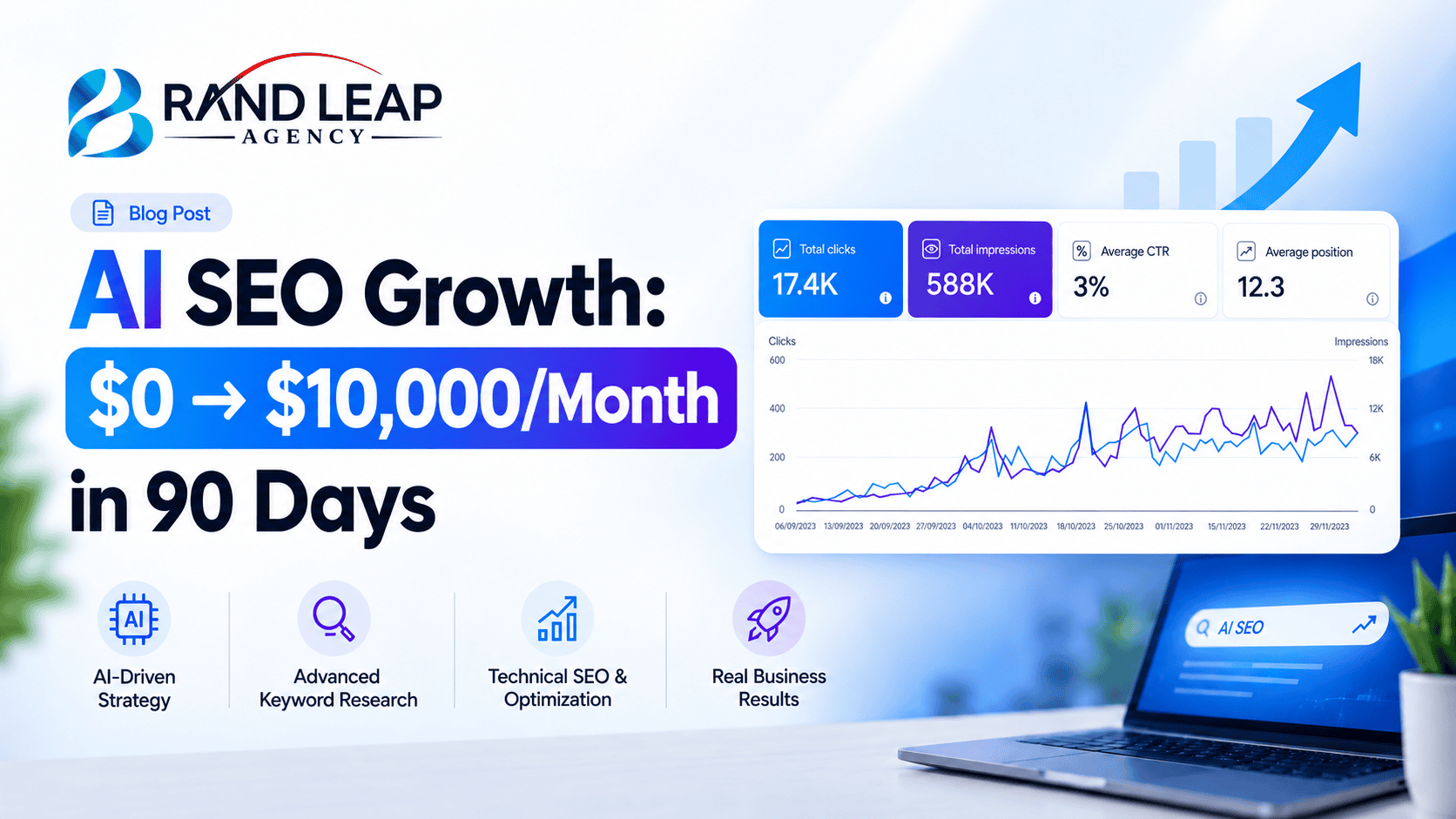
Ask for verifiable evidence before accepting a success story. A credible case study will include baseline metrics with dates, a clear timeframe, a list of target keywords, and raw exports from Google Search Console and GA4. Treat claims as hypotheses until you can inspect timestamped reports and raw data, since screenshots and percentages without baselines can mislead.
Request read-only GA4 and Google Search Console access, ask for raw ranking CSVs with dates, and verify references on platforms such as Clutch or SEMrush’s agency directory. Watch for manipulated visuals by checking axis scales, short or cherry-picked timeframes and missing underlying numbers. The following minimum evidence should be non-negotiable:
- Baseline and post-period metrics with dates (sessions, conversions, MQLs). These should include clear start and end dates and unaltered export files.
- Target keyword list and date-stamped ranking CSV. The CSV should show positions over time with timestamps for verification.
- Search Console and GA4 CSV exports or read-only access. Direct access is better than screenshots so you can confirm queries and clicks.
- Proof of business outcomes: lead lists, CRM timestamps or revenue lifts. Evidence should map to the same timeframe as the analytics exports.
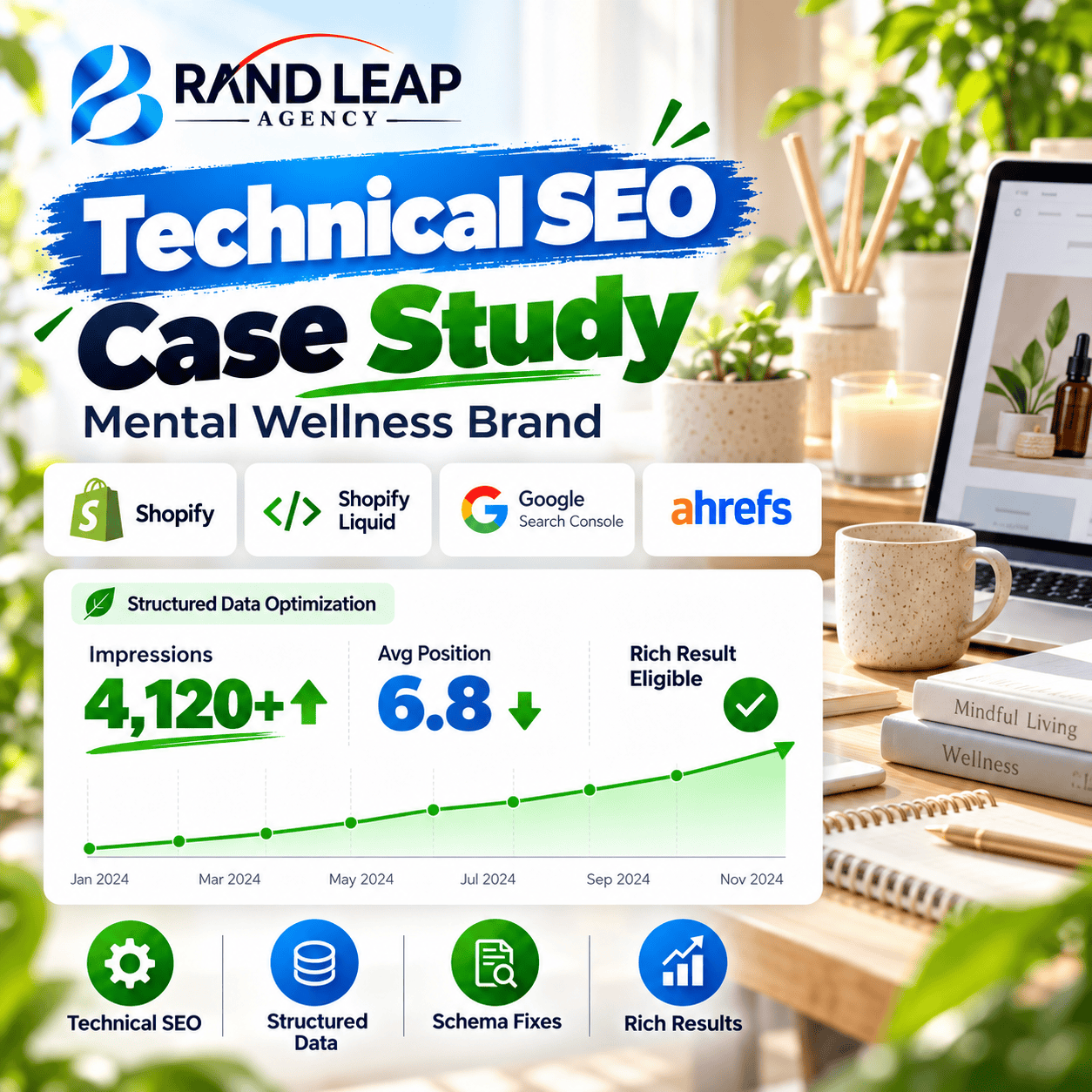
Brandleap Agency helped a Singapore B2B client move 18 target keywords to page one, increase organic sessions by 120% over six months and generate 2.8x more inbound MQLs. The team delivered a technical audit, content-cluster revisions, targeted outreach and localised schema, and verified results with Search Console CSVs, GA4 conversion reports, dated ranking exports and outreach logs. With that verified evidence, make outcomes enforceable in contracts and SLAs so both sides have clear expectations.
4. Team, process and reporting: who will actually do the work
Map roles to daily ownership so you know who will handle each task. A typical team includes an account strategist, a technical SEO specialist, a content lead, an outreach specialist and a frontend developer. The account strategist and content lead should align closely with your internal stakeholders or be kept in-house where possible because they own brand voice and approvals. Use contractors for specialist work such as outreach, complex technical fixes and short-term frontend sprints to keep costs efficient and speed delivery.
Your engagement should follow a predictable workflow so progress is visible and measurable. Start with discovery and a full technical and content audit, then move to a prioritised roadmap and quick wins in months one to three. Focus on content production and authority building in months three to six, and shift to continuous optimisation and scaling after month six.
Insist on transparent reporting and sensible SLAs from day one. Require read-only dashboard access (GA4, Search Console, rank tracking), regular exports and a concise KPI set: organic sessions, conversions, keyword positions, technical health and backlink velocity. (See best practices for agency reporting with Search Console in this Search Engine Journal guide.) Agree response SLAs for tickets and a cadence for strategy calls so nothing stalls between you and the team.
Lock the basics into the contract: a six to 12-month term, a defined scope of work, an exit notice clause (typically 30 to 60 days) and clear handover obligations. With team and process criteria set, move on to shortlisting and scoring vendors.
5. Shortlist, score and choose: a 5-step checklist you can use today
Begin by aligning agencies to your vertical and budget so you focus on partners who understand your market and spend range. Follow this five-step process to shortlist and validate.
- Match agencies to your business type and budget, narrowing the field to a manageable list. Prioritise vendors with relevant vertical experience and similar client sizes. If you are open to regional partners, read about thebenefits of hiring an SEO agency in the Philippines.
- Request comparable proposals and a short case data extract showing raw ranking and traffic metrics for similar clients. Ask for export files or read-only access so you can compare apples to apples.
- Validate references and raw data with direct follow-ups or read-only access. Speak to existing or former clients about communication, timeliness and results.
- Run a paid pilot or focused audit to see real outputs and capability. Use the pilot to test delivery, reporting and how the agency handles blockers.
- Score final offers against a weighted matrix and keep the shortlist to three to five candidates. Use the matrix to document trade-offs and share recommendations with stakeholders.
Use a simple scoring template to keep decisions objective and repeatable. For example, assign weights such as case studies 30%, local market experience 20%, pricing and deliverables 20%, team and processes 15% and communication and transparency 15%.
For e-commerce, raise case studies to 40% and emphasise conversion metrics. For enterprise, increase team and processes to 25% and value SLAs at 20%, then keep the scoring sheet in a spreadsheet so you can weight, re-rank and export finalists for stakeholders to review.
On demo calls, ask focused, evidence-driven questions that clarify ownership and deliverables. Use the questions below in outreach to get comparable answers from each agency.
- Can you share CSV exports of six to 12 month ranking trajectories for a comparable client? Ensure the export includes dates and the set of target keywords so you can validate movement over time.
- Who will personally work on our account and how many hours per week will they allocate? Ask for CVs or brief bios to confirm experience and capacity.
- Provide a sample month 1–3 roadmap with key deliverables and milestones. That roadmap should show quick wins and dependencies that affect timelines.
- What exact KPIs do you commit to and what are the reporting intervals? Make sure the KPIs tie back to revenue or qualified leads rather than vanity metrics alone.
- Show a before/after analytics view attributing traffic and conversions to specific SEO work. Prefer raw GA4 or Search Console exports over summarized slides.
- Which tools do you use and will we have raw access to reports and data? Confirm any third-party tool costs and read-only access requirements up front.
- Explain how you handle unforeseen technical blockers and escalation paths. Ask for examples of past blockers and how the team resolved them.
Score each proposal, normalise totals and flag any outliers for a final reference check so you pick the partner aligned with your goals. After scoring, structure the pilot so you get measurable outcomes fast and prove capability before committing to a longer retainer.
6. Next steps: request an audit, run a trial and sign with confidence
Be explicit when you request an audit so the output is actionable. Ask for read-only Search Console, GA4 and CMS access, server log access if possible, your business goals, priority keywords, top competitors and conversion tracking details.
Here is a concise audit request you can copy: “Hi [Name], please run a technical and content audit focused on our priority keywords (list attached). We will grant read-only Search Console, GA4 and CMS access and our goal is X leads per month. Please deliver findings and a two-week roadmap within 10 business days.” Use that wording to ensure consistent, comparable audits across vendors.
Run a low-risk 30 to 90 day pilot to prove capability and limit spend. Scope a single set of technical fixes (crawl errors, site speed, core web vitals), fully optimise two high-impact pages with on-page tests, and attempt two to three authority outreach efforts to demonstrate link acquisition. Set clear success criteria: priority keywords moving toward page one, a measurable uplift in organic sessions or clicks (target 10–25% depending on baseline), tracked conversion events firing and at least one verified authority placement. When the pilot meets those signals, you have justification to move to a retainer.
Negotiate contract terms that protect both parties and cash flow, including clear deliverables and timelines, reporting frequency, notice periods, IP and content ownership, and agreed KPIs with review windows every 30 to 90 days. Expand scope when pilot KPIs show business impact, and change providers if transparency is poor, SLAs are breached repeatedly or you see no improvement after agreed remediation steps.
Choose an SEO agency in Singapore that drives real customers
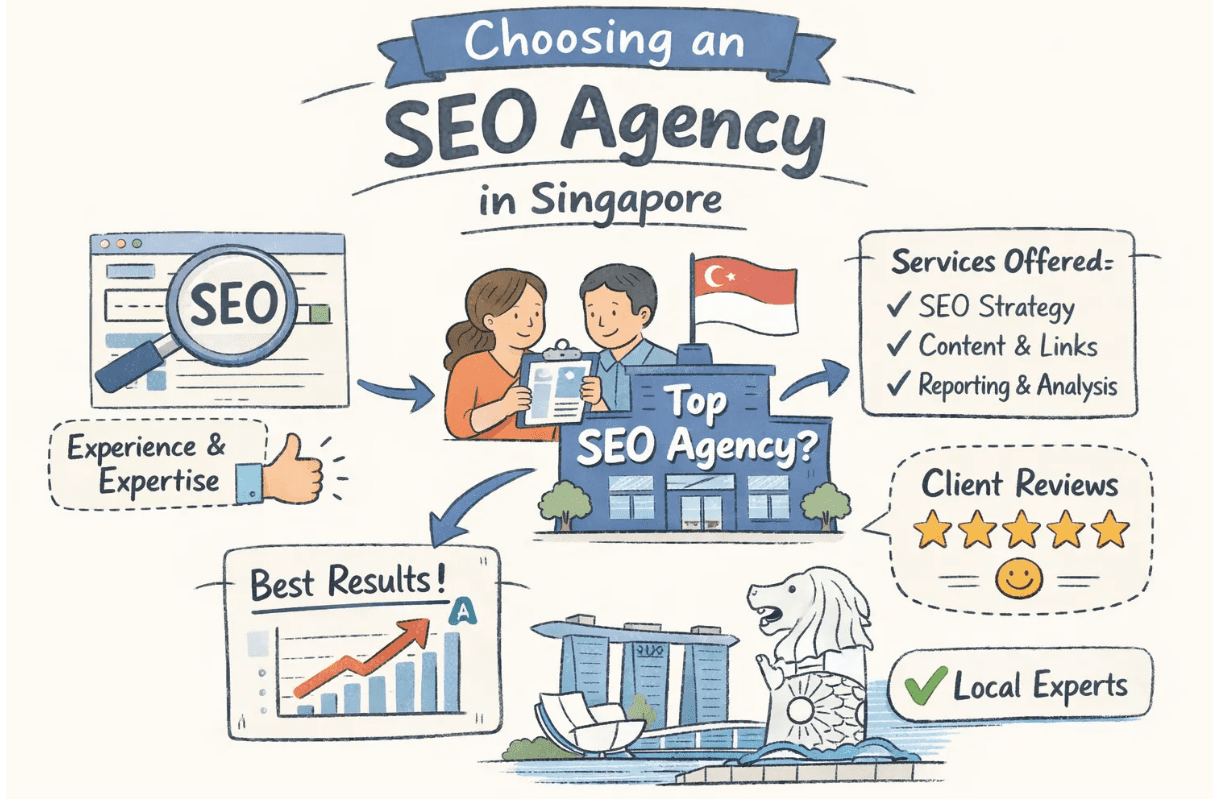
Choosing an SEO agency in Singapore comes down to predictable outcomes, not glossy slides. Look for measurable signals: how the agency handles mobile-first search, local language nuances and conversion-focused fixes. Two quick rules: value comes from deliverables, not sticker price, and case studies must show measurable customer growth rather than vague traffic numbers. Shortlist three agencies, ask each for a 90-day roadmap and two relevant case studies, compare their month-one deliverables and run a 30–90 day pilot before committing; if you want help with audits or pilots, Brandleap Agency can assist in scoping and verification.